20090615

Excavators target colonial RI distillery

NEWPORT, RI -- An archaeological team from Salve Regina University plans to return to a historic residential site this summer to dig for a colonial-era distillery.

The team, working with the Newport Restoration Foundation, began excavating at the Thames Street site in the summer of 2007. Thomas Richardson II, an 18th Century Newport merchant, sea captain and slave trader, also manufactured rum, using slave labor, on his waterfront property.

The team, led by Jim Garman, chairman of the local university's Cultural and Historic Preservation Department, used ground-penetrating sonar tests that indicate the possible presence of the remains of a distillery.

Rum was commonly manufactured in New England during that period as part of the triangular trade among Africa, the Caribbean and New England involving slaves, rum and molasses.
ON THE WEB
• Go Newport
• Newport Mansions
Dowd's Guides

A flair of language piques curiosity

LONDON -- They shall sip whisky, flaunt tartan, bang the drums and dress as a cow.

That's the sort of sentence that will grab anyone's attention. If you want to find out a bit more about what Scotsman writer Stephen McGinty refers to, just go here for his mini-report.

20090613

And the winnahhhhhh -- Glen Breton!


OK, it's over. I think it is. Then again, who knows? I never completely count out those tenacious folks at the Scotch Whisky Association (SWA).

Scotland's trade group, which has a history of pouncing with full legal force on any entity it thinks may be encroaching on its members' turf, had appealed to the Supreme Court of Canada for permission to proceed with its third appeal of the use of the word "glen" by a small Nova Scotia distillery. The SWA has consistently claimed the word tends to confuse consumer into thinking the single malt whisky is made in Scotland -- even though it says "Canada" on the label, a label that also bears the Canadian maple leaf.

After a protracted, nine-year-long fight, the Supreme Court now has refused permission, which would appear to be the final blow to the SWA argument. In any case, Glenora Distilleries now is clear to register its trademark Glen Breton whisky under Canada's Trade Marks Act.

Glenora President Lauchie MacLean said he has always believed that Glenora competed honorably for success in the very challenging marketplace of single malt whisky, and that he hopes the SWA and its members will accept the ruling and that there will be open communication going forward.

The Glenora Inn & Distillery is located in Glenville, Inverness County, Nova Scotia. The heritage of the community definitely is Scottish, from the name of the province -- which means "New Scotland" -- to the name of the county, taken from the location of the same name in Scotland.

You can read my coverage of the naming battle in chronological order:

• Tempest in a glen
• Canadians backing Glen Breton with dollars
• Scotland vs. Cape Breton, Round 2
• Canada's Glen Breton loses labeling battle
• Glen Breton wins another court round
• SWA not giving up on Glen Breton
• Battle of the 'glen' continues in Canada

And, you can go here to find out the availability of Glen Breton.
ON THE WEB
Glenora Inn & Chalet
Nova Scotia Dept. of Tourism
• Dowd's Guides

20090604

San Antonio: A city with a river for a heart

William M. Dowd photo

SAN ANTONIO, TX -- From 10,000 feet the first impression you get is of land as flat as a pool table but considerably less green.

Swooping a bit lower, the snaky San Antonio River comes into view, cutting through the heart of this city that began in 1718 as nothing more than a Franciscan mission in a remote northern province of Mexico.

And then I am here, in the second largest city in The Great State of Texas. Home of both the tiny Alamo and of the 7,000-acre Lackland Air Force Base, among other military installations. Proud location for such modern entertainment complexes as San Antonio SeaWorld, Six Flags Fiesta Texas and the Alamodome, home to the NBA's Spurs. A community that is home to numerous colleges, from the University of Texas/San Antonio to the University of the Incarnate Word. A place soon to be home of the Museo Americano Smithsonian.

But, above all, there is Paseo del Rio, the River Walk.

It is the heartbeat of San Antonio, a waterway down below street level, accessible by stairways or elevators.

Paseo del Rio is the culmination of generations of fooling around with the depth, flow and direction of the river as part of various flood-control, navigation and ecological projects.

Since the 1960s, when the city got ultra-serious about making a portion of the San Antonio River a world-class draw for locals and tourists alike, it has continually developed its amenities under strict zoning regulations.

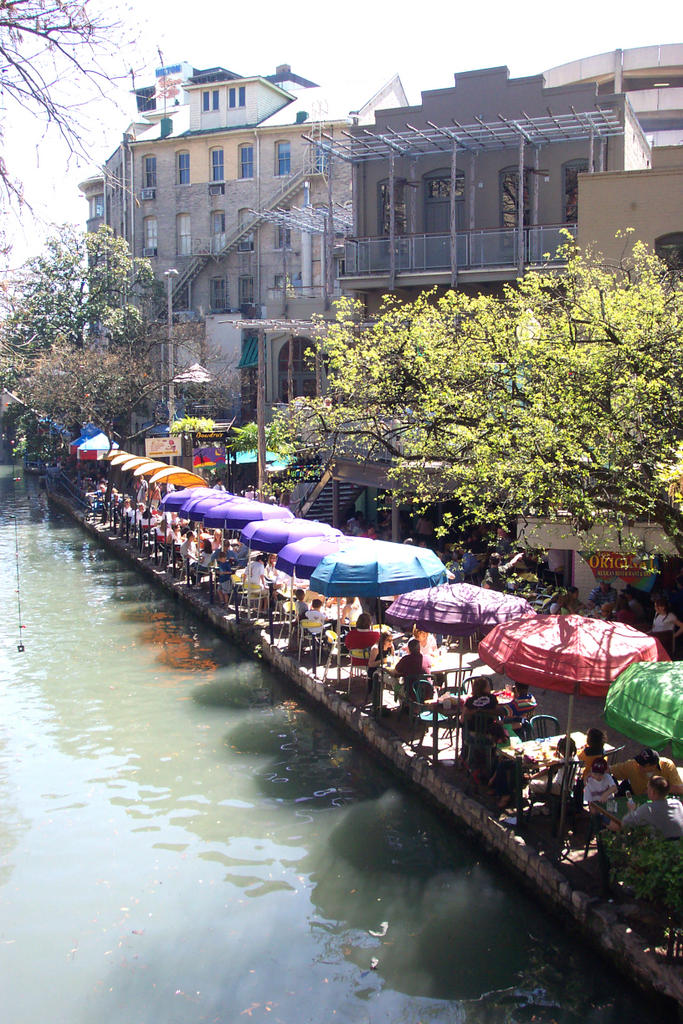
The river is flanked by pedestrian walkways that lead past dozens of cafes, shops and bars, each with umbrella-shaded tables lining the riverbanks.

Cypress and magnolia trees reach out lazily over parts of the water. Thick stands of philodendron flank stone benches. Flower gardens are tucked into every available niche in the stonework that dates from the 1930s as part of a government renovation project.

Large barge-like tour boats ply the river, sometimes quietly, other times with boisterous passengers exchanging brief choruses with singing cafe patrons on land.

River Walk, a tourist magnet for margarita-sipping in outdoor cafes and chowing down in restaurants dishing up Tex-Mex, is going to keep growing. Nine more miles in the $279 million project are due by 2014. Two miles of that stretch were opened this week, doubling the River Walk in size.

The River Walk food covers the spectrum from pub food to fine dining -- Tex-Mex, Cajun, Japanese, Italian, German ... . You can dine at waterside or indoors, on the pedestrian level or on small balconies overlooking the passing scene.

As I strolled both sides of the river on a sunny Friday afternoon, I shared the narrow pathways and climbed the arched stone bridges that link the two sides with a seemingly endless flow of young parents pushing strollers and herding lagging toddlers, of older couples strolling hand in hand, of groups of obvious tourists trying not to get separated, and with Mexican visitors here for the day from the other side of the border down near Laredo, a mere 2 1/2 hour drive away.

Curiously, despite the mass of humanity, a laid-back atmosphere persists -- no pushing, no jostling for space. It was all more civilized than a visitor from the aggressive northeast could have expected.

The next day I found out that despite how busy the River Walk is during the day, when the sun goes down on Saturday night the activity rachets up, way up. Seating is tough to come by as evening closes in. No wonder, with all the free music and people watching to be had.

I commandeered a patio-style chair at the water's edge near a bend in the River Walk. Strains of Tejano music trickled from several bistros. A loud sing-along from a nearby Irish pub made one almost unconsciously join in. A jazz combo behind me played New Orleans-style music on a tiny open-air stage.

For one moment I couldn't quite believe another sound intruding into the mix. But, there it was. The skirling of bagpipes bouncing off the underpinnings of one of the arched stone bridges. It was real, shared courtesy of a Celtic organization in convention downtown and anxious to test the River Walk acoustics.

The jazz musicians good-naturedly waited for the impromptu concert to end, then resumed their own music after the piano player observed, "Ain't that some kind of jazz?"

Captivating though it is, the River Walk is not all there is to San Antonio, a city that might have ended up being called Yanaguana for the original Payaya Indian name for the river. It was renamed on June 13, 1691, by Domingo Teran de los Rios, first Texas provincial governor who selected San Antonio as the name after participating in a St. Anthony's Day mass at the water's edge.

The Alamo, a brief stroll from the Riverwalk, obviously is a must-see for all visitors.

Many people know that the building we refer to as The Alamo is quite small, virtually empty, and not particular inspiring to see. But The Alamo of the famous 1836 battle in which an overwhelming Mexican force overran a small band of 189 Texians -- as the independence- minded locals were then called, foreign adventurers, frontiersmen, freed slaves, and various others was far different from today's unimposing physical structure.

The history of The Alamo -- originally called Mision San Antonio de Valero but renamed by soldiers from the Mexican town of Alamo de Parras when the complex was turned into a cavalry post -- is clearly spelled out in poster-sized displays and in pamphlets supplied by the Daughters of the Republic of Texas who operate the admission-free site that has a gift shop larger than the main building.

At the time of the fateful battle in which such American icons as Davy Crockett and Jim Bowie died, The Alamo was a series of buildings, including the present mission structure and the Long Barrack, the first recorded hospital in Texas.

The Alamo is located in an otherwise frivolous neighborhood. It is fronted by a large plaza, one corner commandeered the day I visited by a self-styled street preacher, another by an ice cream vendor. The vendor drew a larger crowd.

Across the street are a Ripley's Believe It Or Not Museum, a souvenir T-shirt store and a jackalope museum and store that is a tribute to the mythical cross between a jackrabbit and an antelope that is one of the Southwest's great tongue-in-cheek creations.

Oddities are not confined to that area of the city, however. The Buckhorn Saloon, established in 1881, takes up an entire corner plot on the major East Houston Street thoroughfare that is lined with non-theme hotels and restaurants. It is a combination lunchtime restaurant and museum of Old West memorabilia ranging from stuffed animal trophies to personal items from William S. Hart, perhaps the greatest of all silent film cowboys.

In addition to its historic architecture and safe downtown walking areas, San Antonio takes great pride in its wide array of museums. Rather than the typical museums so many cities offer, those in and around the city often are very specific to the region. And not all of them involve animals and cowboys.

Take the San Antonio Museum of Art. It houses a vast collection of pre-Columbian art and antiquities as well as modern and Mexican folk art and the 30,000-square-foot Nelson A. Rockefeller Center for Latin American Arts.

The Witte Museum is a complex of historic homes and log cabins and is known for its history and science exhibits of Texas dinosaur finds and Paleo Indian cultures of the Rio Grande Valley.

The University of Texas Institute of Texan Cultures showcases the 27 major ethnic groups identified as shaping the culture of the state.

Outdoors, the area has many attractions both inside Loop 410, the interstate route that encircles the city and makes getting around simple, and outside. In addition to the aforementioned theme parks, there are the San Antonio Zoo, Travis Park -- named in honor of William Barret Travis who commanded the Alamo, the 33-acre Botanical Gardens, the Japanese Tea Gardens and the 232-acre Friedrich Wilderness Park that offers hiking trails in hilly, heavily forested land.

San Antonio is a complex city that, with its lack of big-city skyscrapes and hustle-bustle sort of sneaks up on you. It's a nice feeling.


ON THE WEB

San Antonio Convention & Visitors Bureau
Community Portal
My San Antonio.com
The NBA Spurs
The WNBA Silver Stars
Stock Show & Rodeo
San Antonio Zoo & Aquarium
Dowd's Guides

20090602

WI nears OK for spirits samples, on-site sales

The Wisconsin State Legislature's Joint Finance Committee has proposed allowing the state's makers of spirits to provide samples and sell their wares on site.

That is a provision in the proposed state budget approved Friday by the committee. Analysts expect the budget to be approved by the full Legislature.

Wisconsin's wineries and breweries already may provide samples and make sales to people who visit their facilities.

There are three craft distillers in the state -- Great Lakes Distillery in Milwaukee, Yahara Bay Distillers in Madison, and 45th Parallel Spirits in New Richmond. Some wineries have said that if the proposal is adopted into law, they will distill wine into brandy.

20090519

Wisconsin going smoke-free

MADISON, WI -- If you're a smoker, Wisconsin no longer is your kind of place.

Gov. Jim Doyle signed a smoking ban Monday, making bars, restaurants and other workplaces smoke-free starting next summer.

"Today is a day that we all can take a deep breath and enjoy the accomplishment that will occur here today," Doyle said just before signing the bill in the Capitol.

The Democrat-controlled Legislature passed a compromise last week that bans smoking in virtually all workplaces but delays the start date until July 5, 2010, later than Doyle and other supporters wanted.

Indian-run casinos are exempt from the ban because lawmakers do not have the power to fully regulate them under federal law. Also exempt are existing cigar bars and specialty tobacco shops.
ON THE WEB
Travel Wisconsin
Wisconsin Tourism Attractions
Dowd's Guides

20090517

NC joins neighbor in restaurant smoke ban

North Carolina is the latest entity to join the growing global ban on smoking in restaurants.

The state legislature this week passed House Bill 2 to ban smoking in restaurants, and a spokesman for Gov. Bev Perdue said the governor is expected to sign it into law this coming week.

"The General Assembly finds that secondhand smoke has been proven to cause cancer, heart disease, and asthma attacks in both smokers and nonsmokers," according to the final version of the bill. "It is the intent of the General Assembly to protect the health of individuals in public places and places of employment and riding in State government vehicles from the risks related to secondhand smoke."

Neighboring Virginia's legislature passed such a law in February, and Gov. Timothy M. Kaine signed it in March. It is scheduled to take effect in December.

About 60% of Virginia's full-service restaurants already are smoke-free, according to statistics compiled by the Virginia Department of Health from restaurant inspections.


ON THE WEB
• Explore North Carolina
• Touring Virginia
Dowd's Guides

20090514

Waterside dining history on Long Island

GREENPORT, NY -- A recent Business Week magazine compilation of the oldest restaurants in the U.S. didn't rank as No. 1 the very establishment recognized as the one that has been operated the longest by the same family since inception.

It's Claudio's, located harborside in Greenport on the North Fork of Long Island. The National Restaurant Association authenticates it as the oldest, same-family-run restaurant in the United States.

This charming, maritime restaurant was established in 1870 by Manuel Claudio, a Portugese merchant sailor who gave up the whaling life to establish a presence in this fishing-and-tourist village that now extends to Claudio's Marina, Claudio's Clam Bar, Claudio's Liquors, Claudio's T-Shirts & Souvenirs, and even Crabby Jerry's, which inexplicably eschews the Claudio name.

One side of the establishment looks out over the harbor. The "blind'' side is dominated by a Victorian-style bar salvaged in 1886 from a New York City hotel being demolished. The romantic days of Prohibition rum-running and America's Cup sailing competition touched Greenport heavily, and there is pictorial evidence of those days all around the walls.

The food? Wonderful clams casino using tiny local Little Necks with bacon, garlic, cheese, peppers and spices. Succulent broiled fresh swordfish steak with herbed butter, and an equally succulent fresh flounder in white wine sauce. Pepper-and-herb crusted mahi-mahi. A true New York-style cheesecake. A tangy key lime pie. Good coffee, fine drinks and good service.

Tempted to visit? The restaurant is open from mid-April to December 1st at 111 Main Street. Phone (631) 477-0627.
ON THE WEB
• Claudio's restaurant
Dowd's Guides

20090513

Kentucky Bourbon Trail re-launches

The Kentucky Bourbon Trail today marked its 10th anniversary by unveiling a new logo, brochure, souvenir passport and commemorative T-shirt.

“This is a significant milestone for one of Kentucky’s most popular tourism attractions,” said Eric Gregory, president of the Kentucky Distillers’ Association. “It’s also a perfect opportunity to introduce a fresh new look that reflects the growing bourbon revolution.”

The association created the Trail in 1999, inspired by the tourism and marketing opportunities in California’s wine country and Scotland’s whisky trails. The Trail features eight historic distilleries located in the Bluegrass country:

• Jim Beam
• Maker's Mark
• Buffalo Trace
• Four Roses
• Heaven Hill
• Tom Moore
• Wild Turkey
• Woodford Reserve

Visitors who collect stamps on their souvenir "passports" at all eight distilleries can redeem the passport for a free Kentucky Bourbon Trail T-shirt. This year’s shirt commemorates the 10th anniversary of the Trail.

The Trail also has added a Facebook page, and a revised Web site and Twitter page are due to be launched soon.
ON THE WEB
Kentucky Bourbon Trail
Dowd's Guides

20090511

Maine Beer Trail unveiled

PORTLAND, ME -- Most states have wine trails. Some cooperatively operate a whiskey trail. Maine now has a beer trail.

The Maine Restaurant Association and the Maine Brewers Guild today announced the unveiling of the Maine Beer Trail.

The purpose is to attract visitors to Maine to enjoy the micro- and craft-brewing industry found throughout the state. A brochure (seen at right) provides a guide to more than a dozen of the state's breweries and brew pubs. Brochures can be downloaded and also will be available at Maine Visitor Centers and participating breweries and brew pubs.

Maine ranks fourth in the nation in the number of breweries per capita, with one brewery for every 42,000 residents, according to the Brewers Association.

It is home to New England's first microbrewery, D.L. Geary Brewing, established in 1986 in Portland. Gritty McDuff's opened its doors in 1988 and became the first brew pub to open in Maine since prohibition. It has sites in Portland, Freeport and Lewiston/Auburn.
ON THE WEB
Maine Restaurant Association
Maine Brewers Guild
Dowd's Guides

20090506

Vermont broadens wine, spirits tastings, sales

MONTPELIER, VT -- Vermont winemakers and distillers got good news Tuesday when Gov. Jim Douglas signed a bill allowing them to sell more products on-site.

Previously, wineries could offer tastings or sell bottles of wine. Distilleries could do neither.

Now, wineries also may sell glasses of wine on-premises, and distilleries can offer tastings and sell bottles of their spirits.

In addition, wineries will be allowed to sell and offer tastings of other winemakers’ wares, rent their sites for events such as weddings, and produce and sell fortified wines such as ports.

Vermont’s first winery was founded 25 years ago, and the state now is home to 20.

Ed Metcalfe, of Whitingham, told the Associated Press he was on the fence about opening a distillery in Vermont if he couldn’t sell his vodka and specialty liquors on site. He said the new law cinched it for him, allowing him to sell and offer tastings at the distillery he plans in Marlboro.
ON THE WEB
Vermont's Wineries
Vermont Craft Distillers
• Dowd's Guides

20090501

It's Opportunitini summer in Las Vegas

Introducing The Opportunitini.

The 20-gallon, gin-based martini was created at the Hard Rock Cafe in Las Vegas as a fundraiser for Opportunity Village, a local not-for-profit that provides vocational training, job placement and respite to people with intellectual disabilities.

Proceeds from sale of individual drinks made from the giant cocktail were raised Tuesday with Vegas Mayor Oscar Goodman pouring in the final bottle of gin.

The Opportunitini was created by bartenders at the Hard Rock and will be on the menu, in standard size, all summer.
ON THE WEB
• Hard Rock Cafe/Vegas
• Opportunity Village
• Dowd's Guides

Trader Vic's re-emerges in LA

From the Los Angeles Times

LOS ANGELES -- There was much sorrow among history buffs and tiki aficionados alike when the iconic Beverly Hills bar Trader Vic's shut its doors in spring 2007. The old-school watering hole, which opened in 1955, had fostered a sense of L.A. history despite the perpetual renovations and changes happening all around its location at the intersection of Santa Monica and Wilshire boulevards.

After months of rumors and speculation, Trader Vic's returns Saturday to Southern California with an expanded and updated version in downtown's sprawling L.A. Live entertainment complex on the corner of Olympic Boulevard and Figueroa Street. With picture windows looking out onto Olympic, this super-sized version of the classic Polynesian experience is essentially two places in one.

The front half is a party-ready bar area, complete with a wrought-iron enclosed patio outside. But deeper inside is the plush, wood-paneled dining room, where booths line the custom tapa cloth-covered walls, with everything focused around the giant Chinese wood-fired oven located at the back of the room. There is a posh private event room adjacent to the dining area, with an impressive outrigger imported from the Dallas Trader Vic's hanging above the room's huge communal table. And, of course, there are tikis, large and small, everywhere.

[Go here for the full story.]
ON THE WEB
The History of the Mai Tai
Dowd's Guides

20090427

Catskills casino gets county OK

MONTICELLO, NY -- The Sullivan County Legislature today approved an agreement with the Seneca Nation of Indians and Seneca Catskills Gaming Corporation to develop a casino resort on 63 acres of land in the Catskill Mountains.

The long-discussed project will be located off Interstate 86 Exit 107 in the Town of Thompson.

Once completed, the Seneca Catskill Mountains Hotel & Casino will include 2 million square feet of space, 6,000 slot machines, 120 table games, 30 poker tables, a race book center, a 1,500 room hotel and spa, 12 restaurants, retail space, a 5,000-seat arena, 100,000 square feet of banquet space, and an arcade center.

The agreement calls on the county to "actively work with and assist the Nation, to obtain any and all approvals required for the project from governmental entities. In further consideration of this Agreement, the County will undertake, in its sole discretion, to enter into agreements with locally impacted entities to mitigate impacts of the project."

The Seneca Catskills Gaming Corporation will pay directly to Sullivan County for the benefit of the locally impacted entities as determined by the county annual local-impact payments in accordance with the following schedule: years 1-2 prior to hotel completion, $15.5 million; years 3-7 subsequent to hotel completion, $20 million.

Rotate Black projects that the hotel and casino will generate approximately $160 million in exclusivity fees to state and local governments.
ON THE WEB
New York's Indian Casinos
Dowd's Guides

20090416

There's something intoxicating in the air

If you happen to find yourself in London between now and April 25, you can get the effects of a good stiff drink while being able to honestly say you didn't have a drop.

What's the gimmick? It's a temporary bar dubbed Alcoholic Architecture. It is offering a cloud of breathable gin and tonic to its patrons for about $7 an hour.

The "bar" creates an intoxicating vapor using an ultrasonic humidifier system. Patrons put on protective suits and "drink" in the air.

The cocktail mist is made using gin, tonic water and the same technology as Anthony Gormley’s Blind Light at the Hayward Gallery. The interior of the bar is decorated to look like the inside of a cocktail with giant limes and straws.

Harry Parr, partner of Bompas & Parr which created the bar, told the media, "I’m interested in states of matter. Here we’ve vaporised a cocktail. In the future I would like to make a liquid banqueting table.

"In the 1905 Gondola Banquet the Savoy Hotel was flooded and the meal was eaten on a floating gondola surrounded by live swans with dessert presented on the back of a baby elephant. That would be the ultimate meal."

Alcoholic Architecture is open today through April 18th and 23-25 at 2 Ganton Street, Newburgh Quarter, London, W1F 7QL.

Upstate NY town is nation's 'coolest'

From WBNG.com Channel 12

OWEGO, NY -- The Town of Owego was buzzing with excitement after the CBS Early Show announced it is the "Coolest Small Town In America."

"I thought it was totally awesome. I am so proud that people outside the village come in and take a look and say, yes, it is. ... It's a really cool town," says Lisa Curatolo of Owego.

... Owego [located west of Binghamton in Upstate New York's Southern Tier] received 24,000 votes since BudgetTravel.com began its contest in February.
More than 150 towns were nominated, but only about 20 were chosen as finalists. Owego beat second place Rockland, ME, by a thousand votes.

[Go here for the full story.]
ON THE WEB
• Visit Tioga County
Owego: The Heart of River Country
• Dowd's Guides

20090411

'Save our pubs' cry grows in UK

Beer sales at pubs are way down, and several of the traditional drinking spots close each day in the United Kingdom.

There have been sporadic "Save our pubs" meetings and calls for help in the national press, but they haven't created quite the groundswell Bob Russell wants to see.

The Liberal Democrat Member of Parliament (MP) has made a parliamentary motion calling on the government to adopt a five-point plan to save the institution of the British pub.

Traditional public houses are being "unfairly priced out of the market while supermarkets offer cheap deals without the level of restrictions and responsibilities required" by licencees of pubs, Russell said in a statement.

He's not alone in the move. A total of 202 MPs backed the motion which came at the start of National Cask Ale Week.

Also, TV news readers Melanie Sykes and Oz Clarke have suppported a call by the Campaign for Real Ale (CAMRA) and the Independent Family Brewers of Britain (IFBB) for a declaration of a National Beer Day.

Russell noted in his statement that five pubs close down in the UK every day, and beer sales in pubs at their lowest level for nearly 40 years. He said further tax increases are planned that "will place traditional public houses at even greater risk of closing down".

The five-point plan by the British Beer and Pub Association is:

• Cut plans to increase beer tax.

• Enforce existing laws, rather than creating new ones, to deal firmly with irresponsible drinkers and premises.

• End irresponsible promotion of alcohol in supermarkets, pubs and elsewhere.

• Trust responsible adults to make informed choices about what they drink rather than punishing them for the actions of an irresponsible minority.

• Support the British pub as a vital part of social life in local communities.
ON THE WEB
CAMRA: Campaign for Real Ale
Save the Great British Pub
Dowd's Guides

20090405

A bar, a beer and a boar

William M. Dowd photos


IN THE RAIN FOREST, St. Croix -- As rain forests go, this isn't much of one.

We're bumping along a rutted one-lane road, or what passes for one on an island with no particularly good roads of any kind and a lot of deserted shells of buildings. Typical of the other face of the Caribbean, the one the tourists aren't meant to see. The rundown homes, peeling paint, piles of rusted-out barrels and other metal debris; the scrawny goats and chickens that meander about, poking into corners for something to eat, and competing for walking space along the roads with uniformed school children looking bright-eyed despite the obvious poverty.

We'd been put on the trail of a particular drink called a "Mama Juana," apparently something very special on this American Virgin Island. Go into the rain forest, we'd been told. Look for The Domino Club. That's where you'll find it. And look for the beer-swilling pigs while you're at it.

The 15-acre western part of the island is dotted with all sorts of trees -- kapok, mahogany, turpentine -- as well as scraggly vines and ferns. The occasional banana quit, hummingbird or yellow warbler darts through the thick vegetation.

This spot north of the capital city of Frederiksted is privately owned, although no one stops the public from wandering through it, especially on a variety of narrow trails that snake through the underbrush.

Just when it seems we might have taken a wrong turn, suddenly we are there.

Our driver pulls off the tight road and our little group scrambles out, anxious for a Mama Juana or two. But first, we have to visit the wild, beer-swilling pigs.

A couple of accuracy alerts. For one, according to the strictest botanical definition, this isn't technically a rain forest, we're told, although no one seems to be able to supply that definition. For another, the pigs we were there to visit actually are boars. And for a third, we are told these particular boars are domesticated and have inherited their jobs from a previous generation of once-wild ones that drank real beer. The current creatures drink only O'Doul's non-alcoholic brew, a nod to animal rights groups.

Jacqueline, a stout, blonde-haired woman of indeterminate age, lines us up in front of the high-walled enclosure where she says the pigs live.

"Here's the drill," she says, mustering up all the charm of a Marine drill instructor. "Three dollars each for admission, a dollar a can for the beer, an extra five dollars if you want to shoot any video. Now, how many of you are coming in?"

We dutifully pay our money, then walk through the doorway, immediately spotting a pair of boars behind cement pen walls. They'd just stepped in from their larger outside pen. They are thirsty and bang against the walls.

"Don't let their tusks scare you," Jacqueline says. "Their teeth don't start till way back in their mouth, so you can place a can of beer in their mouth and they'll bite down on it without hurting you."

Several timid feints and the first of our group successfully "feeds" a beer to a boar. It clamps its powerful jaws on the can, crushing it and releasing the foaming brew. He guzzles the beer, spits out the can and looks around for more. His penmate does the same.

The process goes smoothly through most of two six-packs, until one of our group gets a little sloppy, or one of the boars does. A crushed can explodes its contents onto our companion's shirt front, soaking him to the skin. That's the end of the boar fest, and we head across a small clearing to the Mount Pellier Hut of The Domino Club.

We commandeer a rickety table in the thatched three-room hut. The place is dominated by a long bar in a dark part of the structure peopled by a couple who look as if they've been seated there for a very long time. Jaxcqueline, it turns out, also is the head bartender and in charge of the only other obvious employee.

The Domino Club is a structure that looks as if, in case a shot is fired and the authorities are called, it can be packed away and disappear in seven minutes flat.

We order Mama Juanas, then think to ask what is in the drink. Rum, honey and herbs, we're told. What kind of rum? What kinds of herbs? Just herbs, is the answer. Special herbs. And, don't chug the shots, we are warned.

We hoist, toast and -- despite the instructions -- chug. God almighty. This is vile stuff, is my first thought. I'll never need cough medicine again, is my second. The potion should be called Mama-don't-wanna.

Our driver is getting impatient. We don't mind, clambering back into the van and rattling off into what's left of this not-quite-a-rainforest, curiosity quenched, even if our thirst isn't. But, there is a nice bar back at the hotel that serves any kind of cocktail you can think of.

Aah, civilization.


ON THE WEB
St. Croix, USVI, Tourism
Dowd's Guides

20090402

Another comeback in Ybor City

William M. Dowd photos

Visitors view the statue of Vicente Martinez Ybor.


TAMPA, FL -- As the sun beat down on the broad roof of the Ybor Cigar Factory, a man in a crisp, white guayabera shirt walked down the aisle between rows of tables stacked high with tobacco leaves, headed for an elevated platform with a single chair in its center.

To the contrasting rhythms of overhead fans lazily moving the air through the cavernous room and dozens of hands deftly rolling premium cigars, the man took the chair and began reading aloud to the latest shift of workers, part of the 4,000-worker force here at the world's largest cigar factory.

Newspapers, poetry, novels, all were fuel for the reader's efforts that informed, entertained, even distracted the cigar makers, people who in many cases had only their labors in common.

That, from the late 1890s to the early 1960s, was a commonplace sight in Ybor City, the polyglot community on the east side of Tampa that at one time employed 18,000 workers in literally dozens of large and small cigar factories and shops that made it the cigar capital of the world.

The factory reader was more than entertainment for the workers. His efforts formed the basis of an education in English for people who had flocked here from Spain, Cuba, Italy, Romania, Germany, even China to find work in the factories, and for whom English was, at best, a second language.

A vibrant, bustling multi-national community grew up around the factories, full of ethnic social organizations whose vestiges remain today, as well as nightclubs, restaurants, small shops, art galleries -- everything that today would draw free-spending tourists.

For Ybor (pronounced EE-bore), however, much of that community infrastructure is just now being recovered or rebuilt, having succumbed to a series of economic downturns, mechanical advances, changes in health consciousness, and that scourge of the 1960s known as "urban renewal."

Urban renewal, that federally-funded and, arguably, misguided program of modernizing cities by urging demolition of their old architecture, in the 1960s delivered a devastating blow to Ybor City's history. Seventy acres of what once had been a separate city were leveled.

Literally hundreds of residential structures were razed to make way for an interstate highway and little else despite ambitious plans for extensive development. Today, thanks to the unflagging efforts of various civic organizations that really began taking hold in the late 1990s, much of the Ybor City that had fallen into disrepair and neglect has been revived.

Art shops, casual dining places, nightlife offerings ranging from traditional Flamenco dancing to hip comedy, plus pocket parks and tourist sites all have helped revive the 500-acre remains.

The resurgence stumbled a bit in the early years of this century, but in the past two years has regained momentum. My most recent visit, just last week, shows a growing number of new bars, restaurants and boutique shops as well as an even greater number of festival-style events.

Ybor is an easy place to navigate, truly a walkers' delight, with several centrally located public parking lots, and plenty of benches for taking a break. Those with less energy can grab one of the RetroStar Pedicabs.

Once you get there, that is.

Most visitors begin in Tampa, then join the eastbound traffic backup at the 20th Street exit of Interstate 4, still the fastest way from Tampa proper. More than 60 bars, nightclubs and restaurants draw up to 30,000 people to Ybor on weekend nights.

Four years ago, the 2.3-mile TECO Line Streetcar System debuted, linking numerous tourist attractions and remote parking areas. The line serves the "visitors crescent" that covers the Tampa Convention Center, the Ice Palace, Garrison Seaport and Florida Aquarium close to downtown Tampa as well as the historic Ybor City district.

The line boasts some pristine renovated trolley cars, but it is more than merely decorative. Last year an estimated 400,000 riders took advantage of the inexpensive rates -- a $2 one-way cash fare, a $4 all-day pass, and various discount packages.

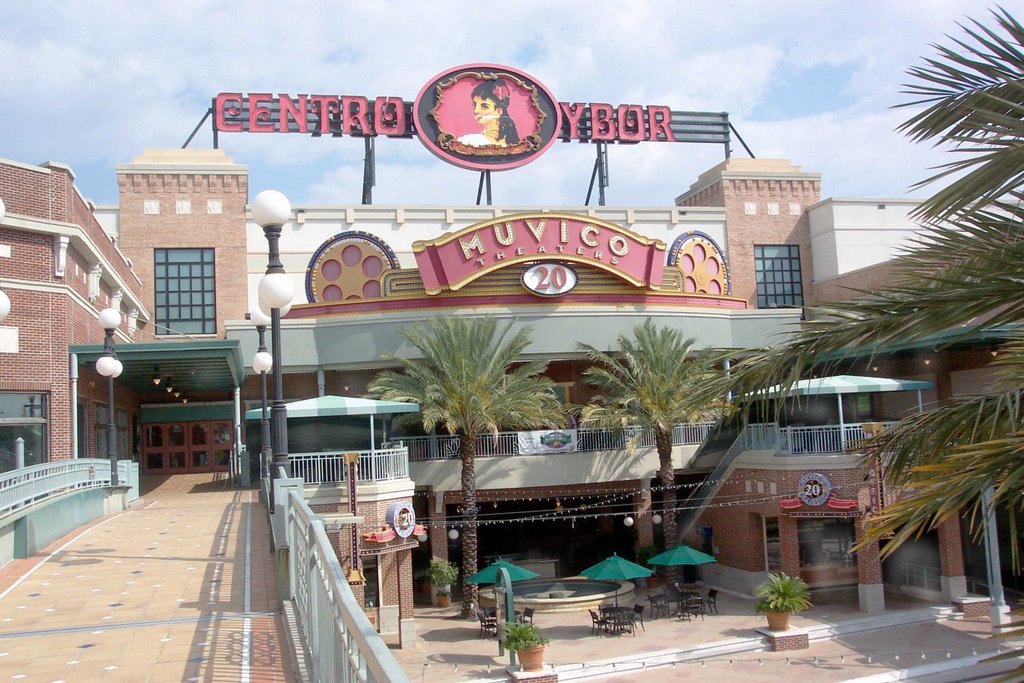
Ybor, named for cigar magnate Vicente Martinez Ybor who founded the community in 1896, is a pleasantly schizophrenic community. A self-guided daytime walking tour will take you from viewing the remaining former cigar factories that have been put to other uses to various statues of local luminaries to Centro Ybor, the commercial center of the community where shopping, dining and nightlife are packed cheek-to-jowl in a curious architectural arrangement -- a bi-level set of brick structures split by Seventh Avenue, Ybor's main thoroughfare.

Many cigar workers lived in casitas, small single-story homes. Three of them have been restored and are part of the Ybor City State Museum at 1818 Ninth Ave. The museum also offers walking tours of Ybor.

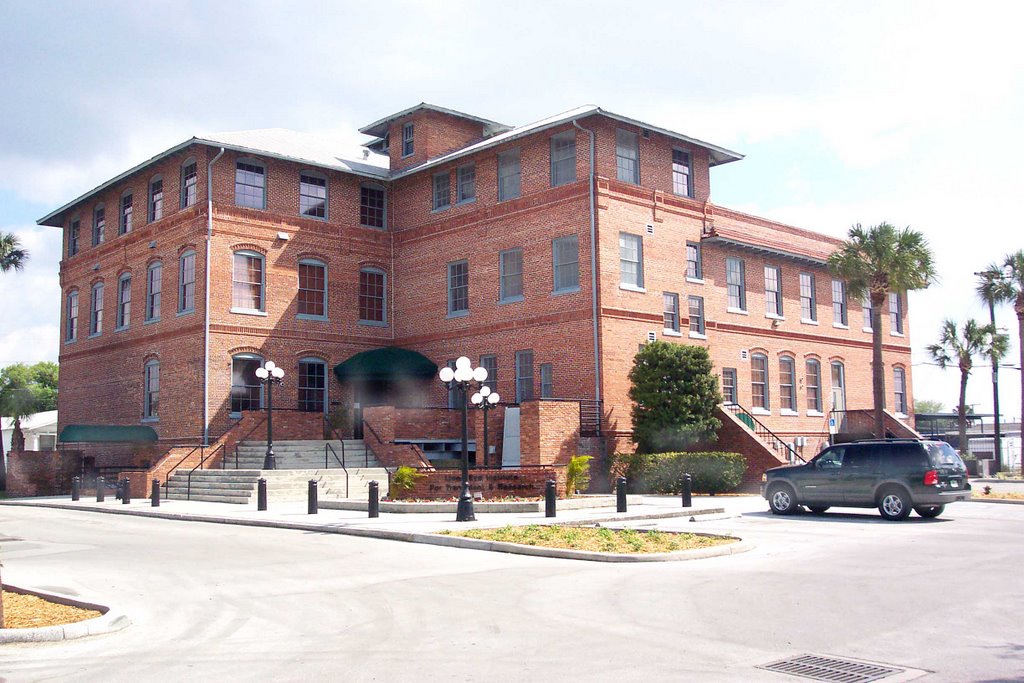
One of the renovated cigar factories is now Ybor Square, a mall filled with dining and retail establishments at 1901 North 13th Street. The 113-year-old building is listed in the National Register of Historic Places.

The Ybor City Brewing Co. -- its Ybor Gold is one of the favorite local beers -- is located in another renovated cigar building, a 104-year-old brick structure at 2205
North 20th Street.

Still another is the 99-year-old former Lozano cigar factory that has been converted to house the Central Florida Lions Eye & Tissue Bank, the world's largest eye bank,
at 1410 North 21st Street.

By day, shoppers, business people, and strolling retirees create comparatively little noise. By night, Ybor is Tampa's hottest hotspot, with a plethora of nightclubs, bars, comedy clubs such as The Improv or the Comedy Works, and casual restaurants drawing everything from college-age kids to Baby Boomers and beyond.

The $50 million Centro Ybor complex includes a 20-screen theater and a high-tech arcade, but even though such offerings usually cater primarily to the younger set, the management has made it more adult-friendly at night with its parental escort policy. After 8 p.m., no one under 18 is allowed in unless accompanied by a guardian 21 or older.

The range of offerings throughout Ybor pays tribute to the community's multicultural sensibilities, from the Irish kitsch of the James Joyce Pub to the drag shows at La
Femme Buvette or the Pleasuredome, or the Georgia/Carolina atmosphere of Moses White & Sons BBQ.

The Green Iguana (there also is one in nearby St. Petersburg) is one of the most popular spots for both social interaction and downright fine food, particularly what is colloquially known as "Floribbean" food, studded with the likes of grouper tacos, fajitas and Jimmy Buffet-esque cheeseburgers. Streetcar Charlie's, one of my favorites, has a large bar and a nice dining area with floor-to-ceiling windows that make it a great spot for people watching while enjoying a good lunch or dinner.

Then there is Gaspar's Grotto, a 10,000 square foot mecca for barbecue events and live entertainment on a large stage in the restaurant courtyard. Inside, a huge bar as well as a pool table-and-sports-TV area take up most opf the room.

The establishment is owned and run by Eric Schiller, a voluble transplanted Bostonian who spent decades at sea, captaining tankers before putting down on land a few years ago when, as he told me during lunch some time ago, "It dawned on me that it might be better to raise a family on dry land."

His love of beer is shown in his willingness to take visitors on a tour of his huge walk-in beer chiller located behind the courtyard of his East Seventh Avenue restaurant.

Those are examples of comparative newcomers. For a taste of old Ybor, I like the 1,200-seat Columbia, which celebrated its 100th anniversary in 2005. It's only a middling restaurant, but an excellent vestige of Flamenco culture, offering old-world Iberian ambiance in intricate tile work, vivid colors and haunting music.

My most enduring memory of a Flamenco show there was watching from a ringside table after dinner as one young lady energetically worked her way through a 20-minute ensemble performance, hammering away with the required powerful staccato steps despite a heavily bandaged ankle. That's show biz.

Lodging possibilities vary in Ybor. In addition to accommodations offered by the Hilton, Hyatt, Marriott and Holiday Inn chains -- the Hilton Garden Inn has an outdoor pool and an indoor workout room, there is my particular choice, the Don Vicente de Ybor Historic Inn, located on Republica de Cuba street.

It was constructed just before the turn of the 20th Century as an office complex by the founder of Ybor City and was used for numerous purposes, including a hospital, before falling into disrepair. Local developer Jack Shiver has restored it as a boutique hotel with gorgeous woods, mosaics and appointments.

Of course, if none of this appeals to you, you might be lured in by Ybor's version of Mardi Gras, a little something known as Guavaween, not to be confused with Tampa's Mardi Gras-style Gasparilla Festival held each February.

The October event draws 100,000 or more to Ybor each year, many in costume, to enjoy a lineup of festivals, concerts and a family fun fest.

Like Mardi Gras, the scene includes women in platform boots, skimpy attire and glitter, and some men similarly attired.

That, too is, show biz.


ON THE WEB
Tampa Bay Convention & Visitors Bureau
• Ybor Online
• Dowd's Guides

A city where it's good to be square

A view of the Guadalajara Cathedral of the Assumption of Our Lady
from the steps of the Teatro Degollado.

A full view from the Plaza de la Liberacion of the Cathedral.

William M. Dowd photos

GUADALAJARA, Jalisco, Mexico -- Far from the mayhem in many of its border towns held hostage by drug cartels, Mexico's second largest city has many things going for it. A low crime rate, high employment, sprawling public parks, a strong public education system. But those are things you have to dig a little to realize. What stands out immediately are the squares.

From small to immense, squares -- or plazas -- create a network of neighborhoods throughout the city. Usually anchored by a church or a large municipal structure, the squares boast architecture that ranges from Baroque to Gothic to Art Deco to Modern, from late 16th century cathedrals to such new attractions as the Guggenheim Museum. It's a sign that an erratic economy in much of the country is felt much less in this city of 5 million.

In all parts of this bustling city, workers are ripping out old sidewalks and roadways, replacing them with pavings hand-imprinted to resemble cobblestones, burying power lines, installing new street lamps and benches. Two reasons are behind the activity: An impending election, with politicians releasing funds for public works projects, and a general spruce-up since the city will host the Pan-American Games in the fall of 2011.


One square that particularly stands out is the Plaza de la Liberacion, which has the Guadalajara Cathedral or Cathedral of the Assumption of Our Lady (La Catedral de Guadalajara or Catedral de la Asunción de María Santísima) on one side and the Teatro Degollado on the other.

The church is the Roman Catholic cathedral of the Archdiocese of Guadalajara and a minor basilica. It is built in the Renaissance style, with neo-gothic towers. It began as a primitive adobe structure in 1541, which was replaced in 1618 by a sturdier structure. Earthquakes in 1818 and 1849 severely damaged it, but over the years it was continually repaired and expanded. However, it has continued to be wracked by earthquakes in 1932, 1957, 1979, 1985, 1995 and 2003.

The interior of the soaring structure is a stunning piece of artwork, with seven side altars. The main altar is made of marble and silver, and the windows are of stained glass imported from France.

An interior view of the Cathedral.

Meanwhile, across the plaza, the Teatro Degollado, which is designed to mimic the famous La Scala opera house in Milan, Italy, is home to a wide range of live performances, from orchestral to dance to operatic.

The Teatro, as seen approaching it from the square.

Both sides of the main theater are lined with box seats,
designed after Milan, Italy's La Scala opera house.

The theater dates from 1866. It originally was known as the Theater de Alarcon in honor of the Mexican dramatist Juan Diaz de Alarcon, but several years later was renamed in honor of its main benefactor, Governor Santos Degollado.

The theater has undergone numerous restorations and expansions since its inception. Its current seating capacity is 1,340, plus a 200-seat recital hall. It is the permanent home to both the Philharmonic Orchestra of Jalisco and the Folkloric Dance Company of the University of Guadalajara.
ON THE WEB
• South of the Border, Down Tlaguepaque Way
Mexico's Day of the Dead a Lively Time
Dowd's Guides

20090401

Underwater museum planned in Egypt

I'm midway through a paperback novel called "The Lost Tomb," in which author David Gibbins ("Atlantis," "Crusader Gold") takes readers underwater and underground in search of lost antiquities.

His goal: decipher Biblical mysteries and help find artifacts for various museums.

Although "The Lost Tomb" is fiction, it is based on much real archaeological research, equipment and procedures. All wrapped up in the guise of an adventure story, complete with dangers real and imagined.

So, with all this derring-do fresh in mind, the announcement that the world’s first underwater museum is being planned caught my attention.

This particular project by the Egyptian government and UNESCO (United Nations Educational Scientific and Cultural Organization) will result in a museum to show the rich cultural and historical heritage that can be found under the Bay of Alexandria in northern Egypt.

UNESCO is expected to start preparatory work this month. The agency has established the "Convention on the Protection of the Underwater Cultural Heritage," a global initiative expected to become operational by the end of 2008 after its ratification by 20 nations.

The convention highlights the importance of saving submerged cultural property, which has become increasingly vulnerable to pillaging with the development of more sophisticated and affordable diving equipment.

The Egyptian complex, according to particulars released by UNESCO, will be built partly above and partly under water. The submerged part of the complex will enable visitors to see archaeological remains on the seabed, representing an important advance in the development of underwater cultural heritage exhibitions.

“The first underwater discoveries in the Bay of Alexandria were made in 1911, so you see that this is already a long, ongoing issue in one of the most ancient harbors of the world,” Ulrike Koschtial, the representative for the UNESCO Convention, told The Media Line.

“The whole Bay of Alexandria actually still houses the remains of very important archeological sites. You have the place of the Pharaohs -– the ancient lighthouse of Alexandria -– which is one of the 7 Ancient Wonders of the World. You have the Polonike Palace, which was the palace of Cleopatra, and there might also be the grave of Alexander the Great,” she said.

Other artifacts recovered from the Bay of Alexandria and adjacent sites will be presented to the public in exhibition sites above water. Adjacent archaeological sites include Abukir Bay, where the vestiges of the sunken cities of Canopus and Herakleion are to be found.
ON THE WEB
• Guide to Underwater Archaeology
• Underwater Archaeology
The Museum of Underwater Archaeology
Dowd's Guides

20090322

Impending Irish taxi strike no joke

April 1 usually is a day for good-natured jokes. In Ireland this year, that will not be the case.

If you're in the country on that day and need a taxi cab, good luck. Taxi drivers are planning a national strike.

Members of the Taxi Drivers for Change group announced the planned strike after their demonstration over the deregulation of licensing failed to make much impact on traffic in Dublin. An emergency taxi service for the elderly and for medical patients would be maintained.

Frank Moore of the Irish Taxi Drivers Federation said he would urge his colleagues to join the protest, but a decision would not be made until his union's meeting next Tuesday.

According to The Independent, the national strike was announced after a delegation of taximen emerged from a meeting with Taxi Regulator Kathleen Doyle and told colleagues she would not commit to limit licensing.

Jim Waldron, of Taxi Drivers for Change, pledged to step up the campaign at Dublin Airport and other locations, the newspaper reported.

"The only fool around here is Transport Minister Noel Dempsey and we're not going to be made fools of on April Fool's Day," he said.
ON THE WEB
Airlines, Ferries, Buses & Trains in Ireland
Dowd's Guides

20090311

Where music is the food and drink of life

TROY, NY -- Restaurateur/musician Ray Wall (right) has the best of both his worlds.

The founder, with Mary Ann Stafford, of the whimsically named Jose Malone's Mexican Irish Restaurant -- a nice tequileria as well as a very good dining spot -- has just announced the establishment's Live Irish Music Schedule for the St. Patrick's Day season ... .

... Wall himself ... plays the hammered dulcimer, bodhran (Irish drum), Irish whistles, and the uilleann pipes, the Irish form of the bagpipes.

[Go here for the full story.]

Cheeseburgers, then rum, in Paradise


William M. Dowd photos


FREDERIKSTED, St. Croix, AVI -- The truck driver in the NFL football jersey placed one end of a curved PVC pipe into a larger, metal pipe in the blacktop driveway, then pulled a lever on his tank.

Moments later, a thick, dark stream of Guatamalan molasses began oozing its way from the tanker truck into the gravity-feed system that filled huge storage tanks at the Cruzan's Diamond Estate Distillery.

Step 1 in the process of creating a line of fine rums -- rum industriale, to be precise -- had been taken.

However, I was most interested in a point in the process that came numerous steps later. Tasting the final product of several Cruzan rums in a blind tasting involving rums from Bacardi, Pyrat and Myers's. Having been fortified with the requisite cheeseburger -- as in Jimmy Buffet's iconic song "Cheeseburgers in Paradise" -- the night before, I was ready to begin.

The tasting was led by Bobby Gleason (who goes by "Bobby G" in his professional life), right, the master mixologist for Jim Beam Brands, which took over the Cruzan operation last year from Absolut.

Gleason's forte is cocktails -- the history of them, the romance of them, the creation of them, and the enjoyment of them. He's a wealth of stories about the high and mighty and the down and dirty from his years as a bartender at the Bellagio in Las Vegas, but he's a star in his own right. Last year, for example, at the Nightclub & Bar Show he shattered the Guinness Book of World Records mark for the number of cocktails made in one hour.

The record had been 179 by London bartender Paul Martin. Gleason flew past it with an astounding 253.

"The rules said you had to complete one cocktail before you began another, had to have at least three ingredients in each one, and each had to be different," he explained. "I think I had four or more ingredients in just about all of mine."

He's just as adept at leading a casually-paced tasting. Sitting in a converted 19th Century carriage house on the Cruzan complex, we sampled nine 80-proof rums of varying style. The results:

Bacardi Superior: A honey fragrance with a surprisingly lingering finish atop banana and apple notes and the characteristic Bacardi mild burn.

Cruzan Estate Light: A gentle nose with honey and applesauce notes, then elements of caramel, vanilla and sweet apple in the mid-range and finish.

Bacardi Reserva: More of the honey nose, but with the added element of butterscotch, which made the slight acidity of the taste a surprise. A round, structured mouth-feel.

Cruzan 2-Year Dark: Here we moved into softer, more refined fragrances of brown sugar and tropical tastes of coconut and pineapple. A very agreeable product.

Bacardi 8: Fragrances of almonds and creme brulee precede a spicy, nutty rum with the tropical notes of pineapple and toasted coconut. Complex and pleasing.

Pyrat XO: This is a blend of rums from nine different pot stills. The strong aroma of orange peel creates an expectation of something like a Grand Marnier, and that's what comes through along with touches of anise and cinnamon. A nice dessert offering.

Cruzan Single Barrel: Vanilla, almonds and allspice all compete in the nose, but the taste is dry, soft and Scotch-like with a hint of orange. Very nice sipping rum.

Myers's Origional Dark: Notes of maple and chocolate in the nose, which match up with the dark color, then more chocolate, plus coffee and some molasses in the haste and finish.

Cruzan Black Strap Navy Style: This two-year-old is flavored with dark molasses, and that's what comes through in the nose and in the initial taste. It quickly softens, and coffee elements come through, leading to a long, smooth finish.

Cruzan and its Diamond Estate Distillery is still run by the Nelthropp family despite having passed through a succession of off-island owners. It now is in its seventh generation with Gary Nelthropp in charge of the daily operation. Although the five-still manufacturing equipment is old, it is kept in good repair and Cruzan can crank out 17,000 cases daily.

"We're expanding our warehousing under Beam Global," Nelthropp said. "We already have 12 warehouses that can handle about 10,000 cases each, but we'll be able to put 23,000 in the new facility."

The weather has changed dramatically over the years on St. Croix. At one time, it was the Caribbean's major sugar producer. When Nelthropp's father was young there were seven rivers that ran full year-round, helping supply the much-needed water.

"Now," Nelthropp says, "there are maybe two. We're not really sure what changed, but the rainfall just disappeared. At one time 85% of the island was planted in sugar cane; now it's virtually zero. That's why we started importing our own molasses, and what we get from Guatamala is very high quality."

Rums made from cane sugar are known as rum agricole. Because Cruzan, the island's lone rum distillery, makes its spirits from molasses which comes from cane, it is known as rum industriale.

Cruzan (pronounced crew-zhawn) matures its rums in once-used bourbon or other whiskey barrels. The aged rum is charcoal filtered. White (light) rum is aged 14 months to four years, the single barrel up to 12 years.

The bottling is done in Florida, which makes economic sense -- 85% of Cruzan rum is sold in the States.
ON THE WEB
• Dowd's Guides

When in Mexico, viva la Cazuela!

April L. Dowd photo

TLAQUEPAQUE, Mexico -- Straight tequilas, whether blanco, reposoda or añejo.

Margaritas, traditional or various fruit flavors.

Typical Mexican beverages, and wonderful drinks all. But what if you're looking for something very neighborhood specific?

I was, while in Mexico last week, and I found it at the El Patio restaurant in this artisan-dominated suburb of Guadalajara — the community’s own drink, called the Cazuela, that is a wonderfully refreshing potion, particularly for hot days like the 85-degree one I was experiencing.

The Cazuela gets its name from the earthenware bowl in which it is served.

It's made with ginger ale or Squirt -- the lowly soft drink so favored as a mixer in Mexico, blanco tequila and squeezes of wedges of orange, lime, lemon and mango, with pieces of the fruits competing with ice cubes for room in the bowl.

This punch-like mixture is, like so many other drinks, subject to the preferences of whoever is making them. Back in 1995, when Mexican food was just beginning its current U.S. uptick beyond some Southern border communities, the much-honored cookbook author Fonda San Miguel ("Tequila! Cooking with the Spirit of Mexico") was invited to serve a lush ethnic meal at the James Beard House in New York.

The Cazuela punch she served with it was a much more complex recipe that included watermelon, pineapple, oranges, grapefruit, carambola (star fruit), lemons, silver tequila, gold tequila and citrus-flavored soda.

Besides the Cazuela drink, the bowl -- which originated in Spain -- also is used to whip up a variety of one-dish meals.

Just two examples: A classic Cazuela in Puerto Rico includes sweet potatoes, cinnamon, cloves, ginger and star anise. In Chile, a common Cazuela involves chicken or beef with potatoes and vegetables in an herbed stock.


ON THE WEB
Fonda San Miguel's Cazuela punch recipe
Travels With My Cazuela
South of the border, down Tlaquepaque way
Dowd's Guides

20090309

Scotch distillery refurbishes visitor center

KIRKWALL, ORKNEY, SCOTLAND -- The Highland Park distillery has opened its refurbished visitors center here at the northernmost Scotch whisky distillery in the world.

It brings to life the distillery, established in 1798, and its integral relationship with the Orkney Islands. Visitors are given samples of the distillery's products at the bespoke tasting bar, which features Orkney drystone walling and traditional oak reclaimed from an original Highland Park washback previously used for the fermentation stage of making the single malt.

A new cask education area highlights the vital role of the sherry oak casks used to develop the complexity of the whisky.

The center also offers something called the "Connoisseur’s Tour," a more in-depth experience which ends in the Tasting Room with a tasting of the malts in Highland Park’s portfolio, including the 12-, 15-, 18- and 25-year-old expressions.

As the company notes, "Visitors can view historic Highland Park memoirs, including a note from Sir Winston Churchill. During World War II, HMS Royal Oak was sunk in Scapa Flow and Churchill visited the distillery. When offered a cup of tea on arrival, he immediately stated his preference for a glass of Highland Park."
ON THE WEB
Highland Park Visitors Center
Dowd's Guides

20090227

(Some) drinks are on US Airways

US Airways, which was the sole major air carrier charging customers for non-alcoholic beverages, bowed to industry and consumer pressure and will rescind the charges as of March 1.

According to a memo to airline employes from upper management, " .... We (are) returning complimentary sodas, juices, tea, water and coffee to US Airways. The free beverage service will resume on March 1. This change reverses part of the a la carte business model we believe is right for our business ... .

"When we launched the beverage purchase program in 2008 we knew it would generate additional revenue. From this perspective the program was very successful. What we didn't know at the time, but later experienced, was that the cabin atmosphere would also improve with fewer carts in the aisles and shorter lines to the lavatories.

"Today, while we remain firmly committed to the a la carte strategy -- we also know it is a work in progress. We know customers don't buy an airline ticket based on whether or not they will get a free soda onboard, but with US Airways being the only large network carrier to charge for drinks, we are at a disadvantage. More importantly, this difference in our service has become a focal point that detracts from all of the outstanding improvements in on-time performance and baggage handling that all of us have worked so hard to achieve over the past year."

That means no more $1 charges for tea or coffee or $2 charges for soft drinks, juices and water.

Very nice. Buh-bye.
ON THE WEB
Dowd's Guides

Thailand temporarily dropping visa fee

Exploring the financial aspects of Asian travel? You may want to take into account a change in Thailand.

The Royal Thai government has decided to exempt the fee for tourist visa applications for a three-month period, March 5 through June 4.

Prime Minister Abhisit Vejjajiva is personally spearheading efforts to revive the nation's tourism industry and boost the country’s competitive position to offset the impact of the global financial crisis.

Thailand presently gives a "visa on arrival" for citizens of 20 countries for a stay not exceeding 15 days. Citizens of another 42 countries are allowed a visa-free stay of not more than 30 days. To stay longer, visitors to apply for visas at Thai embassies or diplomatic missions abroad before their arrival in the country.

Thailand this year is expecting 14 million foreign visitors, with tourism revenue projected at US$14.46 billion.

ON THE WEB

• Tourism Thailand
Dowd's Guides

Historic schooner on summer cycle

William M. Dowd photo

CHRISTIANSTED, St. Croix -- It rose above the smaller sailing craft in the calm harbor waters like a giant reddish cloud. The schooner Roseway wasn't even at full sail, yet its dark canvases dwarfed all around it.

It was a genuine sighting of a floating U.S. National Historic Landmark, something I hadn't anticipated when I plopped down on a boardwalk bench in this small main city of St. Croix to relax and let my eye wander over one of the prettier spots on this down-at-the-heels Virgin Island.

The Roseway was built in 1925, and before it was completely restored two years ago it had served as a racing yacht, a fishing vessel and a pilot boat guiding Allied vessels through minefields and anti-submarine nets during World War II.

The Roseway was the last sail-powered pilot boat in the U.S. when put into retirement in 1972. It segued into use as a charter sailing ship off the Maine coast before falling into disrepair.

When the ship was donated to the World Ocean School in 2002, it was the start of a whole new life. The Roseway makes Massachusetts its warm-weather home and St. Croix its winter home. Each location is home to a World Ocean School office.

Massachusetts was an easy decision. The schooner was built in Essex on Cape Ann just north of Boston.

The 137-foot tall ship has tanbark sails, and its 14 cabins can accommodate up to 32 guests who utilize not only deck space but a large main saloon for dining and socializing.

The World Ocean School is based aboard the Roseway, which it uses as a floating classroom for adults and children. Visitors can take part in extended programs, or just summer daytrips right now departing from the Port Authority Dock at Gallows Bay. For a 2½-hour sail, adults pay $45 ($40 for seniors), kids $30.
ON THE WEB
• World Ocean School
Visiting St. Croix
Dowd's Guides

20090127

One region's Class of '96 brew pubs gone

LATHAM, NY -- I remember the heady days of 1996, when a boom in the creation of brew pubs in New York's Capital Region prompted me to write a cover story for the Albany Times Union's "Preview" magazine covering the trend.

"The tap is nearly wide open in the gradual brew pubbing of the Capital Region," it enthusiastically began.

But that was then, this is now. The Malt River Brewing Co. (above), which opened during that boom in '96, has closed for good. It was the last of the boomlet's enterprises.

Malt River, located in the Latham Circle Mall in suburban Albany County, was owned by Marc Weiss, whose father owned the long-troubled mall that was taken over by creditors earlier this month.

The other brew pubs also founded in '96 that previously bit the dust were The Big House in Albany, the Van Dyke in Schenectady, and the Original Saratoga Springs Brew Pub in the city of its name.

However, the region's first-ever brew pub, the River Street, Troy, establishment originally called Brown & Moran, later called the Troy Pub & Brewery and now with the name Brown's Brewing Co. emblazoned on its Web site, still is going strong under Garrett Brown, president and CEO, who has slowly been constructing another major brewing complex in rural Rensselaer County.

And Gary “Goose” Gosselin, owner of Brunswick Barbecue & Brew, a new restaurant in the former Styx Restaurant in Cropseyville just outside Troy, told me he plans to hook up his current beer-making equipment to turn the restaurant into a true brew pub this year. Incidentally, Malt River is one of the stops on Gosselin's extensive beer-making resume.
ON THE WEB
Brown's Brewing Co.
Brunswick Barbecue & Brew
Dowd's Brews Notebook
Dowd's Guides

Blog Archive