20050916

Egrets and herons and geese, oh my

The quick rustling in the cattail reeds and marsh grass at the edge of the pond put me on alert. The sudden beating of powerful wings and a loud, clacking kuck kuck kuck sound startled me nevertheless.

"What is it, a wood duck?'' asked my companion, whose view of the bird was blocked by the thick stand of trees it flew into.

"No, the neck's too long,'' I said, maneuvering for a better look.

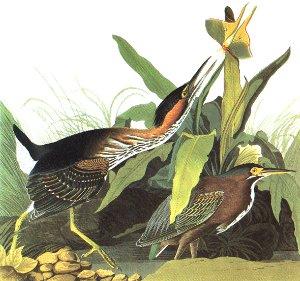
The insistent kuck kuck kuck continued, the bird obviously trying to lure us away from a nest it thought we might disturb. That's when it raised the shaggy crest on its dark head, a sharp contrast to its white throat, chestnut-colored neck and bluish-green back.

Ah, ha. A green heron.

No wonder I love playing golf.

The site of this none-too-frequent sighting was the Brunswick Greens Golf Club, a little upstate topographic gem just outside Troy, NY, not far from the Hudson River. But, it didn't have to be. As a gypsy golfer who plays only sporadically and belongs to no particular club, I've been privy to observing wildlife on numerous courses in the area.

Given my particular level of play -- sub-par in the truest sense of the phrase -- I've also had many opportunities to go thrashing about in woods, ponds, swamps and undergrowth in search of an errant ball. It's amazing how many snakes, rabbits and chipmunks a clumsy golfer can flush out of hiding, along with the occasional skunk.

But there is nothing like simply watching, without disturbing, golf course wildlife.

On the day I saw the green heron, my buddy and I sat sipping cool drinks after a round of destroying golf balls but not our self confidence.

As our gaze swept over the rise and fall of the course, taking in the views of lush green grass and stands of paper birch, dense pines and maples, towering red oaks and fernlike black walnut, a majestic white bird swooped low over a pond barely 50 yards from us.

It touched down like a feather, its brilliant white plumage and long, thin black legs in sharp contrast to the manicured emerald grass. It was a great egret, often mistaken for the snowy egret but differentiated by its black feet compared to what bird watchers refer to as the snowy's "golden slippers.''

The slender, stately creature extended its neck toward the water, then gently stepped into the pond, causing barely a ripple. The hunt for food was on as nature maintained its eternal rhythm despite the staccato tsss tsss tsss of an oscillating sprinkler and the occasional cries of golfers alternately cursing and cheering their shots.

These solitary waders are in sharp contrast to that most prolific of wild birds, the Canada goose.

You don't have to be on a golf course to spot the muscular 12-15 pound honkers that drop off the Atlantic Flyway migratory path to winter here, but it is on those courses they display a particularly belligerent attitude, helped along by their strength of numbers.

I recall one early autumn afternoon I was leisurely tracking down an errant 3-iron shot near a large pond.

Off in the distance I heard a soft, thrumming sound. As I zeroed in on its source, I realized it was a wave of Canada geese maneuvering for a pond landing.

Fluttering wings extended above them, they were aiming straight down. As they hit the surface the slapping sound of webbed feet on water was like a muffled orchestra percussion section, supplying the meter for this aerial ballet.

No sooner had they landed and paddled to one end of the pond, a second wave came in. Then a third. And, finally, a smaller fourth wave of stragglers that had formed up overhead as the stronger flyers took care of business down below.

It was an elegant, inspiring sight that stopped all the golfers in their tracks to watch as the rays of the late afternoon sun bounced off the smooth feathers and rippled water, adding accents to the tableau.

The euphoria such unexpected simple pleasures can inspire was, however, short lived. By the time I found my ball, most of the geese had exited the pond in search of food and had surrounded the ball.

As I stood knee-deep in honkers, unable to swing my club too far for fear of striking one of them and prompting retribution from the notoriously grumpy birds, I wondered if the experience was worth the trouble.

But the day I saw the green heron brought back memories of so many such outings that I knew, of course, it really was no trouble at all.
ON THE WEB
All About Birds
About Birding/Wild Birds
Official Birds of All States
Wildbirds.com
Ornithology: The Science of Birds
North American Birds Photo Gallery

20050821

On the Road In Search of My Darby Duck

April L. Dowd photo


DUBLIN, IRELAND -- It was the early '50s in the tiny kitchen of a third-floor walk-up in Darby, a Philadelphia suburb then dominated by second-generation and recently arrived Irish.

The young visitor from New York is balking at the chicken dinner being put on the table in front of him.

"I don't like chicken," the young ingrate mutters to his gray-haired granny.

" 'Tisn't chicken, darlin' boy," she says in her light brogue, a hint of a smile playing around the creases of her work-worn face. " 'Tis Darby Duck, and there's no finer dish you can have in Ireland or here in my kitchen."

Quickly convinced, as kids often are by their elders, he dug into the dish with enthusiasm. "Darby Duck" had won a lifelong convert.

One fine night many, many years later, the ex-kid was sitting in a venerable old pub in Kinsale, a picturesque seaport town on the south coast of Ireland's County Cork, pondering what to have for dinner.

The most recommended dish was a roast chicken.

"Darby Duck," he thought. "Sure and there'll be no finer dish here in Ireland or even at home in my kitchen."

And, 'twas true.

We had headed for a motor vacation in Ireland determined to overcome the negative stereotype about Irish food. You know: "What's a seven-course Irish meal? A potato and a six-pack." "You can have your meat any way you like it, as long as it's mutton."

True foodies, the four of us -- the missus amd I plus Mr. & Mrs. Brown, our frequent traveling and dining colleagues -- assumed we could break the mold. Impossible, others told us. "Ireland is where you go to drink, not to eat." "I actually lost weight there in one week of bad food." And on and on.

Our first night in Ireland made us wonder a bit. We'd flown into Dublin, planning to motor around the east and south coasts, then up into the west coast wilds of County Clare -- where that old granny had come from -- before heading back down to Shannon and flying home eight days later.

We checked into our hotel -- the beautifully converted Clontarf Castle, site of one of the epic battles for Irish warrior king Brian Boru -- and asked for advice.

Where, we asked, is the best place for local food?

Well, said the bell captain in all seriousness, it depends on what you're looking for. The best in the city is Italian, Thai or Chinese.

Of course it is. And isn't that true in most places these days unless you're so far off the beaten path you're creating an entirely new one?

The ubiquity of various ethnic foods is widespread. Whether you're in Ireland or the States or in the Caribbean, Europe or Asia, you're assailed by many of the same choices -- Italian, Thai, Chinese, Indian, Pizza Hut, McDonald's, TGI Friday, KFC and so on.

We chose Italian, and after a very serviceable meal at a pasta palace, retired to our hotel.

Under a vaulted ceiling in the castle's stonewalled pub, one of the gentlemen in our party had a tall, lukewarm, alluringly dark Guinness draft while the other tried to get over his jet lag by teaching the pleasant young bartender how to make a bourbon Manhattan. Sort of a cross-cultural evening, but it set the tone for the beverage portion of our trip.

And then it was off for a 600-mile string of B&Bs, sheep, village and city pubs (one of them, Cruise's in Ennis, County Clare, was founded in 1654), sheep, breathtaking vistas, sheep (as humor writer Dave Barry has noted, Ireland appears to be an island slowly being consumed by sheep), makers and purveyors of crystal and sweaters, sheep, and some interesting meals. And sheep.

In the aforementioned Kinsale pub, we dined on excellent roasted chicken: lightly seasoned, succulent white meat, browned skin with no hint of greasiness -- Darby Duck at its finest, plus oven-browned potatoes, tender carrots, dense soda bread slathered with the rich Irish butter and pots of robust dark tea.

And, of course, some of our party opted for a pint or three of the Guinness while some others helped along another pillar of the Irish economy by surrounding a few drams of smooth, golden Jameson's whiskey.

(As a concession to the many Americans who flood the island each year, it no longer is an effort to get a bit of ice in your drinks.)

Of course, there were other, more elaborate meals here and there that show the emergence of continental-trained chefs bringing their newly honed skills back home to broaden the cuisine -- a particularly fine set of fork-tender beef medallions in a green peppercorn/sherry/cream sauce; a Cajun-spiced chicken sandwich with a tomato-paste salsa topping the equal of any sandwich saucing I've ever had; fresh-caught salmon or sole that you know just came off the fishing boat at the local pier; calorie-be-damned ice cream sundaes draped in honey or butterscotch or dusky, cocoa-y chocolate; any kind of potatoes (and at many meals you got french fries -- "chips" -- in addition to mashed, boiled or roasted potatoes), and wonderful yeasty white breads and flavored soda breads.

So, while I'd never consider Ireland a cuisine destination place, I'd certainly argue against the notion that it's a nation of culinary Philistines. A little intelligent scouting around will help you uncover food just like at home, or something with a bit of a local flavor.

Virtually all the pubs serve food, and sitting on the bar side of a pub/restaurant will usually get you the same menu but at a reduced price. The saving comes from having to go to the bar and bring back your own drinks, and sit at little cocktail tables rather than full-size tables. But that's a tiny thing for the 10 to 20 percent saving. And when you're in a true Irish pub, the last thing you want to do is be in the restaurant separated from the bar and the conversation (real conversation, about life and love and politics and travel and finance) and -- sterotypical as it sounds -- the frequent impromptu sing-alongs.

And you don't have to be a drinker to take up space in a pub. Soft drinks (from Coca-Cola to the delicious local Finches sodas) as well as juices, coffee or tea are not an unusual order.

But wait, you say, what about the "full Irish breakfasts" of tourist legend?

Ahhh, `tis true about them. A bowl of porridge, a rack of toast with rich butter and marmalade, orange juice, a platter of fried or scrambled eggs, broiled tomatoes, Irish bacon (closer to what we call Canadian bacon), slices of fried pudding (more like a dense sausage, either "white" or "black" pudding, the former made with meal and spices and sometimes a bit of meat, the latter made dark with blood), plus a carafe of strong tea or coffee with rich fresh cream.

Does everyone in Ireland eat breakfast like this?, we asked the slim hostess of a hotel restaurant located on the promenade of Galway city, overlooking misty Galway Bay.

"Oh, Lordy no," said she. "That's mostly for the tourists. If you ate like that all the time it'd kill you."

ON THE WEB

• The New Irish Cuisine

You Live In ...

You Live in New Hampshire when ...

1. You only have four spices: salt, pepper, ketchup, and Tabasco.

2. Halloween costumes fit over parkas.

3. You have more than one recipe for moose.

4. Sexy lingerie is anything flannel with less than eight buttons.

5. The four seasons are: winter, still winter, almost winter, and construction.

You live in the Midwest when ...

1. You've never met any celebrities, but the mayor knows your name.

2. Your idea of a traffic jam is 10 cars waiting to pass a tractor.

3. You have had to switch from "heat" to "A/C" on the same day and back again.

4. You end sentences with a preposition: "Where's my coat at?"

5. When asked how your trip was to any exotic place, you say, "It was different!"

You live in the Deep South when ...

1. You can rent a movie and buy bait in the same store.

2. "Ya'll" is singular and "all ya'll" is plural.

3. After five years you still hear, "You ain't from 'round here, are ya?"

4. "He needed killin' " is a valid defense.

5. Everyone has two first names: Billy Bob, Jimmy Bob, Mary Sue, Betty Jean, Mary Beth, etc.

You live in New York City when ...

1. You say "The City" and expect everyone to know you mean Manhattan.

2. You have never been to the Statue of Liberty or the Empire State Building.

3. You can get into a four-hour argument about how to get from Columbus Circle
to Battery Park, but can't find Wisconsin on a map.

4. You think Central Park is "nature."

5. You believe that being able to swear at people in their own language makes you multi-lingual.

6. You've worn out a car horn.

7. You think eye contact is an act of aggression.

You live in Florida when ...

1. You eat dinner at 3:15 in the afternoon.

2. All purchases include a coupon of some kind, even for houses and cars.

3. Everyone can recommend an excellent dermatologist.

4. Cars in front of you are often driven by headless people.

You live in Arizona when ...

1.  You are willing to park three blocks away because you found shade.

2.   You can open your car without touching the door and you can drive your car without touching the steering wheel.

3.   You've experienced condensation on your butt from the hot water in the toilet bowl.

4. You can attend any function wearing shorts and a tank top.

5.   "Dress Code" is meaningless at high schools and universities. Picture lingerie ads.

6.   You can drive for 4 hours in one direction and never leave town.

7.   You have over 100 recipes for Mexican food.

8.   The four seasons are: tolerable, hot, really hot, and ARE YOU KIDDING ME??!!

9. You know that "dry heat" actually is comparable to what hits you in the face when you open your oven door.

You live in California when ...

1. You make over $250,000 and still can't afford to buy a house.

2 The high school quarterback calls a timeout to answer his cell phone.

3. The fastest part of your commute is going down your driveway.

4. You know how to eat an artichoke.

5. When someone asks you how far something is, you tell them how long it will take to get there rather than how many miles away it is.

You live in Colorado when ...

1. You carry your $3,000 mountain bike atop your $500 car.

2. You tell your husband to pick up Granola on his way home and he stops at the day care center.

3. A pass does not involve a football or dating.

4. The top of your head is bald, but you still have a pony tail.

Thanks to our good friend Dave LaCascia who passed along this compilation.

20050811

NY breaks ground for wine/food center

William M. Dowd photo


CANANDAIGUA, NY -- Call it Copia Lite if you like, but if the movers and shakers behind the New York Wine & Culinary Center project for which ground was broken on Aug. 10 are correct, you'll be comparing it to the Napa Valley, CA, food and wine institution before long.

The plan is to construct and open the center by early summer of 2006, an ambitious target for the $7 million project being financed by $2 million in state funding and the rest from various private funds. The center will be located on the shore of Canandaigua Lake and will serve as a gateway to the state's wine, food and agricultural areas.

Gov. George E. Pataki (at the center of the photo during the ceremonial groundbreaking), who recently announced he will not seek another term, was on hand for the event.

"From North Country apples to Long Island wine, the New York Wine and Culinary Center will be a celebration of New York's agriculture and its many offerings," he Pataki said. "We are proud to be a partner in this tremendous effort that will showcase New York's rich abundance of outstanding food and wine products and our agricultural heritage in this new state-of-the-art facility located right here in the heart of the Finger Lakes."

The major private backers are Constellation Brands, the locally0headquarterd company that is the world's largest manufacturer and distributor of alcoholic beverages; Wegman's Food Markets, a Western New York chain, and Rochester Institute of Technology's Hospitality and Service Management School.

The mission of the Center will be to foster knowledge in the wine, agriculture and culinary arts industries across New York State. To do so, the Center will offer hands-on courses in culinary science; interactive exhibits on New York State agriculture, foods and wines; demonstration space; and a live garden outside of the building.

The 15,000 square-foot facility will include a tasting room with a rotating selection of wines from New York's major regions (Niagara/Lake Erie, Finger Lakes, Hudson Valley and Long Island), a wine and tapas bar for light meals and wine-and-food pairings, a theater-style demonstration kitchen, a training kitchen for hands-on cooking classes, and industrial kitchens for credited culinary classes and corporate training. It also will house the offices of the New York Wine and Grape Foundation.

Said state Agriculture Commissioner Nathan L. Rudgers, "New York is an agricultural powerhouse. So much of our present culture, achievements and local community development are derived from agriculture that it is important to educate and promote the importance of this industry. The Center will highlight our wine and agricultural products, agri-tourism and focus on developing value-added products."

Agriculture is one of New York's most vital industries, encompassing 25 percent of the state's landscape and generating more than $3.6 billion last year. It has 7.6 million acres of farmland with 36,000 farms and is the nation's third-largest wine-producing state after California and Oregon.
ON THE WEB
Dowd's Guides

20050725

Wines That (help you) Travel Well


Wine lovers usually have scouted out the best spots in their own backyard, but what about when they're on the road?

There are plenty of guides around, but we find the annual awards given by Wine Spectator magazine are as reliable as any. Each year, the editors of the magazine make awards in three categories -- Grand Award, Best of Award of Excellence, and Award of Excellence. The complete list of 3,606 restaurants is available in the Aug. 31 issue, but we've extracted a list of the best state by state and around the world.

Here are the winners of the 2005 Grand Awards. Note there are just 86 of them, and any state or country not listed has no Grand Award winners this time around.

Arizona - Anthony's in the Catalinas, in Tucson; Mary Elaine's at The Phoenician Resort, in Scottsdale.

California - Cafe Tiramisu, Restaurant Michael Mina, The Carnelian Room, Rubicon, Restaurant Gary Danko, in San Francisco; The Chef's Table, in Fresno; Club XIX, in Pebble Beach; Grasing's, Casanova, El Paseo, on Mill Valley; Marinus, in Carmel Valley; Restaurant 301 at The Hotel Carter, in Eureka; The Sardine Factory, in Monterey; Sierra Mar on Big Sur, in Carmel; Horseshoe Bar Grill, in Roseville; The Restaurant at Domaine Chandon, in Yountville; Zibbibo, in Palo Alto; Patino, in Los Angeles; Il Grano, in West Los Angeles; Osetra the Fishhouse, in San Diego; Cuistot, in Palm Desert; Valentino, in Santa Monica; The Winesellar & Brasserie, in San Diego; The Cellar, in Fullerton; Wine Cask, in Santa Barbara.

Colorado - The Keystone Ranch Restaurant, in Keystone; Ruth's Chris Steak House, in Denver; Zach's Cabin, in Avon; Flagstaff House, in Boulder.

District of Columbia - Galileo da Roberto Donna.

Florida - Bern's Steak House, in Tampa; L'Escalier at the Florentine Room, in Palm Beach.

Illinois - Charlie Trotter's, in Chicago; Carlos' Restaurant, in Highland Park.

Louisiana - Brennan's, Emeril's, in New Orleans.

Massachusetts - The Federalist, in Boston; Silks at Stonehedge Inn, in Tyngsboro; Topper's at The Wauwinet, in Nantucket.

Missouri - JJ's, in Kansas City.

Nevada - Aureole, Delmonico Steakhouse, Piero Selvaggio Valentino, Picasso, in Las Vegas.

New Mexico - Billy Crew's Dining Room, in Santa Teresa.

New York - Alain Ducasse at The Essex House, Cru, Daniel, Feledia Ristorante, Montrachet, Tribeca Grill, '21' Club, Veritas, in New York City; The American Hotel, in Sag Harbor; Crabtree's Kittle House Inn, in Chappaqua; Friends Lake Inn, in Chestertown; .

North Carolina - The Angus Barn, in Raleigh.

Vermont - The Inn at Sawmill Farm, in West Dover.

Virginia - The Inn at Little Washington, Washington.

Washington - Canlis, Seattle.

OUTSIDE THE U.S.

Canada - Sooke Harbour House, in Sooke; Opus Restaurant on Prince Arthur, in Toronto; Via Allegro Ristorante, in Etobicoke; Bistro a Champlain, in Marguertie du Lac Masson.

Anguilla - Malliouhana Restaurant, in Meads Bay.

Bahamas - Graycliff, in Nassau.

France - Alain Ducasse au Plaza Athenee, La Tour d'Argent, Le Cinq, Michel Rostant, Taillevent, in Paris; Troisgros, in Roanne; Au Crocodile, in Strasbourg.

Germany - Restaurant Jorg Muller, in Sylt-Westerland.

Italy - Bottega del Vino, in Verona; Enoteca Pinchiorri, in Florence; Guido Ristorante, in Bra; Il Poeta a Contadino, in Alberobello; La Pergola, inn Rome.

Japan - Enoteca Pinchiorri, in Tokyo.

Macao - Robuchon a Galera.

Monaco - Le Louis XV - Alain Ducasse.

Singapore - Les Amis.

Spain - Atrio, in Caceras.

Switzerland - Landgasthof & Vinothek Farnsburg, in Ormalingen; Restaurant Riesbachli, in Zurich.

20050722

Provincetown, Cape Cod's Most Frantic Spot

William M. Dowd photos


PROVINCETOWN, MA -- The man in the bow held one oar out of the water, feathering the other to act as a rudder. His partner in the stern gamely kept pulling with both oars. Slowly, the chunky rowboat turned, its prow now aimed directly at the Provincetown II, the largest Cape Cod Bay scenic cruiser, which was moored to the foot of MacMillan Wharf.

With a little more maneuvering, its crew managed to bring it alongside the cruiser, but it was a precarious spot. The usually calm waters of Provincetown Harbor were churned up by a steady stream of boats making their way to the processional lineup at the other side of the wharf.

"Hey, Father!'' called a woman who had been hanging on the rail of the larger vessel, peering down at the rowboat bobbing 20 feet below. "Maybe you better bless 'em early. I don't think they can make it around again.''

The Rev. John Raposo of St. Peter's Church in Provincetown obligingly shook the aspergillum, and a spray of holy water droplets from the wand went over the side and onto the rowboat and its occupants.

The scene was five years ago at what then was the 53rd annual Blessing of the Fleet. It had begun 15 minutes early, with that small interloper jumping the line. But, hey, it was Father John's first crack at the job, and everyone likes to put his own stamp on an event.

This year, Blessing No. 58 took place as the culmination of a three-day festival each June that marries the pervasive Portuguese heritage with tourist kitsch, both endemic to this fishing port.

Parties, concerts, exhibits, fishing derbies for adults and kids, and the arrival of dozens upon dozens of boats of all sorts ushers in the high season for P-town.

On this sweltering Sunday, as the Cape Cod Fiddlers held forth on a makeshift stage down the wharf, and a procession carried a statue of St. Peter the apostle known as The Fisherman to the end of the wharf, the crowds gathered to walk the gangplank onto the Provincetown II to get the best view of the procession of boats.

The blessing originated as a special event for the fishing fleet, but it has grown in scope each year. This time it included speedboats, fishing boats, sightseeing boats, pontoon boats, the new Midnight Gambler that offers thrillseekers gaming tables offshore, even an inflatable one-man craft that made the rowboat look like a cabin cruiser.

Festooned with pennants and flags, crewed by girls in bikinis and shirtless, buff young men in cutoff jeans or by grease-stained working sailors, the boats passed in a seemingly endless parade.

The priest in charge of the blessing kept spritzing water, the boaters kept waving and whooping in return, and the crowd that had trooped onto the Provincetown II crowded the rail so energetically that the cruiser noticeably listed to port.

Summer in P-town, the pace at full bore and not slowing down until mid-September. At the northern tip of the Outer Cape, this town renowned for its art galleries, cafes, nightclubs, clever landscaped alleys, colorful cottages and guests houses and family-friendly/gay-friendly attitude will continue to be packed with strollers, shoppers, sightseers and assorted other folks.

The seasonal shops along narrow, bustling Commercial Street that runs the length of town are vying with the year-round businesses for tourist dollars. In a leisurely stroll, you come across everything from a Hallmark store to a drag nightclub, from fine dining to a saltwater taffy shop, from modern home decor offerings to antique finds.

A few of the major draws on the P-town schedule beyond the plethora of clubs, bistros, drag reviews, art exhibits, sunbathing, kite flying, bicycling, fishing, swimming, dune tours, sailing and dining:

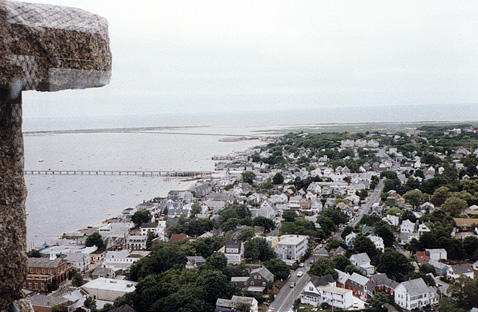
Pilgrim Monument and Provincetown Museum: The view of P-town from the monument tower (shown above) provides only one highlight of this institution which tells visitors a lot about Cape Cod history.

Theaters: C.A.P.E. Inc., Meetinghouse Theater, Provincetown Theater Company. Details for shows and tickets: (508) 487-2400.

Concerts: "Sundays at Five,'' a weekly program at the Universalist Meeting House, 236 Commercial St., of concerts featuring the music of Gershwin, Shostakovich, Mozart, Dvorak, Celtic and Irish traditional works and more at $10 a ticket. Reservations: (508) 487-2400.

Whale-watching: Cruises set out several times daily from a variety of competing slips on Macmillan Wharf. Stroll down and check out who is offering the best prices of the day. Cape Cod Bay is a fantastic place for seeing a variety of whales that come to the calm waters to feed, and some sightseeing boats offer free rainchecks if no behemoths are spotted.

ON THE WEB

  • • Pilgrim Monument & Provincetown Museum
  • • Provincetown Chamber of Commerce
  • • Fine Arts Work Center
  • • Provincetown Calendar of Events
  • 20050714

    Cameras, colleges and culture

    ROCHESTER, NY -- This is a city built on Lake Ontario, but more accurately it was built on photography -- the Eastman Kodak empire that pioneered many aspects of still and motion picture photography, including the mechanics, the film, the processing and the vision of the field.

    Many of the Kodak dollars went into the community, creating a culture rich in colleges, museums and the arts. This web page will help you connect to many of the cultural sites of this gem of a city located on the shore of one of the five Great Lakes -- a fishing and boating mecca despite its reputation as a Snow Belt city.

    Like any older city, Rochester has its financial problems and some rundown neighborhoods to go with them. But, despite the loss of so much "company town" money that nourished it when Kodak was in its prime, it retains a significant cultural sphere.

    A few examples: The Eastman House (shown above), The Frederick Douglass Museum & Cultural Center, National Warplane Museum, New York Museum of Transportation, Rochester & Genessee Valley Museum, Rochester Museum & Science Center, and the Strong Museum.
    ON THE WEB
    Greater Rochester Visitors' Association
    Eastman School of Music
    Lake Ontario Fishing Guide
    Rochester Museum & Science Center
    Strong Museum (for children)
    National Warplane Museum

    Cowboy food in the Big Apple

    The latest food craze in New York City is American. Wild West American.

    The newsest emporium of such fare is Maremma. If that sounds Italian, it is. Let us explain.

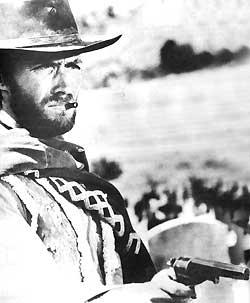
    The region called Maremma is an area of Tuscany where a lot of "spaghetti westerns" -- those Italian-made U.S. western movies that helped spring Clint Eastwood to stardom, for example -- were shot. The restaurant called Maremma, located at 228 West 10th St., is owned by chef Cesare Casella. It has a western theme despite the Italian influences.

    Movies and western dining seem to be going hand in hand here. Movie director Bob Giraldi, who has a longtime business relationship with restaurant owner/chef Jean-Georges Vongerichten, is opening two new restaurants this summer. One is Diablo Royale at 189 West 10th St., near Maremma. It will have a modern Mexican menu and a Wild West saloon motif. He's staying mum on the theme of the second.
    ON THE WEB
    • Emeril's Western recipes
    • Wild West theme party for kids
    • Western cookbooks
    • Ranch-style cooking with a twist
    • New York magazine's NYC dining guide
    • City Guide magazine's NYC dining guide

    20050711

    Arizona: Land of Contrasts


    From Phoenix to phantoms, Arizona is a state that lives by contrasts.

    The sophistication of the capital city, as well as smaller communities such as Tucson and Scottsdale, hold the political and cultural segments of most of the state. However, its rich environmental and indigenous people have left a legacy for the modern world as well.

    The Phoenix area, located on the upper edge of the Sonoran Desert,  was settled about 1,700 years ago by the Hohokam people who built a sophisticated series of waterways to irrigate crops. They eventually disappeared, perhaps because of a sustained drought, although no one knows the precise reason.

    It took until the 1860s for the area to be reborn, with a farmer named Jack Swilling forming an irrigation company to construct canals to bring lifegiving water to the area. The name "Phoenix" -- after the mythical bird that is reborn from its own fineral pyre -- was selected to represent the strength of the newest settlement.

    In 1881, the city was incorporated. The beginning of the tourism boom and a steady rise in people moving here eventually led to Phoenix becoming the seventh largest city in the nation.

    The state also is home to several Indian reservations and numerous Indian communities. Some welcome tourists, others are quite private. Many of the Indian communities connect natural elements -- such as the towering sauguro cactus seen above -- to their tribal religious and cultural events.

    Hot air ballooning and gorgeous scenery are two of the biggest attractions in Monument Valley, and the splendors of the Grand Canyon create one of America's top tourist draws. And, a mixture of natural markings and glyphs carved into the rock surfaces by indigenous people long ago are a drawing card at the Painted Rock State Park.

    ON THE WEB

    • Colleges and universities
    • State parks
    • Lodging connections
    • Business and finance
    • Jim Harvey's Arizona history column

    20050710

    A Lemon Frock and a Cold Wadadli

    April L. Dowd photos


    ENGLISH HARBOUR, Antigua -- It had been a long time since she had been to Shirley Heights for a Sunday steel drum orchestra concert. Lavinia wanted to make a good impression on anyone who might notice her.

    Yes, the lemon yellow frock, she thought. And the matching yellow picture hat. They would be perfect.

    She missed Lionel. He hadn't been particularly fond of the steel drums -- "Bloody noisy cans," he'd called them in his grumpily good-natured way -- but he was kind enough to take her up to the old British fort every few weeks. He contented himself with the spectacular view of English Harbour far down below while she was busy enjoying the music and the visitors who flocked to Antigua in the early months each year to luxuriate in the brilliant sunshine when coverlets of snow were the order of the day back home in Britain and Australia and the United States.

    It had been more than a year since Lionel had passed on, but a return to England still was out of the question even at her advanced age. A life spent mostly in the British West Indies as the wife of a foreign service official didn't exactly make one want to move on, even if a spouse of nearly 50 years no longer was here to share the daily adventures.

    Lavinia had finally grown restless and felt the need of an outing to a familiar spot. Her driver parked the car at the foot of the path leading up to the ruins of the old stone observation post that had been the guardian of the British Navy's Caribbean fleet under the iconic 18th century naval hero Horatio Nelson.

    Lavinia paid her $4 US -- odd, she thought, how the Yankee dollar had become the common currency in the Caribbean -- to the polite young men in the wooden guard shack, receiving in exchange an entry ticket that also entitled her to one cocktail or a beer in the former fort building that now served as a pub. As if that would entice her.

    Lavinia skirted the building and made her way along the steep rock ledge where the plateau fell sharply away. She wanted to stake out a spot next to the covered pavilion where tourist children already were performing those little show-off dances children often do when music is played in public places. Meanwhile, their suburned parents were queing up at the various rudimentary barbecue stands that dotted the grounds.

    As the rhythm of the steel drums gathered momentum and the rays of the descending sun glanced off the mountains guarding English Harbour, Lavinia swayed almost imperceptibly to the beat while less inhibited visitors clapped hands and wiggled hips in time to the sensuous music. And, she thought of Lionel.

    Of course, all this is mostly supposition.

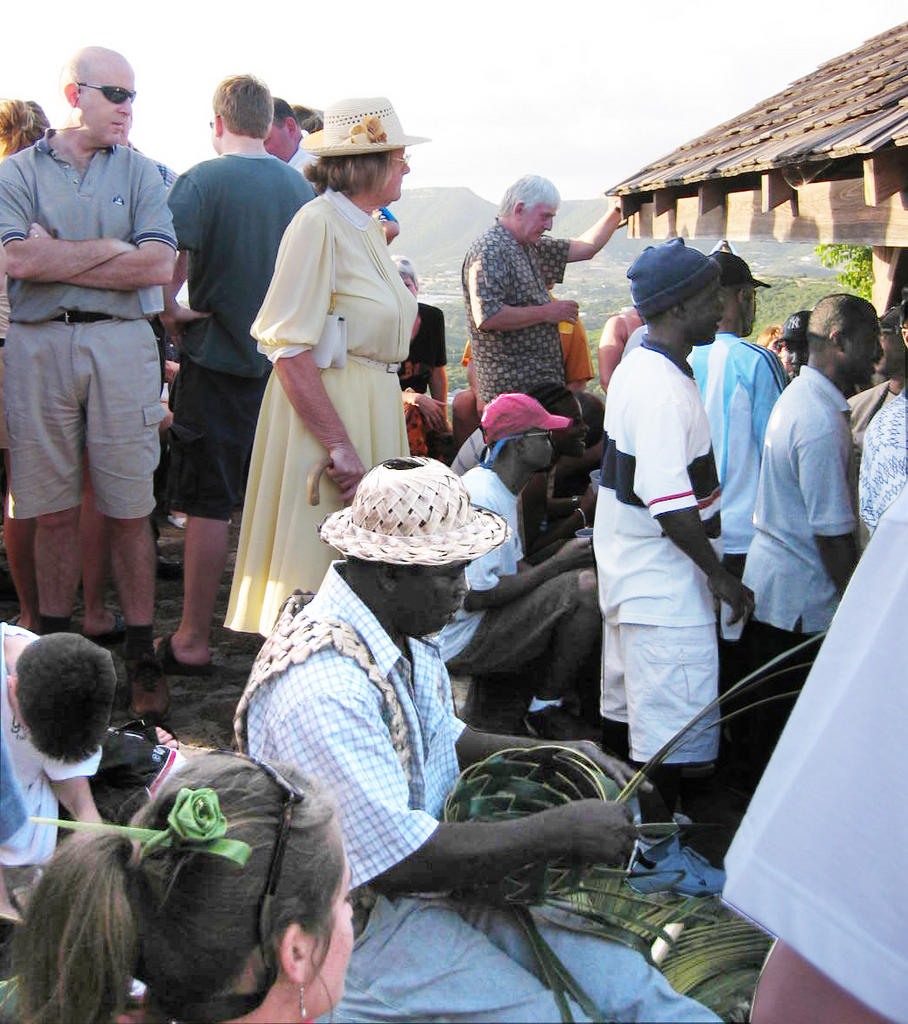
    The crowd was real and the details described are real, and the woman in the lemon yellow dress and hat was most assuredly very real the evening I stood on Shirley Heights, even though she seemed to have a mystical knack of never being in a clear line of sight for the camera.

    I could only imagine the details of her life, loathe as I was to intrude on her obvious pleasureable solitude in the midst of a crowd of jabbering Yanks, Aussies and Britions, most of them jarringly dressed in shorts or jeans and T-shirts and athletic shoes of every hue.

    Her ensemble was too calculated, too British in the way we have come to know over the years. But she was so perfect in so many ways, a sharp reminder that Antigua remains a British island in ways at once obvious and imperceptible despite being granted its independence in 1981.

    Begin with the place names -- English Harbour, Nelson's Dockyard National Park, Clarence House, Shirley Heights, Dow's Hill Interpretation Center, Fort Berkeley and the tiny communities of Gray's Farm, All Saints, Falmouth Harbor, Dickenson Bay and so forth all smack of English heritage. As does the national language -- "Broken English," explained Cleo, a smiling waitress at one dining spot when asked what Antigua's official language is.

    And pay attention to the most popular game on the island: cricket, the British game that became an Antiguan obsession. The official season lasts from January to July. Matches are played all over the island, but the best spot for visitors to watch is at the beautifully landscaped Antigua Recreation Ground near the V.C. Bird International Airport, named for the first post-independence prime minister.

    The only real city on this island is St. John's, capital of the tiny nation of 67,000 people officially known as Antigua and Barbuda. Together, they total 443 square miles, smaller than Singapore, Bahrain and Guam, larger than Bermuda, Monaco and Vatican City. It also is home to many expatriate Brits who found the warm breezes of the Leeward Islands preferable to the North Atlantic gales of their homeland.

    St. John's most striking edifice is the white, baroque-towered St. John's Cathedral, the current structure built in 1845 after being rebuilt following earthquakes in 1683 and in 1745.

    On neighboring Barbuda, which is mostly uninhabited but reachable by daily scheduled boat trips, the world's largest community of frigate birds lives in a wildlife sanctuary of some 5,000 of their kind (also known as man o' war birds for their habit of raiding other birds' catch). They share the island with 170 other bird species, making Barbuda a paradise for bird watchers, photographers and artists.

    Antigua (no matter what you hear elsewhere, it's pronounced ann/tee/gah) is an island of beaches and churches, of goats and uniforms.

    It boasts 365 beaches, one for each day of the year, many of them with satin-like sand. And, there is at least a rudimentary church serving every conceivable religion and sect: United Methodist, Roman Catholic, Moravian, Anglican, Lutheran, Church of Christ, Baptist, Wesleyan, Mennonite ...

    Thousands of goats roam freely through fields and along roads, turned loose by their owners each morning to graze and indoctrinated so well they can sort themselves out and find their way back to their respective homes at sundown. And flocks of school children, from those in elementary grades through the older kids at little Antigua State College, wear crisp school uniforms that smooth out their class and financial differences.

    If you're into strenuous vacation activities, Antigua offers plenty of swimming, boating, diving and fishing. If you're staying at one of the lush private resorts that provide pools, tennis courts, casinos and other activity venues for their guests, so much the better.

    Organized events are a major draw, too, no matter where you're lodging. The annual Antigua Classic Yacht Regatta in late April, for example, is a showcase for large, classic wooden sailing ships that dominated the Caribbean in times past, tacking on the prevailing trade winds as they journeyed along the routes of commerce from island to island.

    That is followed in late April and early May by the annual Antigua Sailing Week that draws regal sailing ships and sleek-hulled sloops from throughout the world for shows and races.

    In late July and early August, the revels of Antigua Carnival take over, and the usually laid-back pace of life gets turned up in the form of parties, festivals and concerts.

    Historic sites are foolers, usually modest -- which means not turned into commercial gimmicks. Betty's Hope, for example, is a fully restored sugar mill that lets visitors know what life was like at Sir Christopher Codrington's sugar plantation that was the island's first back in the 1600s. At one time the island was punctuated by close to 200 cane-processing windmills. Today there still are nearly 100, most now used as houses, shops and restaurants.

    The food, even in the little hamlets and villages that dot the rolling hills and deep valleys of this coral island, tends toward the pan-Caribbean sort … lots of seafood and chicken, a few goat dishes, plenty of stews and casseroles that appeal to British appetities. However, it's not impossible to find some elements of ancient vegetarian food that survived from the time of the island's Arawak settlements in the early A.D. years. The argicultural-minded Arawaks had succeeded the Siboney ("stone people") of the B.C. years, and in turn were succeeded by the aggressive Caribs whose influence is evident throughout the Caribbean.

    In lieu of an indigenous liquor (Puerto Rico has its rum, Sant Maarten its guavaberry liquor, etc.), the Antigua Brewery Ltd. turns out a fine beer called Wadadli, evocative of Heineken's best.

    If the pace seems a bit much, stick around for the National Warri Festival each October and November. It celebrates a board game brought here along with the men and women imported from West Africa to work on the Caribbean sugar plantations of the 19th century. Think watching a backgammon tournament.

    With a cold Wadadli in hand.

    ON THE WEB

    • Island Hopping Guide
    • Welcome to Antigua & Barbuda
    • Antigua News & Weather
    • Antigua Sun newspaper
    • Antigua Observer newspaper


    English Harbour viewed from Shirley Heights

    Gulf Coast Florida: More Than Rodents and Rockets

    William M. Dowd photo


    TAMPA/ST. PETERSBURG, FL -- See DisneyWorld, Epcot and environs if you plan to visit Florida. After all, if you believe the advertising hype they're the only things to see in Florida.

    OK, they advertise the Miami/Ft. Lauderdale area, too. But for now, let's look across the state at the Gulf Coast -- that stretch of sun-kissed land that lies along the west coast of the Florida peninsula. This is Florida, beyond Disney World and Cape Canaveral -- beyond rodents and rockets.

    Once you get below the Panhandle -- the  location of the state capital of Tallahassee -- you hit a string of charming waterfront communities such as Tarpon Springs (a center for sponge fishing and Greek culture), Clearwater (and its beachfront shops and restaurants on Clearwater Beach),  St. Petersburg, Ft. Myers and Naples.

    The Tampa Bay area is the largest Gulf Coast metropolis. The cities of St. Petersburg and Tampa, the latter slightly inland, flank the bay. It's a boom area that offers business and residences ranging from the cosmopolitan to the casual. Florid Old Florida architecture abounds, but there are more modern looks as well, such as The Pier off St. Petersburg, a multi-storied inverted pyramid that house shops, nightspots and an aquarium. It's connected to the mainland by its own causeway (seen above).

    Colleges and universities abound, along with a raft of museum such as the fabulous Salvador Dali Museum in St. Pete and a 'living museum" such as Ybor City, the onetime cigar-making town that now is a rejuvenated tourist attraction in Tampa itself. Make a point of visiting there for the nightlife, as well as the docent-guided tours and the Cuban sandwiches that take crusty bread and cold cuts to a new level.

    Pro sports are big in the area, from the NFL's Tampa Bay Buccaneers to hockey to baseball, as well as water sports, fishing, beachcombing, swimming and boating.

    An hour's drive south is Sarasota, winter home to circus stars and minor league baseball, with a refurbished downtown that is worth spending time traversing on foot.

    Another hour south you hit the Ft. Myers area, gateway to Sanibel and Captiva islands and such scenic wonders as the "Ding" Darling Wildlife Refuge on Sanibel.

    In Ft. Myers itself, one of the major attractions is Thomas Edison's winter home, complete with laboratory, home and museum right on the main McGregor Boulevard thoroughfare. And make a point of having dinner at one of the restaurants along the Caloosahatchie River where sunsets are breathtaking.

    One more hour and you're in Naples, second fastest growing metro area in the nation (Las vegas is No. 1). Upscale housing, dining, hotels and shops are the norm there.

    Beyond this, you're in 'gator country. You can head easterly toward Daytona, Ft. Lauderdale and Miami, or even further south to the Keys. But, literally millions of people don't feel the need to keep going. They make the meandering Gulf Coast of Florida their home or destination.

    ON THE WEB

    • Tampa Bay Area Start Page
    • Tampa Bay Convention & Visitors Bureau
    • Tampa Cam (updated every 5 mins.)
    • Florida Info
    • Gulf Coast fishing guide
    • Tarpon Springs
    • Clearwater/Clearwater Beach
    • Sarasota
    • Fort Myers/Cape Coral
    • Sanibel & Captiva islands

    20050709

    Times Are Tough In Bunker Hill


    BUNKER HILL, W. VA -- Here along the western edge of the Shenandoah Valley, a lengthy drought and an infestation of that insect horde known as the 17- year locusts have conspired to cut into the pocketbook.

    The backyard garden patches that usually help sustain many families living on the edge of a shaky economy and help bring in a few extra dollars from makeshift roadside produce stands have been alternately baked and defoliated. So the resilient folks of the West Virginia panhandle have turned to other ways of making money.

    The resurgence in domestic tourism that began when foreign terrorists knocked down the Twin Towers in New York has helped. Along U.S. Route 11 -- a road that runs from the Canadian border to the Gulf of Mexico and was part of Main Street U.S.A. before the interstate highway system was born -- the signs of transient dollars abound.

    Heading northeast up through Front Royal, Middletown and Winchester, Va., then across the state line to this hamlet and neighboring Darksey, Leetown and Inwood, the signs of ingenuity are everywhere -- stands peddling fireworks just before you cross from Virginia, where they're legal, into West Virginia, where they're not; craft shops; RV shops; fast-food stands; Civil War souvenir stands -- and the everpresent yard sales.

    To someone from the Northeast interested in "antiques" and odd, old pieces of furnishings, those yard sales look like the promised land. Back home, it long ago became impossible to find a bargain, what with everyone jacking prices up unmercifully to take advantage of the New York City types who haunt the upstate Albany/Saratoga area and New England and think the inflated prices charged for such quaint country items are a steal.

    Pulling the car off the road behind a pickup truck so the New York license plate didn't tip off the amateur vendors, we stopped at one likely looking sale. A grouping of wooden furniture and a stack of dishes had caught our collective eye.

    One piece in particular triggered a flood of memories. It was a smoking stand, the sort many of us had in our homes 30 years or more ago -- a boxy stand on four slim legs, with brass-plated ashtray, pipe- and match-holders on top, and a drawer that opened to provide space for pipe tobacco and other smoking equipment.

    Pieces that remain in good condition are hard to find. We had seen some in our home area -- the kind cranked out at one time in the Bennington, Vt., area, and throughout New York's Hudson Valley where I live, but they were overpriced at $40 or so. This one looked like a bargain.

    "I sure hate to part with it," the woman said. "It belonged to my granddaddy, and he used it right up to the day he died in our house. But times are tough, and we just had to sell our house and move into a trailer behind my uncle's place, so a lot of our stuff has gotta go."

    We expressed appropriate sympathy, then asked how much for the stand.

    "Well, it's hard to put a price on something like that. It's been around my whole life. Probably made down here in the Valley. Most of the good ones were. But I guess I could let it go for $35."

    Tempting, but not good enough.

    "Well, it is gettin' late, and maybe nobody else'll come by today that wants it. How about $25?"
    Still tempting, but still not good enough. How about $15?

    "You're tough, but we need the money, so ... well, OK. But take good care of it. It was my granddaddy's."

    Three 5's and a smoking stand changed hands.

    We looked at the stack of dishes that would have rounded out a collection of mismatched but unusual pieces we had for casual use at home. The prices were low and the hard-to-find dishes were selling fast. This would be a one-time-only chance.

    The problem: the trunk of the car was so packed with vacation-travel paraphernalia that space was at a premium. It was the stand or the dishes. My computer-like logic analyzed the problem: a Shenandoah Valley smoking stand was worth $75 to $100 compared to the $40 value of one made up north near home. I'd paid $15. The smoking stand won the last spot in the trunk.

    Days later, back home in Upstate New York, I was cleaning up the stand and reveling in my good fortune. Missing out on the dishes was a disappointment, but a genuine Shenandoah Valley smoking stand was great consolation. Just one more bit of grime to rub off the bottom ... What was this? A sticker that read: "A Cushman Furniture product, N. Bennington, Vt." -- a 20-minute drive from my house.

    Estimated value: $15-$25 dollars.

    Maybe the woman did spot the New York license plate after all.

    ON THE WEB
    • Yard Sale Queen
    • Yard Saling
    • 15 tips for a successful yard sale

    20050707

    Vacation Planning Offices, By State


    Dial 1-800 before any phone number unless otherwise an area code precedes it.

    Alabama
    252-2262

    Alaska
    (907) 465-2010

    Arizona
    842-8257

    Arkansas
    628-8725

    California
    862-2543

    Colorado
    265-6723

    Connecticut
    282-6863

    Delaware
    441-8846

    District of Columbia
    (202) 789-7000

    Florida
    (904) 487-1462

    Georgia
    847-4842

    Hawaii
    464-2924

    Idaho
    835-7820

    Illinois
    223-0121

    Indiana
    289-6646

    Iowa
    345-4692

    Kansas
    252-6727

    Kentucky
    225-8747

    Louisiana
    334-8626

    Maine
    533-9595

    Maryland
    543-1036

    Massachusetts
    447-6277

    Michigan
    543-2937

    Minnesota
    657-3700

    Mississippi
    927-6378

    Missouri
    877-1234

    Montana
    541-1447

    Nebraska
    228-4307

    Nevada
    638-2328

    New Hampshire
    386-4664

    New Jersey
    537-7397

    New Mexico
    545-2040

    New York
    225-5697

    North Carolina
    847-4862

    North Dakota
    435-5663

    Ohio
    282-5393

    Oklahoma
    652-6552

    Oregon
    547-7842

    Pennsylvania
    847-4872

    Rhode Island
    556-2484

    South Carolina
    346-3634

    South Dakota
    732-5682

    Tennessee
    836-6200

    Texas
    452-9292

    Utah
    538-1030

    Vermont
    837-6668

    Virginia
    847-4882

    Washington
    544-1800

    West Virginia
    225-5982

    Wisconsin
    432-8747

    Wyoming
    225-5996

    20050706

    Tales From the Travel Agents


    Travel agents get some very strange requests. Here is a compilation of them that is making the Internet rounds lately.

    We can't personally vouch for their authenticity, but the agents who contributed them do. Read and smile, or weep:

    • I had someone ask for an aisle seat so her hair wouldn't get messed up from being near the window.

    • A client called in inquiring about a package to Hawaii. After going over all the cost info, she asked, "Would it be cheaper to fly to California and then take the train to Hawaii?"

    • I got a call from a woman who said she wanted to go to Capetown. I started to explain the length of the flight and the passport information when she interrupted me with, "I'm not trying to make you look stupid, but Capetown is in Massachusetts." Without trying to make her look like the stupid one, I calmly explained, "Cape Cod is in Massachusetts. Capetown is in South Africa." Her response: Click.

    • A man called, furious about a Florida package we did. I asked what was wrong with the vacation in Orlando. He said he was expecting an ocean-view room. I tried to explain that is not possible because Orlando is in the middle of the state. He replied, "Don't lie to me. I looked on the map and Florida is a very thin state."

    • I got a call from a man who asked, "Is it possible to see England from Canada?" I said, "No." He said, "But, they look so close on the map."

    • A nice lady just called. She needed to know how it was possible that her flight from Detroit left at 8:20a.m. and got into Chicago at 8:33 a.m. I tried to explain that Michigan was an hour ahead of Illinois, but she could not understand the concept of time zones. Finally, I told her the plane went very fast. She bought that.

    • A woman called and asked, "Do airlines put your physical description on your bag so they know whose luggage belongs to who?" I said, "No, why do you ask?" She replied, "Well, when I checked in with the airline, they put a tag on my luggage that said FAT, and I'm overweight. Is there any connection?" After putting her on hold for a minute while I looked into it (I actually was laughing) I came back and explained that the city code for Fresno, CA, is FAT, and that the airline was just putting a destination tag on her luggage.

    • I just got off the phone with a man who asked, "How do I know which plane to get on?" I asked him what exactly he meant, which he replied, "I was told my flight number is 823, but none of these darn planes have numbers on them."

    • A businessman called and had a question about the documents he needed to fly to China. After a lengthy discussion about passports, I reminded him he needed a visa. "Oh, no I don't. I've been to China many times and never had to have one of those." I double-checked and sure enough, his stay required a visa. When I told him this he said, "Look, I've been to China four times and every time they have accepted my American Express."

    Do you have any offbeat travel tales to share? Feel free to e-mail them to Taste for Travel.

    20050705

    Erlowest brings back Adirondack splendor

    LAKE GEORGE, NY -- The topography around Lake George masks as much as it reveals.

    Once past the fetching garishness of Lake George Village heading toward Bolton Landing on Route 9N -- the winding, tree-lined road locally known as Lake Shore Drive, you'll find a hodgepodge of log cabin guest colonies, Adirondack-style lodges and private homes existing cheek-by-jowl.

    They are the obvious. But down the hills that slope to the exquisite lake are several former mansions converted over the years to guest lodging. As a group they once were referred to as Millionaire's Row, the dominant structures on the shores of Lake George.

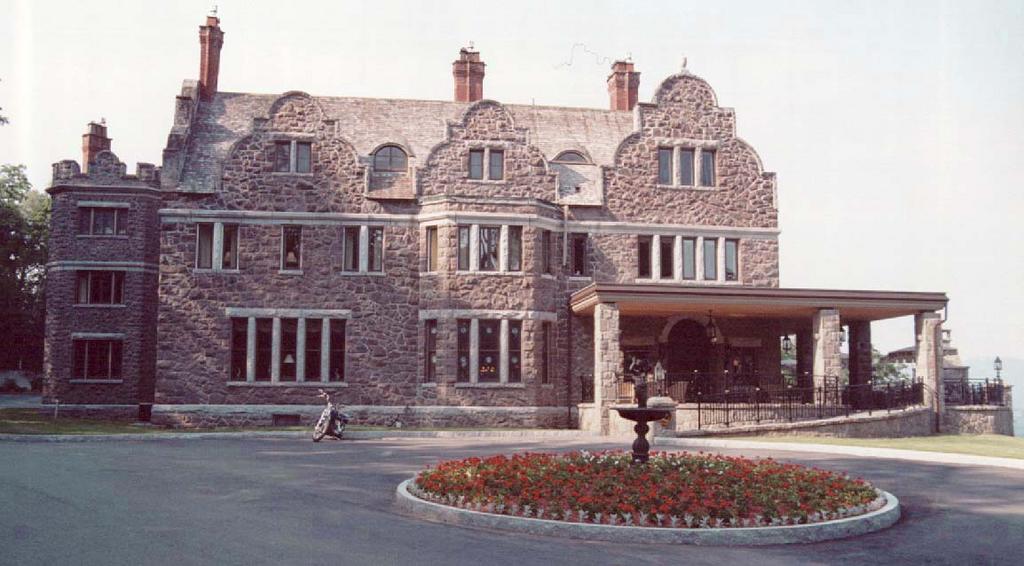
    Take the Queen Anne-style stone structure built in 1898 for Brooklyn lawyer Edward Morse Shepard as a lakeside vacation retreat. Once patrons navigate down a steep, winding drive, the formerly hidden three-story edifice looms into view.

    This is the Inn at Erlowest.

    It has gone by various names bestowed by various owners -- Erlowest, Leffingwell Palace, Sunset Castle and back to Erlowest when it came under the ownership of David and Cheryl Kenny last summer.

    There are many gems here, from rolling lawns to a lakeview veranda to a library-style bar and four dining rooms.

    Those rooms are studies in elegance -- coffered ceilings, rich draperies, small avian sculptures on the casement window sills and sparkling Spiegelau glassware on the tables.

    But it is what goes on in the kitchen under chef Matthew Secich that makes Erlowest a wonder.

    Secich is an eclectic Ohioan whose background includes time as a college lacrosse player and a U.S. Army cavalry scout as well as a student and a chef at various stops in the United States, France and England. Don't try to pigeonhole his style. He works on whim and the availability of local food supplies.

    "In the kitchen,'' he says, "we use no recipes. I draw a picture and we create a new dish.''

    There are several ways of seeing those creations: two separate seven-course tasting menus ($79 per person) and an a la carte list, all of which change daily, or a special session in The Chef's Table Room adjacent to the kitchen where Secich gives vent to his creative flow through 8 to 12 courses ($129 per person).

    Constant Companion and I had selected the vegetable tasting menu (the a la carte menu and the grand tasting include meat and fish items), with a $55 wine pairing option.

    Erlowest's 264-label wine list contains a wide selection that runs the gamut in price and vintage from a 1961 Chateau Margaux ($2,770) to a 2002 Houchart Cotes de Provence ($20). Between those extremes are nearly 100 labels priced below $100.

    Even though tastings allow for only small amounts of wine, in this case the add-on is worth the experience. Chef Secich and his staff have done an exemplary job in marrying their produce with excellent vintages.

    After an amuse bouche of julienned Gorgonzola and apple and diced shallot, we were on to the seven tiny tastings, each exquisitely arranged on different shaped platters and serving pieces, each with a taste of its own wine.

    A velvety chilled pea soup was dotted with a small scoop of chocolate mint ice cream -- not the ice cream store flavoring, but the chocolate mint herb -- and paired with a cleansing, nonvintage Gaston-Chiquet brut champagne. Vegetables a la Provencal avoided the cliche tomato-garlic=oregano combination, thanks to the inclusion of licorice-like fennel and a taste of a sweet 2003 Domaine Pastou Sancerre from France's Loire Valley. Our third course was an elegant arrangement of miniscule wild strawberries and reed-slender wild asparagus shoots with a balsamic drizzle, abetted by a crisp 2003 Olivier Leflaive St. Aubin 1er Cru white Burgundy.

    The second portion of the meal was heartier, with rich, full-bodied wines that would go just as well with meat dishes. A quartet of fingerling potatoes was roasted in salt, split and stuffed with Reblochon -- a French cheese made from whole, unpasteurized milk -- then dabbed with wilted spinach. It was paired with a 2000 La Braccesca Montepulciano, carrying red fruit and licorice notes. Then came a trio of savory mushroom mixes that obviated any need for meat, the tender chanterelles, trumpet royals and mousserons paired with an inky-red Mas de Gourgonnier Reserve Les Baux de Provence, powerful with black cherry notes.

    A cleansing finish came from two elements: a salad of spring baby lettuces with Blue Ledge chevre and a vaguely, but pleasingly, astringent 2001 Domaine Jean-Luc Dubois Clos Margot white Burgundy; then, a strawberry soup dotted with a touch of fiddlehead fern ice cream and joined by a 2003 La Spinetta Moscato d'Asti, a low-alcohol little bubbly that completed the beverage circle.

    Secich is a clever kitchen artist with a young staff who may not know it, but they are getting the training of a lifetime.
    ON THE WEB
    • Lake George views
    • Lake George information
    • Lake George Opera
    • Lake George Village
    • Lake George Winter Carnival
    • Lake George fishing
    • Americade motorcycle event
    • Adirondack Chamber of Commerce

    20050701

    An Air of Humor In Plane Sight


    Those faceless folks who keep commercial and military planes aloft are more than just guys with tools. They also have a sense of humor that shows up in their service logs.

    Here is a sampling that is making the rounds on the Internet these days. "p" stands for the problem logged by the pilot. "S" stands for the service tech's response,

    P: Left inside main tire almost needs replacement.
    S: Almost replaced left inside main tire.

    P: Test flight OK, except autoland very rough.
    S: Autoland not installed on this aircraft.

    P: Something loose in cockpit.
    S: Something tightened in cockpit.

    P: Dead bugs on windshield.
    S: Live bugs on back-order.

    P: Autopilot in altitude-hold mode produces a 200 fpm descent.
    S: Cannot reproduce problem on ground.

    P: Evidence of leak on right main landing gear.
    S: Evidence removed.

    P: DME volume unbelievably loud.
    S: DME volume set to more believable level.

    P: Friction locks cause throttle levers to stick.
    S: That's what they're there for.

    P: IFF inoperative.
    S: IFF always inoperative in OFF mode.

    P: Suspected crack in windshield.
    S: Suspect you're right.

    P: Number 3 engine missing.
    S: Engine found on right wing after brief search.

    P: Aircraft handles funny.
    S: Aircraft warned to straighten up, fly right, and be serious.

    P: Target radar hums.
    S: Reprogrammed target radar with words.

    P: Mouse in cockpit.
    S: Cat installed.

    20050612

    A New England dining guide

    April L. Dowd photo


    How do you cover the dining possibilities in a six-state region such as New England without writing a book about it? The answer is, you don't.

    What we have here, instead, is a quick-hit look at a variety of restaurants that offer hungry travelers a localized change-of-pace from the boring sameness of highway-chain food.

    Bear in mind, New England is home to four of the eight Ivy League colleges, which act as restaurant magnets, even in what may be otherwise low-desirability neighborhoods.

    Massachusetts

    The Commonwealth stretches from the Berkshire mountains in the west to Cape Cod in the far east. An example of the best in the west is Bistro Zinc (56 Church St., Lenox, 413/637-8800). This trendy upscale French bistro, on a side street off Historic 7A, makes bold use of metals and woods in its decor. The zinc-topped bar offers a nice array of single barrel bourbons and single malt scotches plus a strong wine list.

    Cape Cod has many, many spots to be recommended. Ebb Tide (94 Chase Ave., Dennisport, 508/398-8733) is just one example, located mid-Cape in a onetime sea captain's house a block off Nantucket Sound. The menu emphasizes locally caught seafood and traditional New England cuisine. (For a more detailed look at the region's top tourist draw, see our 2005 Cape Cod Dining Guide.)

    Of course, you can't talk about food in Massachusetts without at least touching on the Boston metro center, which includes Harvard. A couple of hot new spots: The original Ritz-Carlton hotel (Boston Common, 800/241-3333) just finished a $65 million renovation and its already-famous dining room sparkles again; the Craigie Street Bistro (Harvard Square, Cambridge, 617/497-5511) has been opened by chef-owner Tony Maws who piled up top reviews at Clio before going on his own.

    Vermont

    The Green Mountain State likes to emphasize its Yankee simplicity, but for such a small, sparsely populated state, it has an inordinate numbers of restaurants holding Wine Spectator magazine Awards of Excellence: Bistro Henry, the Colonnade Room at The Equinox, and Mistral's at Toll Gate, all in Manchester Center; Opaline, Smokejack's and Trattoria Delia in Burlington, and The Hermitage Inn in Wilmington.

    Unusual scenic dining spots abound elsewhere, such as the Four Chimneys (Route 7, Old Bennington, 802/447-3500), named for the towering stacks visible from afar. It's a white, 18th century mansion-like structure set in a heavily treed plot in the undulating landscape. Or, Garlic John's (near Manchester Center, 802/362-9843), just outside the community that masquerades as a shopping center. If you've ever wanted to dine on Italian while counting how many empty wine bottles can be suspended from a ceiling, this is the place.

    Rhode Island

    If you tend not to expect much from the nation's tiniest state, think again. In the capital city of Providence alone (home to Brown University) there are enough good restaurants to draw tourists from everywhere, often staffed by graduates of the prestigious Johnson & Wales University culinary program.

    Seafood spots are numerous along the southern seacoast in Newport and Narragansett, for example, but make a point of checking out Federal Hill, the "Little Italy" of Providence that is home to numerous trattoria. Among the top-rated spots in town: L'Epicureo (238 Atwells Ave. 401/454-8431), a hot ticket ever since Esquire magazine praised it nearly a decade ago; Angelo's Civita Farnese (142 Atwells Ave. 401/621-8171), which has been around for nearly 80 years, qualifying it for icon status; and, Al Forno (577 South Main St. in Fox Point), one of the first local spots to earn a national reputation.

    Maine

    Any state with 3,500 miles of coastline has to be replete with seafood restaurants. But, stay loose in your choices statewide. Bangor, the state capitol, and the University of Maine's hometown of Orono hold the usual range of small-city restaurants, but from the greater Portland area south to the New Hampshire state line, for example, the Atlantic coast is lined with quaint towns and even quainter dining spots.

    In Portland itself, Boone's Restaurant on Custom House Wharf (207/774-5725) is quintessential Yankee seafood. The exotic is available at the Afghan Restaurant (419 Congress St., 207/773-3431), whose name describes its offerings, and the flannel-shirt atmosphere is much of the charm of the Stonecoast Brewery (14 York St., 207/773- 2337) and its trio of 9-foot pool tables. Down the coast in Kennebunkport, that favorite haunt of politicians, Bartley's Dockside Dining (207/967-5050), serves up an extravaganza called the Presidential Clambake. Just south of there, in Ogunquit, the beautifully landscaped Barnacle Billy's (Perkins Cove, 207/646-5575) is always a good draw.

    New Hampshire

    As one might surmise, a sparsely populated state tends to have its best dining clustered in just a few spots. The presence of Dartmouth College in Hanover and the tourist draw of nearby Lake Sunapee is a magnet for numerous ethnic spots and coffee houses.

    The Granite State seacoast is a lifeline for unusual restaurants, such as in trendy Portsmouth (Chestnuts at the Nest, 603/373- 6515, with its glass-topped bar and its wild game mixed grill) and Hampton (Galley Hatch, 325 Lafayette Road, 603/926-6152, with its own Seasons Bakery and a long list of $4.95 ice cream specialty drinks).

    Connecticut

    Hartford is the Nutmeg State's largest city, but New Haven is home to Yale and that is a restaurant magnet. In Wooster Square (New Haven's "Little Italy"), there's an endless battle over whether the American pizza was invented at Frank Pepe's (203/865-5762) or Sally's (203/624-5271). The Town Green district is loaded with all sorts of restaurants, such as Galileo's Restaurant at the Omni hotel (155 Temple St., 203/974-6859) with views of the green and of Long Island Sound.

    In Hartford, the Bushnell Park area is a prized location, and Vito's By the Park (26 Trumbull St., 860/244-2200) not only has a park view, it has a large indoor mural of the park.

    Diverse Hartford is loaded with ethnic neighborhood restaurants. For example, near Trinity College in the Park Street area, the heart of the Latino community, you'll find numerous food vendors in El Mercado, an indoor market that's the neighborhood's crown jewel. It's a perfect spot for visitors unfamiliar with the city's neighborhoods to experience the cuisine.

    20050610

    A Cape Cod dining guide

    April L. Dowd photo


    CAPE COD, MA -- In this eclectic place we call America, it isn't difficult to find a huge variety of dining choices along the highways and byways and even in the highrises that overlook them.

    But, boil down the geography to the tourist haven we call Cape Cod and choices are largely confined to just three main roads.

    The Cape, 75 miles long from the Cape Cod Canal in the west to Herring Cove Beach in the northeast, is shaped like the upraised arm of someone "making a muscle.'' It is traversed largely on Routes 6, 6A and 28. Once you're off them you'd better know the local layout intimately to avoid being caught hungry in the many culs-de-sac and roads that dead-end at salt marshes or ponds.

    In past years, our "Cape Cod Dining Guide'' centered on various aspects of the food scene. This eighth annual version celebrates its eclecticism. (For a broader look at the region, see our 2005 New England Dining Guide.)

    The annual caveat: I don't work for the Chamnber of Commerce. The guide is guaranteed to lead you to some pleasant experiences as well as guaranteed to annoy anyone whose favorite spot isn't mentioned. However, with literally hundreds of places to eat, totality is impossible.

    Logistically, since Route 6 -- the Mid-Cape Highway -- is a limited access thoroughfare until you get past Orleans and head north, the principal dining clusters are mostly on Routes 28 and 6A.

    A four-mile stretch of Route 28 from the edge of Hyannis, the Cape's largest town, east to West Dennis on the Bass River is a prime example of how packed with dining variety the Cape's main roads can be.

    At least 40 food-related spots are jammed into that span, from the brand-new Oinky & Moo's southern barbecue (think about it) in West Dennis to the self-explanatory old Riverway Lobster House in Yarmouth.

    This is a good base of operations for families who like very casual, inexpensive food plus proximity to inexpensive motels and elaborate miniature golf layouts, or for couples who need the nightlife. You never have to leave the locale to experience an astounding variety of foods: Irish pub, seafood, Thai, hot dogs and ice cream, soups and salads, Chinese, brunches, Mexican, Polynesian, pizza and the inevitable Dairy Queen, McDonald's and Dunkin Donuts spots and more.

    One of the most popular establishments is Sundowner's, a pleasantly raucous bar and restaurant in West Dennis with an atmosphere that seems provided by Jimmy Buffet -- rough-hewn wood walls, waitresses and bartenderesses (a noticeable dearth of male waitstaff) wearing wild tropical-print blouses, a deck with a water view, frequent live music from pop to reggae, inexpensive and tasty food (they offer a shockingly good New York strip steak as well as the usual clams and shrimp).

    The drinks are fine if you limit yourself to beers or frothy blender products, not so fine if you want expertly mixed cocktails. But, how can you dislike a place that offers a weekly "karaoke gong show''?

    In nearby West Yarmouth, Molly's offers a traditional Irish breakfast (thick Irish bacon, sausage, black and white pudding, eggs, tomatos, beans and home fries) for a paltry $8.50. I still think of the tiny slip of a girl I saw easily polish one off while her boyfriend toyed with a regular-sized ham and eggs.

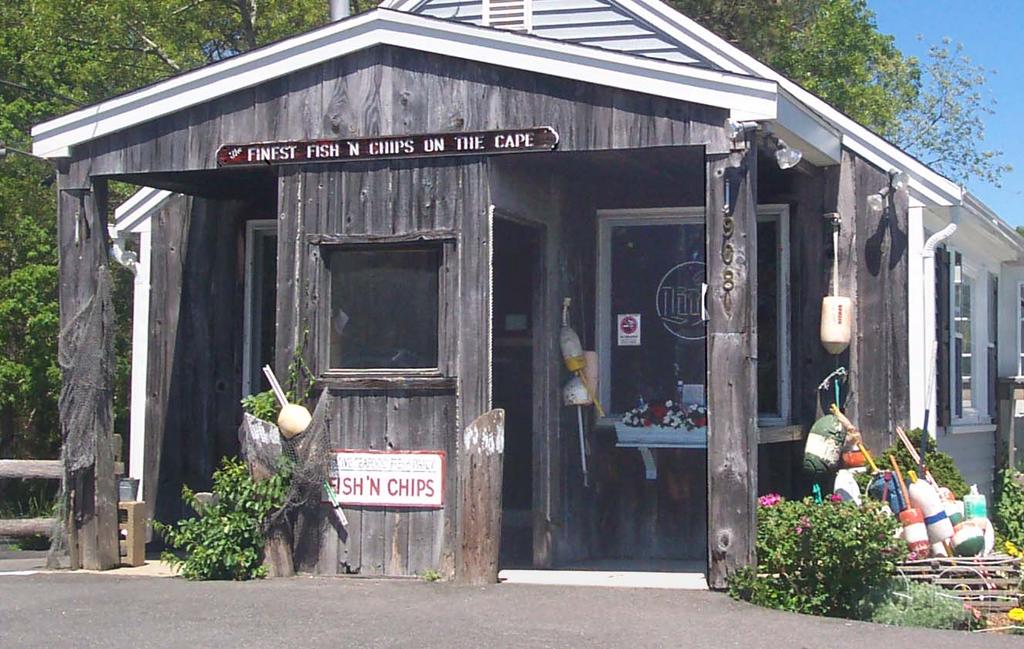
    Then there is a neighborhood spot called Kevin's Seafood & Spirits. Blink and you'll miss it. A sign on the weathered exterior proclaims "Finest Fish 'n Chips On the Cape.'' Such bragging is commonplace on the Cape, but Kevin's (no credit cards, please) walks the walk with its delicate, tasty platter.

    You'll find a lot more upscale dining as well as some great breakfast spots in Hyannis.

    One example: Persey's Place, several blocks east of the Kennedy Museum. It serves what it boasts is "New England's Largest Breakfast Menu'' from 7 a.m. to 3 p.m. Recommended: such delightful oddities as hash Benedict, chocolate chip/banana/walnut pancakes and an array of omelets.

    Start your day there, take a ferry from Hyannis Harbor over to Nantucket or Martha's Vineyard, then come back in the early evening and have dinner in the cool pub atmosphere of the British Beer Company on Main Street. (It has sister locations in Sandwich and Falmouth.) Better still, try Alberto's Ristorante, also on Main. It offers sidewalk dining or white tablecloth tables inside behind frosted glass room dividers.

    The clientele is eclectic (I marveled to my companion about how clever the little child at the next table was, what with her command of French, before realizing it was a French-speaking family), and the Northern Italian food is top-shelf. Particular treats: a salad of white cannelini beans, mixed greens, onions, capers, calamata olives and roasted peppers; a battered veal cutlet stuffed with prosciutto and a mixture of five cheeses, served in a lemon/butter/wine sauce.

    Good as this all is, along with such other lasting treats as the elegant Dan'l Webster Inn in Sandwich and The Red Pheasant in Dennis near the Cape Cod Playhouse and the Cape Cod Museum of Art, we can't forget the Outer Cape, from Orleans at the elbow to Provincetown at the fist.

    A longtime favorite had been Aesop's Tables, located in the heart of Wellfleet village off Cape Cod Bay where we met each year with another couple for a shared anniversary dinner. Since our last visit it had been purchased by the owners of Moby Dick's, a lobster-and-clam shack on Route 6 usually packed with people who like a rough-hewn place that also sells plastic float toys and faux buoys as souvenirs.

    Aesop's has become Winslow's Tavern. A sign proclaims it was established in 2005, a whimsical thumbing of the nose to competitors who brag too much about their lineage. The 1800s Victorian mansion once had the feel of a European country tavern. Now, the food is a bit better, the drinks a little less impotent, but annual regulars like us might find it too fresh and antiseptically pretty.

    The remainder of the Outer Cape remains largely the same as before. The lineup is variety personified. Some examples:

    On the elbow way down in wealthy Chatham is the Wayside Inn, a restored structure located next to Kate Gould Park where the town's brass band offers concerts every Friday night in the summer. Try their "short stack.'' No, not pancakes; grilled medallions of swordfish and filet mignon with spinach and carmelized onions, stacked on mashed potatoes with two sauces.

    The elegant 130-year-old Orleans Inn on Town Cove in Orleans, where the Cape begins bending upward, still has both casual and fine dining with water views from virtually every seat.

    The Sea Dog on Route 6 in Eastham, where they usually roll up the sidewalks at 9 p.m. (except down the road at the always-buzzing Ben & Jerry's store which stays open till 11), has a good steakhouse menu plus live entertainment and a good late-night bar menu.

    The most popular spots, and arguably the best, on Route 6 between Eastham and P-town are in South Wellfleet. They are Van Rensselaer's, whose stuffed baked lobster is a consistent popularity poll winner, and Serena's, an Italian family spot that fills up almost as soon as the doors open each evening.

    Once in P-town, you'll find wall-to-wall eateries that are OK but rarely much different from one another except for the quality of water views. (That doesn't include the iconic Portugese Bakery and its grab-and-go toothsome treats). A pleasant exception is Ciro & Sal's on hidden Kiley Court where they serve Northern Italian cuisine in an intimate grotto/garden setting. And, there you have it. A long list, although hardly all-inclusive. I take comfort in the fact that there's enough meat here to feed you for even a very long stay.

    20050509

    Boutique Bottlers Dot the Country


    For many people, smaller is better when it comes to innovation in spirit-making.

    The boutique liquor business is catching on all across the nation. The latest clear spirit is being distilled up in Maine, and the American version of Europe's eau de vie brandies is gobbling up all sorts of homegrown fresh fruits in many states.

    While the giant spirits conglomerates and distributors such as Allied Domecq, Diageo and Brown Forman battle each other for the lion's share of the market, the less obtrusive mammals are carving out successful little niches of their own.

    For the past five years, a Long Island company has been using local potatoes and Midwest grain to create Peconika vodka. Up in Minnesota, Shakers Original American Vodka, a grain alcohol produced in the town of Benson since the beginning of the year, already is the best-selling vodka in the state.

    Not that the niche operators are restricting themselves to hard liquor. In various parts of the nation, lighter alcoholic beverages are being produced. Two quick examples:

    In Jacksonville, Vt., the North River Winery (pictured above) operation makes 11 different fruit wines, many of them certified organic. The operation has grown from a mere 2,500 gallons a year in 1985 to 20,000 gallons today. In Richmond, Mass., not far from the historic Hancock Shaker Village tourist attraction, John Vittori is putting out his own line of wines made from grapes trucked up from Long Island, NY, as well as a line of sweet and hard ciders from his own apples at the Hilltop Orchards/Furnace Brook Winery operation.

    Meanwhile, back on the liquor trail, potato farmer Don Thibodeau is cranking out the spuds on his Green Thumb Farms near Freeport, Maine, to fuel creation of a boutique vodka product due on the market next spring.

    Thibodeau's vodka, says the Associated Press, will be produced in small batches from his 525-acre spread and, if need be, from potatoes grown elsewhere in the state. The operation will be Maine's first commercial distillery. White Rock Distilleries in Lewiston makes spirits, but its alcohol is imported.

    Thibodeau's product will be aimed at the high-priced "super premium" niche with the likes of Belvedere, Chopin and Grey Goose. A name has been chosen for the new product, but is being kept secret for now.

    Grey Moose, anyone?

    Beyond vodka, the brandies or brandy-like spirits are on the rise, led by the work of master craftsman Jorg Rupf. He makes Hangar One viognier grape vodka and various fruit brandies in a former aircraft plant in Alameda, Calif.

    There are more than 50 such small operations in 16 states using nearly any kind of fruit or organic matter to create vodkas and eau de vie (water of life) brandies -- places such as Westford Hill Distillers in Connecticut, Clear Creek in Oregon and Bonny Doon in California.

    The reasons people get into a business that is hard to promote outside one's immediate area are numerous.

    Steve McCarthy, for instance, tells the Bloomberg News Service he was inspired by the palate-cleansing bite and enticing fragrance of eaux de vie he'd tasted at business dinners in Europe. So, in 1985, he began distilling fruit from his family's Oregon pear orchard. "The market didn't know eau de vie from eau de toilette," McCarthy told the news service. The market knows it now. He distills 8,000 gallons a year of a dozen aromatic spirits for his Clear Creek line, known particularly for its apple brandy.

    California grape grower Ansley Coale met vacationing Hubert Germain-Robin, offspring of a French cognac-making family, and struck up a partnership that has resulted in a pricey, cognac-style brandy made from pinot noir grapes (Germain-Robin Select Barrel XO, $100; Anno Domini, $350).

    20050411

    Reno: Not Just Vegas' Little Sister


    RENO, Nev. -- Just over a decade ago, this northern Nevada community that has long billed itself as "The Biggest Little City in the World" had a seedy reputation.

    It had a stagnant economy, a deteriorating business sector and few job possibilities.

    Since then, however, an ambitious downtown renovation ($37 million for street repairs alone), an expansion campaign at the University of Nevada at Reno campus, a housing boom fueled by the state's burgeoning population, a new art museum and a thriving casino and resort community have helped change all that.

    Last summer, in fact, the city placed No. 3 on Men's Journal magazine's list of the nation's 50 best places to live, and it broke into the top 10 (at No. 9) on Hotels.com's list of most-requested locales for lodging reservations.

    All this is coalescing in a city that only two years ago marked the centennial celebration of its incorporation as a city.

    Riches to rags and back to riches in just 100 years.

    Need more evidence of the Reno boom? The city also is ranked No. 7 in Inc. Magazine's "Best City in Which to Start and Grow a Business." And this community named for a Civil War general moved up an incredible 23 places from last year to No. 22 nationally on the annual Forbes/Milken Institute ranking of "Best Places for Business and Careers."

    Another of Reno's smart moves is being neither foolishly dependent on gambling nor stubbornly independent in marketing itself. Depending on which public relations campaign you pay attention to, the area is referred to as Reno-Tahoe or Reno-Sparks, Sparks being an adjoining residential and casino town that shares convention facilities with Reno.

    The Tahoe reference takes advantage of Reno's proximity to Lake Tahoe, the year-round mountain resort mecca that straddles the California-Nevada line just 40 miles from Reno.

    A Tahoe connection also goes a long way toward reinforcing the point that Reno, unlike sweltering Las Vegas 340 miles to the south, is truly a four-season climate where it actually snows and temperatures fall into the single digits in winter.

    In fact, taking advantage of the outdoors after generations of trying to keep people in the casinos can be seen in the form of a new 24-mile whitewater recreation corridor include a kayaking slalom course through downtown.

    Does that annoy casino owners who like people at the slots and the tables as often as possible? It's doubtful. Harrah's and Eldorado together contributed $1 million toward the $22 million project, which startd last tsummer.

    Comparisons between Reno and Las Vegas are inevitable because of the legal gambling attraction of both cities as well as Americans' legendary ignorance of geography. But the differences are many, not the least of which is the matter of proportion: Vegas' population is triple that of Reno's 138,000.

    Vegas and surrounding Clark County have always been about gambling, ever since mobster Benjamin "Bugsy" Siegel supported construction of The Flamingo in the 1940s and got the laid-back casino business really rolling. Washoe County up here in the north has long been and remains cowboy country, despite all the gambling dens. The city is virtually ringed with working ranches large and small. People wearing Stetsons and work clothes downtown or in the outlying malls isn't an affectation. Neither are the numerous pickup trucks, which actually are used for work.

    The Reno skyline probably isn't what a first-time visitor, particularly one used to the glitz of Vegas, might expect.

    The city sprawls in all directions, but towering casino hotels are few in number -- the 1,300-room Peppermill, the 600-room Atlantis and the 2,000-room Hilton among the most prominent.

    In Vegas, the proliferation of gaudy casinos that sprang up on Las Vegas Boulevard drained the money away from its downtown. But Reno's downtown -- and its smaller buildings -- is still its main draw, as are its many wedding chapels, pawn shops and quick-cash car lots, a triumvirate of businesses that illustrates the gamut of love and luck.

    Parking rates downtown are reasonable ($2 for a four-hour stay is common) and encourage walking tours, particularly on Virginia Street -- the main drag -- and nearby side streets.

    The older, major casinos are tightly clustered, such immaculate places as Circus Circus, the Eldorado, and the Silver Legacy -- where a gorgeous collection of silver objects once owned by one of the region's silver mining barons is on permanent display in the ornate lobby.

    You don't have to gamble at any of these spots to have fun. Periodic free entertainment is provided, the numerous buffets offer a wide range of food at cut-rate prices, concerts and art shows are frequent and the people watching is primo. Or you can stroll down to the National Bowling Stadium to watch the latest tournament.

    Just south of the casino cluster is the Riverwalk, where concerts and art shows are common along the Truckee River, which bisects the city. Amble just a few blocks off Virginia Street and you can see one of two spectacular museums.

    The Nevada Museum of Art's new facility opened on West Liberty Street in May with an exhibition of the renowned Mexican artist Diego Rivera and other 20th Century Mexican art.

    Two blocks off Virginia, on Lake Street South hugging the river, is the National Auto Museum, also known as The Harrah Collection. The collection, the largest of classic cars and trucks in North America, is enough to make any car buff drool. From such examples of art and engineering as Ferraris, Corvettes and Pierce-Arrows, you can jump to some of the earliest American-made working vehicles and race cars.

    A short drive, bus or cab ride to the university campus takes you to the Fleischmann Planetarium and Science Center, located on one of the ridges created by the local "bowl" topography.

    Because of northern Nevada's low light pollution, the dark night sky makes it a stargazer's paradise. On clear Friday and Saturday nights throughout the year, visitors to the planetarium's public observatory can scan the skies through a C-14 telescope free of charge.

    Of course, for the price of a ticket you can see a lot of other stars as well. George Carlin, Jeff Foxworthy, Jay Leno, Meat Loaf, Olivia Newton-John, Vince Gill and Willie Nelson are among the entertainment luminaries who have appeared in recent months.

    ON THE WEB

    • Reno - Lake Tahoe vacation guide
    • Nearby Virginia City
    • Official visitors' guide
    • City of Reno official Web site

    20050408

    Alcohols of the Americas

    National pride can be wrapped up in so many things. Science, food, sports, music. And then there is the spirit world.

    Not the John Edward, talking-to-the-beyond-on-television kind of spirits, but the earthier ones found in amber bottles, cut-glass decanters and crystal tumblers.

    Most countries point with pride to a "national drink." The French have champagne; the Greeks, ouzo; the Russians their vodka. They are not alone.

    In the United Kingdom, for example, we readily find the single malts and gins of Scotland and England. Now even Wales, that forgotten little country that shares the British mainland with them, is getting back into the swing after being without a native distillery since 1894.

    On March 1 this year, the 3-year-old Welsh Whisky Co. introduced its first product, Penderyn single-malt whiskey, created from barley malt and Welsh spring water. It retails for about $40.

    The privately owned distillery, which operates in the Brecon Beacons National Park, revives a Welsh industry that had provided experienced whiskey makers who were among the founding fathers of the American bourbon industry. In Penderyn, the American link lives on. The whiskey is aged in Jack Daniels and Evan Williams bourbon casks shipped from the United States before being finished in Wales in rare Madeira barrels.

    In the United States, we've long enjoyed "national" drinks brought to our shores from elsewhere in our hemisphere -- the rums of Jamaica and Puerto Rico, and the tequilas of Mexico, for example. Now, a trio of previously little-known alcohols from the Americas recently discovered by U.S. tourists is beginning to make inroads in our domestic market.

    From Central America comes S Guaro, introduced in the United States just this year. It's made in Costa Rica from pure sugar cane with no additives.

    Right now, S Guaro is essentially a California drink, with a marketing campaign by distributor S Spirits of Malibu that began by creating a word-of-mouth buzz by serving it at parties orbiting the Golden Globes, Grammy and Academy Awards shows.

    The campaign is similar to one launched last year in the New York area by the distributor of Hpnotiq, a pale-blue French concoction of cognac, vodka and fruit juices. Movie premieres, nightclubs and celebrity parties in the city and in The Hamptons were successfully targeted, and the pale-blue drink quickly caught on.

    "We're trying that grass-roots thing, too, before we try to go nationwide," said Shari F. Levanthal, marketing director for S Spirits. "Funny thing is that if you mix Hypnotiq and S Guaro, you get a great combination drink."

    Guaro tastes more like a vodka than it does anything else, and its distributors recommend it as part of a mixed drink rather than straight.

    On the Caribbean isle of St. Martin/Sint Maarten, the indigenous guavaberry that centuries ago was turned into liquor by the Amer-Indian people is today distilled into a unique "folk liqueur," even though the fragile berries are difficult to cultivate and harvest.

    My first experience with guavaberry liqueur was a colada served in a Philipsburg hotel bar on the Dutch side of the island. It's a deceptively smooth drink, reminiscent of blackberries and dark cherries, sweet but not overly so, thanks to the slightly woody, spicy taste of the liquor.

    Despite the name, the guavaberry (GWAH-va-BER-ry) has nothing to do with the guava fruit. The liqueur -- easily available online for $19.50 -- is made from oak-aged rum, cane sugar and the berries that grow wild in the warm hills in the center of the island.

    Farther south, in Brazil, a form of brandy called cachaca (ka-CHASS-ah, Portuguese for firewater) has taken the South American nation by storm in the past few years. Odd that it took so long, considering it has been around since the 1500s.

    Cachaca is distilled from unrefined sugar-cane juice fermented in a wood or copper container for three weeks, then boiled down three times to a concentrate, giving it a rumlike flavor. The more expensive versions are aged in wood casks that provide a caramel color and take the edge off the raw alcohol taste.

    Brazil has some 4,000 brands of cachaca (Pirapora, Pitu and Velho Barreiro Gold among them, priced in the $24-to-$30 range), making it second only to beer among alcoholic drinks consumed there.

    Like tequila, which moved from being a blue-collar drink to upscale status in Mexico and the United States in recent years, cachaca has taken the same path. It got an extra boost when bartenders at trendy tourist spots in the Brazilian metro areas of Rio de Janiero and Sao Paolo looking for something novel began using it as the basis for a line of cocktails.

    The most popular is a simple one called the caipirinha. It's made by crushing slices of fresh lime in a glass, sprinkling sugar over them, filling the glass with chilled cachaca and popping in a few ice cubes.

    Ah, what a hemisphere!
    ON THE WEB
    Dowd's Guides

    Blog Archive