20090402

Another comeback in Ybor City

William M. Dowd photos

Visitors view the statue of Vicente Martinez Ybor.


TAMPA, FL -- As the sun beat down on the broad roof of the Ybor Cigar Factory, a man in a crisp, white guayabera shirt walked down the aisle between rows of tables stacked high with tobacco leaves, headed for an elevated platform with a single chair in its center.

To the contrasting rhythms of overhead fans lazily moving the air through the cavernous room and dozens of hands deftly rolling premium cigars, the man took the chair and began reading aloud to the latest shift of workers, part of the 4,000-worker force here at the world's largest cigar factory.

Newspapers, poetry, novels, all were fuel for the reader's efforts that informed, entertained, even distracted the cigar makers, people who in many cases had only their labors in common.

That, from the late 1890s to the early 1960s, was a commonplace sight in Ybor City, the polyglot community on the east side of Tampa that at one time employed 18,000 workers in literally dozens of large and small cigar factories and shops that made it the cigar capital of the world.

The factory reader was more than entertainment for the workers. His efforts formed the basis of an education in English for people who had flocked here from Spain, Cuba, Italy, Romania, Germany, even China to find work in the factories, and for whom English was, at best, a second language.

A vibrant, bustling multi-national community grew up around the factories, full of ethnic social organizations whose vestiges remain today, as well as nightclubs, restaurants, small shops, art galleries -- everything that today would draw free-spending tourists.

For Ybor (pronounced EE-bore), however, much of that community infrastructure is just now being recovered or rebuilt, having succumbed to a series of economic downturns, mechanical advances, changes in health consciousness, and that scourge of the 1960s known as "urban renewal."

Urban renewal, that federally-funded and, arguably, misguided program of modernizing cities by urging demolition of their old architecture, in the 1960s delivered a devastating blow to Ybor City's history. Seventy acres of what once had been a separate city were leveled.

Literally hundreds of residential structures were razed to make way for an interstate highway and little else despite ambitious plans for extensive development. Today, thanks to the unflagging efforts of various civic organizations that really began taking hold in the late 1990s, much of the Ybor City that had fallen into disrepair and neglect has been revived.

Art shops, casual dining places, nightlife offerings ranging from traditional Flamenco dancing to hip comedy, plus pocket parks and tourist sites all have helped revive the 500-acre remains.

The resurgence stumbled a bit in the early years of this century, but in the past two years has regained momentum. My most recent visit, just last week, shows a growing number of new bars, restaurants and boutique shops as well as an even greater number of festival-style events.

Ybor is an easy place to navigate, truly a walkers' delight, with several centrally located public parking lots, and plenty of benches for taking a break. Those with less energy can grab one of the RetroStar Pedicabs.

Once you get there, that is.

Most visitors begin in Tampa, then join the eastbound traffic backup at the 20th Street exit of Interstate 4, still the fastest way from Tampa proper. More than 60 bars, nightclubs and restaurants draw up to 30,000 people to Ybor on weekend nights.

Four years ago, the 2.3-mile TECO Line Streetcar System debuted, linking numerous tourist attractions and remote parking areas. The line serves the "visitors crescent" that covers the Tampa Convention Center, the Ice Palace, Garrison Seaport and Florida Aquarium close to downtown Tampa as well as the historic Ybor City district.

The line boasts some pristine renovated trolley cars, but it is more than merely decorative. Last year an estimated 400,000 riders took advantage of the inexpensive rates -- a $2 one-way cash fare, a $4 all-day pass, and various discount packages.

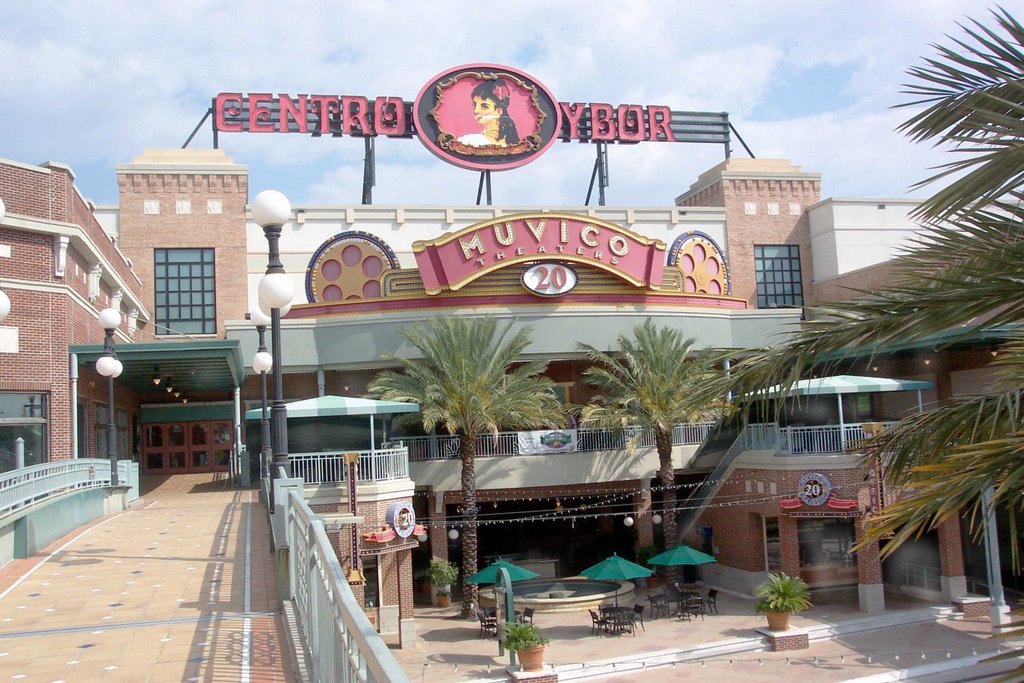
Ybor, named for cigar magnate Vicente Martinez Ybor who founded the community in 1896, is a pleasantly schizophrenic community. A self-guided daytime walking tour will take you from viewing the remaining former cigar factories that have been put to other uses to various statues of local luminaries to Centro Ybor, the commercial center of the community where shopping, dining and nightlife are packed cheek-to-jowl in a curious architectural arrangement -- a bi-level set of brick structures split by Seventh Avenue, Ybor's main thoroughfare.

Many cigar workers lived in casitas, small single-story homes. Three of them have been restored and are part of the Ybor City State Museum at 1818 Ninth Ave. The museum also offers walking tours of Ybor.

One of the renovated cigar factories is now Ybor Square, a mall filled with dining and retail establishments at 1901 North 13th Street. The 113-year-old building is listed in the National Register of Historic Places.

The Ybor City Brewing Co. -- its Ybor Gold is one of the favorite local beers -- is located in another renovated cigar building, a 104-year-old brick structure at 2205
North 20th Street.

Still another is the 99-year-old former Lozano cigar factory that has been converted to house the Central Florida Lions Eye & Tissue Bank, the world's largest eye bank,
at 1410 North 21st Street.

By day, shoppers, business people, and strolling retirees create comparatively little noise. By night, Ybor is Tampa's hottest hotspot, with a plethora of nightclubs, bars, comedy clubs such as The Improv or the Comedy Works, and casual restaurants drawing everything from college-age kids to Baby Boomers and beyond.

The $50 million Centro Ybor complex includes a 20-screen theater and a high-tech arcade, but even though such offerings usually cater primarily to the younger set, the management has made it more adult-friendly at night with its parental escort policy. After 8 p.m., no one under 18 is allowed in unless accompanied by a guardian 21 or older.

The range of offerings throughout Ybor pays tribute to the community's multicultural sensibilities, from the Irish kitsch of the James Joyce Pub to the drag shows at La
Femme Buvette or the Pleasuredome, or the Georgia/Carolina atmosphere of Moses White & Sons BBQ.

The Green Iguana (there also is one in nearby St. Petersburg) is one of the most popular spots for both social interaction and downright fine food, particularly what is colloquially known as "Floribbean" food, studded with the likes of grouper tacos, fajitas and Jimmy Buffet-esque cheeseburgers. Streetcar Charlie's, one of my favorites, has a large bar and a nice dining area with floor-to-ceiling windows that make it a great spot for people watching while enjoying a good lunch or dinner.

Then there is Gaspar's Grotto, a 10,000 square foot mecca for barbecue events and live entertainment on a large stage in the restaurant courtyard. Inside, a huge bar as well as a pool table-and-sports-TV area take up most opf the room.

The establishment is owned and run by Eric Schiller, a voluble transplanted Bostonian who spent decades at sea, captaining tankers before putting down on land a few years ago when, as he told me during lunch some time ago, "It dawned on me that it might be better to raise a family on dry land."

His love of beer is shown in his willingness to take visitors on a tour of his huge walk-in beer chiller located behind the courtyard of his East Seventh Avenue restaurant.

Those are examples of comparative newcomers. For a taste of old Ybor, I like the 1,200-seat Columbia, which celebrated its 100th anniversary in 2005. It's only a middling restaurant, but an excellent vestige of Flamenco culture, offering old-world Iberian ambiance in intricate tile work, vivid colors and haunting music.

My most enduring memory of a Flamenco show there was watching from a ringside table after dinner as one young lady energetically worked her way through a 20-minute ensemble performance, hammering away with the required powerful staccato steps despite a heavily bandaged ankle. That's show biz.

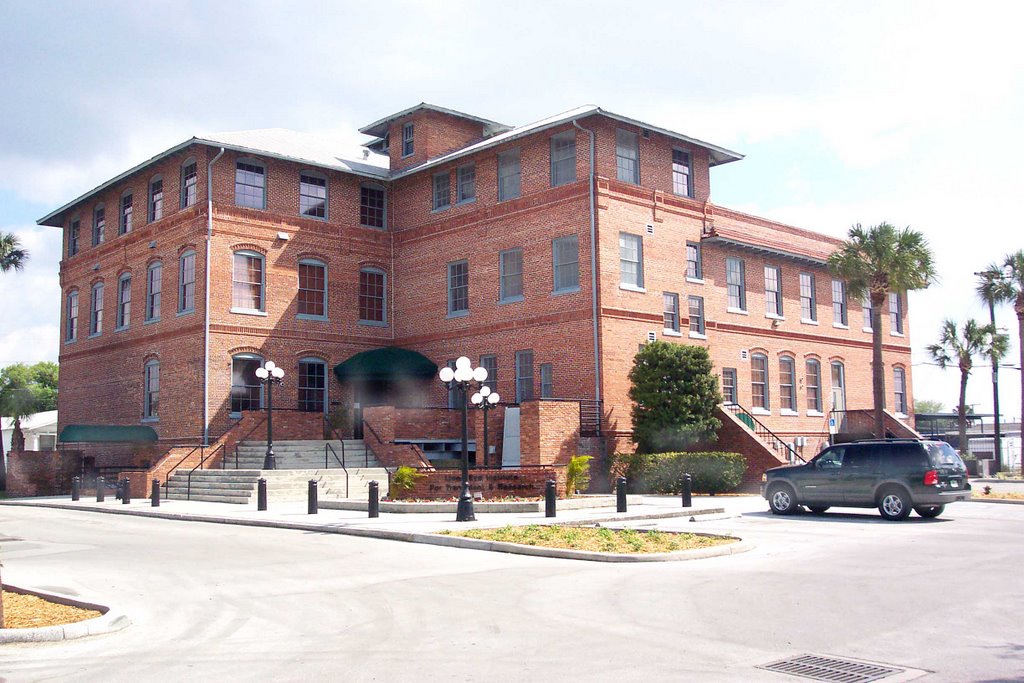
Lodging possibilities vary in Ybor. In addition to accommodations offered by the Hilton, Hyatt, Marriott and Holiday Inn chains -- the Hilton Garden Inn has an outdoor pool and an indoor workout room, there is my particular choice, the Don Vicente de Ybor Historic Inn, located on Republica de Cuba street.

It was constructed just before the turn of the 20th Century as an office complex by the founder of Ybor City and was used for numerous purposes, including a hospital, before falling into disrepair. Local developer Jack Shiver has restored it as a boutique hotel with gorgeous woods, mosaics and appointments.

Of course, if none of this appeals to you, you might be lured in by Ybor's version of Mardi Gras, a little something known as Guavaween, not to be confused with Tampa's Mardi Gras-style Gasparilla Festival held each February.

The October event draws 100,000 or more to Ybor each year, many in costume, to enjoy a lineup of festivals, concerts and a family fun fest.

Like Mardi Gras, the scene includes women in platform boots, skimpy attire and glitter, and some men similarly attired.

That, too is, show biz.


ON THE WEB
Tampa Bay Convention & Visitors Bureau
• Ybor Online
• Dowd's Guides

A city where it's good to be square

A view of the Guadalajara Cathedral of the Assumption of Our Lady
from the steps of the Teatro Degollado.

A full view from the Plaza de la Liberacion of the Cathedral.

William M. Dowd photos

GUADALAJARA, Jalisco, Mexico -- Far from the mayhem in many of its border towns held hostage by drug cartels, Mexico's second largest city has many things going for it. A low crime rate, high employment, sprawling public parks, a strong public education system. But those are things you have to dig a little to realize. What stands out immediately are the squares.

From small to immense, squares -- or plazas -- create a network of neighborhoods throughout the city. Usually anchored by a church or a large municipal structure, the squares boast architecture that ranges from Baroque to Gothic to Art Deco to Modern, from late 16th century cathedrals to such new attractions as the Guggenheim Museum. It's a sign that an erratic economy in much of the country is felt much less in this city of 5 million.

In all parts of this bustling city, workers are ripping out old sidewalks and roadways, replacing them with pavings hand-imprinted to resemble cobblestones, burying power lines, installing new street lamps and benches. Two reasons are behind the activity: An impending election, with politicians releasing funds for public works projects, and a general spruce-up since the city will host the Pan-American Games in the fall of 2011.


One square that particularly stands out is the Plaza de la Liberacion, which has the Guadalajara Cathedral or Cathedral of the Assumption of Our Lady (La Catedral de Guadalajara or Catedral de la Asunción de María Santísima) on one side and the Teatro Degollado on the other.

The church is the Roman Catholic cathedral of the Archdiocese of Guadalajara and a minor basilica. It is built in the Renaissance style, with neo-gothic towers. It began as a primitive adobe structure in 1541, which was replaced in 1618 by a sturdier structure. Earthquakes in 1818 and 1849 severely damaged it, but over the years it was continually repaired and expanded. However, it has continued to be wracked by earthquakes in 1932, 1957, 1979, 1985, 1995 and 2003.

The interior of the soaring structure is a stunning piece of artwork, with seven side altars. The main altar is made of marble and silver, and the windows are of stained glass imported from France.

An interior view of the Cathedral.

Meanwhile, across the plaza, the Teatro Degollado, which is designed to mimic the famous La Scala opera house in Milan, Italy, is home to a wide range of live performances, from orchestral to dance to operatic.

The Teatro, as seen approaching it from the square.

Both sides of the main theater are lined with box seats,
designed after Milan, Italy's La Scala opera house.

The theater dates from 1866. It originally was known as the Theater de Alarcon in honor of the Mexican dramatist Juan Diaz de Alarcon, but several years later was renamed in honor of its main benefactor, Governor Santos Degollado.

The theater has undergone numerous restorations and expansions since its inception. Its current seating capacity is 1,340, plus a 200-seat recital hall. It is the permanent home to both the Philharmonic Orchestra of Jalisco and the Folkloric Dance Company of the University of Guadalajara.
ON THE WEB
• South of the Border, Down Tlaguepaque Way
Mexico's Day of the Dead a Lively Time
Dowd's Guides

20090401

Underwater museum planned in Egypt

I'm midway through a paperback novel called "The Lost Tomb," in which author David Gibbins ("Atlantis," "Crusader Gold") takes readers underwater and underground in search of lost antiquities.

His goal: decipher Biblical mysteries and help find artifacts for various museums.

Although "The Lost Tomb" is fiction, it is based on much real archaeological research, equipment and procedures. All wrapped up in the guise of an adventure story, complete with dangers real and imagined.

So, with all this derring-do fresh in mind, the announcement that the world’s first underwater museum is being planned caught my attention.

This particular project by the Egyptian government and UNESCO (United Nations Educational Scientific and Cultural Organization) will result in a museum to show the rich cultural and historical heritage that can be found under the Bay of Alexandria in northern Egypt.

UNESCO is expected to start preparatory work this month. The agency has established the "Convention on the Protection of the Underwater Cultural Heritage," a global initiative expected to become operational by the end of 2008 after its ratification by 20 nations.

The convention highlights the importance of saving submerged cultural property, which has become increasingly vulnerable to pillaging with the development of more sophisticated and affordable diving equipment.

The Egyptian complex, according to particulars released by UNESCO, will be built partly above and partly under water. The submerged part of the complex will enable visitors to see archaeological remains on the seabed, representing an important advance in the development of underwater cultural heritage exhibitions.

“The first underwater discoveries in the Bay of Alexandria were made in 1911, so you see that this is already a long, ongoing issue in one of the most ancient harbors of the world,” Ulrike Koschtial, the representative for the UNESCO Convention, told The Media Line.

“The whole Bay of Alexandria actually still houses the remains of very important archeological sites. You have the place of the Pharaohs -– the ancient lighthouse of Alexandria -– which is one of the 7 Ancient Wonders of the World. You have the Polonike Palace, which was the palace of Cleopatra, and there might also be the grave of Alexander the Great,” she said.

Other artifacts recovered from the Bay of Alexandria and adjacent sites will be presented to the public in exhibition sites above water. Adjacent archaeological sites include Abukir Bay, where the vestiges of the sunken cities of Canopus and Herakleion are to be found.
ON THE WEB
• Guide to Underwater Archaeology
• Underwater Archaeology
The Museum of Underwater Archaeology
Dowd's Guides

20090322

Impending Irish taxi strike no joke

April 1 usually is a day for good-natured jokes. In Ireland this year, that will not be the case.

If you're in the country on that day and need a taxi cab, good luck. Taxi drivers are planning a national strike.

Members of the Taxi Drivers for Change group announced the planned strike after their demonstration over the deregulation of licensing failed to make much impact on traffic in Dublin. An emergency taxi service for the elderly and for medical patients would be maintained.

Frank Moore of the Irish Taxi Drivers Federation said he would urge his colleagues to join the protest, but a decision would not be made until his union's meeting next Tuesday.

According to The Independent, the national strike was announced after a delegation of taximen emerged from a meeting with Taxi Regulator Kathleen Doyle and told colleagues she would not commit to limit licensing.

Jim Waldron, of Taxi Drivers for Change, pledged to step up the campaign at Dublin Airport and other locations, the newspaper reported.

"The only fool around here is Transport Minister Noel Dempsey and we're not going to be made fools of on April Fool's Day," he said.
ON THE WEB
Airlines, Ferries, Buses & Trains in Ireland
Dowd's Guides

20090311

Where music is the food and drink of life

TROY, NY -- Restaurateur/musician Ray Wall (right) has the best of both his worlds.

The founder, with Mary Ann Stafford, of the whimsically named Jose Malone's Mexican Irish Restaurant -- a nice tequileria as well as a very good dining spot -- has just announced the establishment's Live Irish Music Schedule for the St. Patrick's Day season ... .

... Wall himself ... plays the hammered dulcimer, bodhran (Irish drum), Irish whistles, and the uilleann pipes, the Irish form of the bagpipes.

[Go here for the full story.]

Cheeseburgers, then rum, in Paradise


William M. Dowd photos


FREDERIKSTED, St. Croix, AVI -- The truck driver in the NFL football jersey placed one end of a curved PVC pipe into a larger, metal pipe in the blacktop driveway, then pulled a lever on his tank.

Moments later, a thick, dark stream of Guatamalan molasses began oozing its way from the tanker truck into the gravity-feed system that filled huge storage tanks at the Cruzan's Diamond Estate Distillery.

Step 1 in the process of creating a line of fine rums -- rum industriale, to be precise -- had been taken.

However, I was most interested in a point in the process that came numerous steps later. Tasting the final product of several Cruzan rums in a blind tasting involving rums from Bacardi, Pyrat and Myers's. Having been fortified with the requisite cheeseburger -- as in Jimmy Buffet's iconic song "Cheeseburgers in Paradise" -- the night before, I was ready to begin.

The tasting was led by Bobby Gleason (who goes by "Bobby G" in his professional life), right, the master mixologist for Jim Beam Brands, which took over the Cruzan operation last year from Absolut.

Gleason's forte is cocktails -- the history of them, the romance of them, the creation of them, and the enjoyment of them. He's a wealth of stories about the high and mighty and the down and dirty from his years as a bartender at the Bellagio in Las Vegas, but he's a star in his own right. Last year, for example, at the Nightclub & Bar Show he shattered the Guinness Book of World Records mark for the number of cocktails made in one hour.

The record had been 179 by London bartender Paul Martin. Gleason flew past it with an astounding 253.

"The rules said you had to complete one cocktail before you began another, had to have at least three ingredients in each one, and each had to be different," he explained. "I think I had four or more ingredients in just about all of mine."

He's just as adept at leading a casually-paced tasting. Sitting in a converted 19th Century carriage house on the Cruzan complex, we sampled nine 80-proof rums of varying style. The results:

Bacardi Superior: A honey fragrance with a surprisingly lingering finish atop banana and apple notes and the characteristic Bacardi mild burn.

Cruzan Estate Light: A gentle nose with honey and applesauce notes, then elements of caramel, vanilla and sweet apple in the mid-range and finish.

Bacardi Reserva: More of the honey nose, but with the added element of butterscotch, which made the slight acidity of the taste a surprise. A round, structured mouth-feel.

Cruzan 2-Year Dark: Here we moved into softer, more refined fragrances of brown sugar and tropical tastes of coconut and pineapple. A very agreeable product.

Bacardi 8: Fragrances of almonds and creme brulee precede a spicy, nutty rum with the tropical notes of pineapple and toasted coconut. Complex and pleasing.

Pyrat XO: This is a blend of rums from nine different pot stills. The strong aroma of orange peel creates an expectation of something like a Grand Marnier, and that's what comes through along with touches of anise and cinnamon. A nice dessert offering.

Cruzan Single Barrel: Vanilla, almonds and allspice all compete in the nose, but the taste is dry, soft and Scotch-like with a hint of orange. Very nice sipping rum.

Myers's Origional Dark: Notes of maple and chocolate in the nose, which match up with the dark color, then more chocolate, plus coffee and some molasses in the haste and finish.

Cruzan Black Strap Navy Style: This two-year-old is flavored with dark molasses, and that's what comes through in the nose and in the initial taste. It quickly softens, and coffee elements come through, leading to a long, smooth finish.

Cruzan and its Diamond Estate Distillery is still run by the Nelthropp family despite having passed through a succession of off-island owners. It now is in its seventh generation with Gary Nelthropp in charge of the daily operation. Although the five-still manufacturing equipment is old, it is kept in good repair and Cruzan can crank out 17,000 cases daily.

"We're expanding our warehousing under Beam Global," Nelthropp said. "We already have 12 warehouses that can handle about 10,000 cases each, but we'll be able to put 23,000 in the new facility."

The weather has changed dramatically over the years on St. Croix. At one time, it was the Caribbean's major sugar producer. When Nelthropp's father was young there were seven rivers that ran full year-round, helping supply the much-needed water.

"Now," Nelthropp says, "there are maybe two. We're not really sure what changed, but the rainfall just disappeared. At one time 85% of the island was planted in sugar cane; now it's virtually zero. That's why we started importing our own molasses, and what we get from Guatamala is very high quality."

Rums made from cane sugar are known as rum agricole. Because Cruzan, the island's lone rum distillery, makes its spirits from molasses which comes from cane, it is known as rum industriale.

Cruzan (pronounced crew-zhawn) matures its rums in once-used bourbon or other whiskey barrels. The aged rum is charcoal filtered. White (light) rum is aged 14 months to four years, the single barrel up to 12 years.

The bottling is done in Florida, which makes economic sense -- 85% of Cruzan rum is sold in the States.
ON THE WEB
• Dowd's Guides

When in Mexico, viva la Cazuela!

April L. Dowd photo

TLAQUEPAQUE, Mexico -- Straight tequilas, whether blanco, reposoda or añejo.

Margaritas, traditional or various fruit flavors.

Typical Mexican beverages, and wonderful drinks all. But what if you're looking for something very neighborhood specific?

I was, while in Mexico last week, and I found it at the El Patio restaurant in this artisan-dominated suburb of Guadalajara — the community’s own drink, called the Cazuela, that is a wonderfully refreshing potion, particularly for hot days like the 85-degree one I was experiencing.

The Cazuela gets its name from the earthenware bowl in which it is served.

It's made with ginger ale or Squirt -- the lowly soft drink so favored as a mixer in Mexico, blanco tequila and squeezes of wedges of orange, lime, lemon and mango, with pieces of the fruits competing with ice cubes for room in the bowl.

This punch-like mixture is, like so many other drinks, subject to the preferences of whoever is making them. Back in 1995, when Mexican food was just beginning its current U.S. uptick beyond some Southern border communities, the much-honored cookbook author Fonda San Miguel ("Tequila! Cooking with the Spirit of Mexico") was invited to serve a lush ethnic meal at the James Beard House in New York.

The Cazuela punch she served with it was a much more complex recipe that included watermelon, pineapple, oranges, grapefruit, carambola (star fruit), lemons, silver tequila, gold tequila and citrus-flavored soda.

Besides the Cazuela drink, the bowl -- which originated in Spain -- also is used to whip up a variety of one-dish meals.

Just two examples: A classic Cazuela in Puerto Rico includes sweet potatoes, cinnamon, cloves, ginger and star anise. In Chile, a common Cazuela involves chicken or beef with potatoes and vegetables in an herbed stock.


ON THE WEB
Fonda San Miguel's Cazuela punch recipe
Travels With My Cazuela
South of the border, down Tlaquepaque way
Dowd's Guides

20090309

Scotch distillery refurbishes visitor center

KIRKWALL, ORKNEY, SCOTLAND -- The Highland Park distillery has opened its refurbished visitors center here at the northernmost Scotch whisky distillery in the world.

It brings to life the distillery, established in 1798, and its integral relationship with the Orkney Islands. Visitors are given samples of the distillery's products at the bespoke tasting bar, which features Orkney drystone walling and traditional oak reclaimed from an original Highland Park washback previously used for the fermentation stage of making the single malt.

A new cask education area highlights the vital role of the sherry oak casks used to develop the complexity of the whisky.

The center also offers something called the "Connoisseur’s Tour," a more in-depth experience which ends in the Tasting Room with a tasting of the malts in Highland Park’s portfolio, including the 12-, 15-, 18- and 25-year-old expressions.

As the company notes, "Visitors can view historic Highland Park memoirs, including a note from Sir Winston Churchill. During World War II, HMS Royal Oak was sunk in Scapa Flow and Churchill visited the distillery. When offered a cup of tea on arrival, he immediately stated his preference for a glass of Highland Park."
ON THE WEB
Highland Park Visitors Center
Dowd's Guides

20090227

(Some) drinks are on US Airways

US Airways, which was the sole major air carrier charging customers for non-alcoholic beverages, bowed to industry and consumer pressure and will rescind the charges as of March 1.

According to a memo to airline employes from upper management, " .... We (are) returning complimentary sodas, juices, tea, water and coffee to US Airways. The free beverage service will resume on March 1. This change reverses part of the a la carte business model we believe is right for our business ... .

"When we launched the beverage purchase program in 2008 we knew it would generate additional revenue. From this perspective the program was very successful. What we didn't know at the time, but later experienced, was that the cabin atmosphere would also improve with fewer carts in the aisles and shorter lines to the lavatories.

"Today, while we remain firmly committed to the a la carte strategy -- we also know it is a work in progress. We know customers don't buy an airline ticket based on whether or not they will get a free soda onboard, but with US Airways being the only large network carrier to charge for drinks, we are at a disadvantage. More importantly, this difference in our service has become a focal point that detracts from all of the outstanding improvements in on-time performance and baggage handling that all of us have worked so hard to achieve over the past year."

That means no more $1 charges for tea or coffee or $2 charges for soft drinks, juices and water.

Very nice. Buh-bye.
ON THE WEB
Dowd's Guides

Thailand temporarily dropping visa fee

Exploring the financial aspects of Asian travel? You may want to take into account a change in Thailand.

The Royal Thai government has decided to exempt the fee for tourist visa applications for a three-month period, March 5 through June 4.

Prime Minister Abhisit Vejjajiva is personally spearheading efforts to revive the nation's tourism industry and boost the country’s competitive position to offset the impact of the global financial crisis.

Thailand presently gives a "visa on arrival" for citizens of 20 countries for a stay not exceeding 15 days. Citizens of another 42 countries are allowed a visa-free stay of not more than 30 days. To stay longer, visitors to apply for visas at Thai embassies or diplomatic missions abroad before their arrival in the country.

Thailand this year is expecting 14 million foreign visitors, with tourism revenue projected at US$14.46 billion.

ON THE WEB

• Tourism Thailand
Dowd's Guides

Historic schooner on summer cycle

William M. Dowd photo

CHRISTIANSTED, St. Croix -- It rose above the smaller sailing craft in the calm harbor waters like a giant reddish cloud. The schooner Roseway wasn't even at full sail, yet its dark canvases dwarfed all around it.

It was a genuine sighting of a floating U.S. National Historic Landmark, something I hadn't anticipated when I plopped down on a boardwalk bench in this small main city of St. Croix to relax and let my eye wander over one of the prettier spots on this down-at-the-heels Virgin Island.

The Roseway was built in 1925, and before it was completely restored two years ago it had served as a racing yacht, a fishing vessel and a pilot boat guiding Allied vessels through minefields and anti-submarine nets during World War II.

The Roseway was the last sail-powered pilot boat in the U.S. when put into retirement in 1972. It segued into use as a charter sailing ship off the Maine coast before falling into disrepair.

When the ship was donated to the World Ocean School in 2002, it was the start of a whole new life. The Roseway makes Massachusetts its warm-weather home and St. Croix its winter home. Each location is home to a World Ocean School office.

Massachusetts was an easy decision. The schooner was built in Essex on Cape Ann just north of Boston.

The 137-foot tall ship has tanbark sails, and its 14 cabins can accommodate up to 32 guests who utilize not only deck space but a large main saloon for dining and socializing.

The World Ocean School is based aboard the Roseway, which it uses as a floating classroom for adults and children. Visitors can take part in extended programs, or just summer daytrips right now departing from the Port Authority Dock at Gallows Bay. For a 2½-hour sail, adults pay $45 ($40 for seniors), kids $30.
ON THE WEB
• World Ocean School
Visiting St. Croix
Dowd's Guides

20090127

One region's Class of '96 brew pubs gone

LATHAM, NY -- I remember the heady days of 1996, when a boom in the creation of brew pubs in New York's Capital Region prompted me to write a cover story for the Albany Times Union's "Preview" magazine covering the trend.

"The tap is nearly wide open in the gradual brew pubbing of the Capital Region," it enthusiastically began.

But that was then, this is now. The Malt River Brewing Co. (above), which opened during that boom in '96, has closed for good. It was the last of the boomlet's enterprises.

Malt River, located in the Latham Circle Mall in suburban Albany County, was owned by Marc Weiss, whose father owned the long-troubled mall that was taken over by creditors earlier this month.

The other brew pubs also founded in '96 that previously bit the dust were The Big House in Albany, the Van Dyke in Schenectady, and the Original Saratoga Springs Brew Pub in the city of its name.

However, the region's first-ever brew pub, the River Street, Troy, establishment originally called Brown & Moran, later called the Troy Pub & Brewery and now with the name Brown's Brewing Co. emblazoned on its Web site, still is going strong under Garrett Brown, president and CEO, who has slowly been constructing another major brewing complex in rural Rensselaer County.

And Gary “Goose” Gosselin, owner of Brunswick Barbecue & Brew, a new restaurant in the former Styx Restaurant in Cropseyville just outside Troy, told me he plans to hook up his current beer-making equipment to turn the restaurant into a true brew pub this year. Incidentally, Malt River is one of the stops on Gosselin's extensive beer-making resume.
ON THE WEB
Brown's Brewing Co.
Brunswick Barbecue & Brew
Dowd's Brews Notebook
Dowd's Guides

20090121

Rooftop bar braves Manhattan winter

NEW YORK -- Manhattan's largest rooftop bar and enclosed penthouse lounge isn't shying away from the chills of winter.

The 22,000-square-foot bar, called 230 Fifth, has installed an array of high-powered heaters surrounding its West Bar, the larger of the two rooftop garden bars.

The heaters are augmented by a wardrobe of about 1,000 "signature heavy-duty over-sized hooded red robes and an extensive selection of thermally hot cocktails served in extra large 18 ounce hand-warming mugs," as the management explains it.

230 Fifth has come up with a menu of cocktails for its first outdoor winter season, based on artisan fruit cider bases. They include:

• Hot Apple Cider with Apple Pucker
• Hot Raspberry Cider with Stoli Razberi Vodka
• Hot Peach Cider with Absolut Apeach Vodka
• Hot Pear Cider with Grey Goose Poire Vodka

In addition, a broad range of coffee-oriented drinks is offered, including the "Wired" double espresso topped by Van Gogh Double Espresso Vodka.

The bar is located at 230 Fifth Avenue between 26th and 27th streets. Hours: 4 p.m. to 4 a.m. Phone: (212) 725-4300.
ON THE WEB
National Drinks Examiner
• Dowd's Guides

20090120

Toronto joins bottled water ban

TORONTO, Ont. -- If you're visiting here and have a thirst for a cold bottle of water, you might have more difficulty finding one than in many other towns.

The city has decided to outlaw the sale of bottled water in all municipal buildings, including local arenas.

While banning bottled water, the city did not ban any other bottled beverage.

The ban was approved in December by City Council, with the target of stopping such sales for all municipal premises from City Hall to golf courses by 2011.

Mayor David Miller's spokesman, Stuart Green, said the ban is part of the city's plan to divert 70% of its waste from municipal dumps by 2010.

Not only is the city eliminating sales of the plastic bottles, it also is instituting the following steps:

• A five-cent charge for every plastic bag customers use from a grocery or retail store, starting in June.

• A ban on biodegradable and compostable plastic bags.

• A ban on retail bags with rope handles or metal grommets by the end of next year.

• A request that retailers also provide shoppers with alternatives to having the pay for a plastic bag, whether by providing cardboard boxes or paper sacks for shoppers.

According to the Polaris Institute, 17 municipalities from five Canadian provinces have banned the plastic bottles, while another 45 municipalities are planning restrictions on bottled water.
ON THE WEB
Behind the bottle ban
Dowd's Guides

20090117

DC hotel opens a bar in its bar

A few of the offerings at The Scotch Bar


WASHINGTON, DC -- There's something new in town besides a presidential administration.

The prestigious Willard Intercontinental Hotel's Round Robin Bar is now featuring its own bar, The Scotch Bar.

It's a special alcove with its own intimate bar, small seating area and a very broad selection of newly compiled Scotch whiskies, including dozens of labels and ages from each of the regions of Scotland.

You can get all the details on The DCist.
ON THE WEB
Willard Intercontinental Hotel
Bar DC: A guide
Dowd's Guides

20090116

Survivors praise downed plane's pilot

From eTurboNews.com:

NEW YORK -- The pilot of the US Airways jet that crashed in the Hudson River Thursday is being hailed as a hero after all 155 passengers and crew cheated death.

The pilot, Chesley "Sully" Sullenberger (right), was praised by survivors and officials for coolly landing the jet belly-first onto the river, allowing passengers to make a successful evacuation from the stricken craft.

"He is the consummate pilot," said Lorrie Sullenberger of her husband, an Air Force Academy graduate who flew F-4 fighter planes while in the U.S. Air Force. "He is about performing that airplane to the exact precision to which it is made," she told the New York Post.

"It would appear that the pilot did a masterful job of landing the plane in the river, and then making sure that everybody got out," Mayor Michael Bloomberg said. "I had a long conversation with the pilot. He walked the plane twice after everybody else was off."

[Go here for the rest of the story.]

ON THE WEB
• Safe Water Landings Rare
• Dowd's Guides

Flight cuts reduce flight delays

From ChicagoTribune.com:

U.S. airlines appear to have found the cure for chronic delays: operating fewer flights.

As they parked aircraft and shrank domestic operations last fall, American and United Airlines significantly improved the rate at which they delivered passengers to destinations as scheduled, new federal data show.

After posting the worst record for delays in November 2007, Chicago-based United finished fourth best one year later among 19 carriers. About 86 percent of United's flights were on time in November versus 76 percent during the year-earlier period, according to data released Wednesday by the Department of Transportation.

Ft. Worth-based American improved its results from second worst for tardy arrivals in November 2007 to seventh best a year later.

The industry's overall arrival performance was much improved in November, aided by generally good weather during the busy Thanksgiving travel period and far less congestion in the skies.
ON THE WEB
Real-time Flight Tracking
Dowd's Guides

Eire's oldest brewery may become tour center


The Beamish & Crawford brewery in Cork

CORK, Ireland -- Brewing giant Heineken is considering a proposal to redevelop Ireland’s oldest brewery, Beamish & Crawford, in Cork as a tourist center similar to the Guinness Storehouse in Dublin.

A heritage group set up to save the South Main Street brewery complex in the city center held what it described as “a very fruitful meeting” with the directors of Heineken yesterday at Heineken’s Cork headquarters.

Heineken Ireland announced in December its intention to close the brewery, with the resultant loss of 120 jobs. A committee comprising representatives of three heritage groups has since been set up in an effort to save the brewery building with its distinctive mock-Tudor facade.

National Conservation and Heritage Group chairman Damien Cassidy was part of the delegation that met with Heineken directors yesterday. He said the company had promised to “give close consideration to a sensitive development of the site” during a very positive meeting.

Cassidy said the delegation was taken on a tour of Murphy’s brewery and was impressed by the way in which Heineken had restored the historic building since it took over the company 10 years ago.

He said Beamish would continue brewing at the Cork site until March and the heritage group had asked Heineken to then consider transforming the property into a visitor center and microbrewery.

“The Beamish & Crawford brewery is either 300 or 400 years old. Nobody can be sure but it’s certainly the oldest brewery in Ireland,” he said.

The Cork Lord Mayor Cllr Brian Bermingham already has endorsed proposals for a heritage or tourism complex at the site.
ON THE WEB
Tourism Cork
Guinness Storehouse
• Dowd's Guides

20090113

A-B eliminates its free beer

There's no such thing as a free beer under brewer Anheuser-Busch's new owner.

InBev, or formally Anheuser-Busch InBev, has stopped the practice of giving free beer samples in hospitality centers at its SeaWorld theme parks in Orlando, FL, San Antonio, TX, and San Diego, CA, and its Busch Gardens parks in Tampa, FL, and Williamsburg, VA.

You still can get beer at those parks. Now, however, it will cost you because beer still is being sold at those venues.

Fred Jacobs, spokesman for Anheuser-Busch Adventure Parks, said the free samples had a narrow appeal among park customers. He also said the Belgian company plans to build more restaurants and other venues geared toward families with children.

ON THE WEB

SeaWorld
Busch Gardens
Dowd's Guides

20090107

Body Art Ball sets tour schedule

The human body is, for many people, an integral part of the art world.

Think of them as canvases for painted-on swimsuits in Sports Illustrated magazine, or dancing on "So You Think You Can Dance," or performing in Cirque de Soleil.

Now, Tuaca, the Italian liqueur, is sponsoring the "Body Art Ball Evolution," which will tour nine U.S. cities from February 8 to April 20. The event is a choreographed stage show featuring painted performers illustrating the transformation of the human body into a canvas.

The tour will visit the following cities:

February 8: Phoenix, AZ, The Orpheum Theater
February 15: Denver, CO, The Ogden
February 22: Atlanta, GA, The Opera
March 1: Kansas City, MO, Uptown Theatre
March 8: Columbus, OH, Bar of Modern Art
March 22: Baltimore, MD, Rams Head Live (bartenders only)
April 6: Houston, TX, The Warehouse Live (bartenders only)
April 13: Dallas, TX, The Palladium Ballroom
April 20: Austin, TX, The Paramount Theatre
ON THE WEB
• Dowd's Guides
Tuaca tasting notes

20081230

Discovering which way is up

If your airline flight is delayed this winter because of icy runways, you may have Saskatchewan potash miners to thank for much of the inconvenience.

Hmmm?

The phrase "Saskatchewan potash miners" doesn't come up much in conversation, but it certainly should be kept in mind these days. A shortage of potash, a form of potassium carbonate, caused by the 99-day miners strike this fall, has left many U.S. airports with low supplies of a key runway de-icer because they didn't buy sufficient advance quantities of it.

What other effects are we seeing from the strike? Well, as often happens during an extended strike, the timing was meant to be the worst possible for the business, which can be counter-productive for the strikers as well as the strikee. When 500 miners struck three mines owned by Potash Corp. they did so just as the company was pulling out all the stops to meet huge demand for potash-based fertilizer to boost crop yields in the face of rising food prices.

Now, airports, agri-business operations and other users of potash-based products are turning to alternative materials they are finding (a.) available, and (b.) often less costly.

So, the miners got most of what they wanted by putting a stranglehold on their employers, who themselves had been pulling in record profits, but in the long run may have shot themselves in the collective foot.

All of which reminds me of the beleaguered U.S. automakers and their highly-paid union workers. Their history consists of decades of demands for ridiculously high pay and perks and corporate waste and greed passed on to consumers. The auto consumers, just like the potash consumers, found alternatives -- buying Japanese and Korean cars, for example -- that were much more palatable.

How many times does a lesson have to be repeated before everyone learns a lesson?
ON THE WEB
Real-time Flight Updates
Dowd's Guides

20081227

10 French survival words

Learn 10 French survival words compliments of The Travel Linguist. For a full list of instructional language DVDs, phrasebooks, audio CDs and downloads, click here.

20081224

Keeping track of Santa's flight


Few activities on this Christmas Eve can match the anticipation of awaiting a visit from Santa Claus.

If anyone you know is anxious about where the jolly old elf might be at any particular time, just click here to go to the NORAD Santa Tracker for all the particulars and some seasonal music.

MERRY CHRISTMAS TO ALL!

20081223

A taste of the New Irish Cuisine

DUBLIN, Ireland -- One day into a motor tour of Ireland in search of something to overcome the negative stereotypes about Irish food and I was stumped.

I was here in the capital city, sitting with a traveling companion in the bar of the beautifully converted Clontarf Castle, site of one of the epic battles of the ancient Irish warrior king Brian Boru. We were trying to figure out where to find the best place for local food.

The hotel bell captain seemed a logical person to consult.

"Well," he said in all seriousness, "it depends on what sort of local food you're looking for. The best in the city is Italian, Thai or Chinese."

That was several years ago, and it's even truer today unless you're so far off the beaten path you're creating a new one. The difference is that the New Irish Cuisine, as it is capitalized in most Irish publications, also has begun making inroads into popular taste.

Much as I pride myself on my nearly 100 percent Irish heritage, I cringe -- as does my aorta -- when I think of some of the dishes that once were typically representative of Irish cuisine.

Finnan Haddie, a smoked fish and mashed potato dish. Dublin Coddle, featuring flour-coated pork sausage fried in bacon fat then cooked in cider with onions and potatos. Bacon and Egg Pie, which includes a half-dozen eggs and four ounces of lard. Carrageen Pudding, which is primarily dried seaweed and whipped heavy cream. Toad in the Hole, a bacon-wrapped sausage baked in mustard dough and covered in gravy. And endless platters and bowls of potatoes baked, mashed, fried, steamed, boiled, grilled, sauteed and whatever else one could think of to do with them.

But that was then. This is now, and my how things have changed.

Irish restaurants and modern Irish families are relying on such things as chicken, salmon, monkfish, lamb and vegetarian dishes in ever-increasing amounts, although the ubiquitous and versatile potato retains its place of honor in the Irish kitchen.

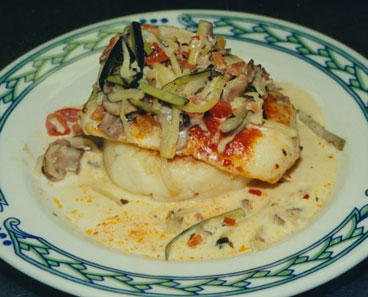
Dishes tend to be more of the "spa cuisine" variety, with less reliance on heavy creams and fats and more exploitation of the island's abundance of fresh produce. Some of the dishes still look heavy -- like the dishs shown above, cod sorrel (top) and colcannon (bottom) -- but light, alternative ingredients lessen the impact.

Ireland once had plenty of people and no money. Now, thanks to its leadership among European nations in the technological revolution, it has plenty of money and no people. To attract new ones and hold on to the ones it has, developing a modern, appealing cuisine has become an important task.

The island's two national food trade groups, Bord Bia (Irish Food Board) and Trade International Northern Ireland, are helping market Irish products worldwide and soliciting foreign investment in the industry under the promotional title "Ireland: The Food Island."

Tourists are being directed to culinary destination spots throughout the country, especially to the southern port city of Kinsale, a picturesque spot that has emerged as the country's gastronomic capital.

As Muirish Kennedy, Bord Bia's client services director, told Irish Connections magazine, "Ireland has changed drastically. ... The young sector is very much the driving force. The food companies here were started in the last 15 years. It's a young new generation that is much more aggressive, much more aware."

There is rarely a question about the quality of Irish agricultural and livestock products. Willing consumers abroad buy 90 percent of Ireland's annual output. The knock has been on what Irish cooks have done with those products at home.

Until the recent economic upsurge, dining out regularly was a rarity in most parts of Ireland, with fewer than 25 percent of people doing it compared to about 70 percent in the U.S. That mindset, which tends to discourage culinary experimenta tion, was perpetuated in the lives of Irish expatriates around the world. Thus, to many people the likes of Toad in the Hole still exemplifies Irish cuisine.

Couple the experiences younger, adventuresome Irish have had in traveling abroad with their higher wages and more disposable income and the demand for better food becomes even clearer.

The appetite for things Irish can be seen in a number of areas beyond industry trade shows. At the bookstores, for example, you can find titles that put to rest the foods of the famine and poverty years. Instead, we find "Elegant Irish Cooking: Recipes from the World's Foremost Irish Chefs," compiled by the noted Irish master chef Noel C. Cullen, now professor of culinary arts at Boston University. And, "The New Irish Table," a collection of recipes from restaurant and home cooks edited by Margaret M. Johnson who has written on Irish food for such newspapers as the Los Angeles Times and the Irish Echo.

And, while they don't have the reputations of such world-renowned culinary schools as the Cordon Bleu in France or the Culinary Institute of America, Irish cooking schools are enjoying a growing reputation.

Noted chef Darina Allen's Ballymaloe Cooking School, operated at her Ballymaloe House Hotel in County Cork, is perhaps the brightest example. It has been the catalyst for several well-received cookbooks and the work of hundreds of graduates who took advantage of the organic farm and extensive gardens on the property.

The world of New Irish Cuisine is not limited to the Republic of Ireland. In Northern Ireland, where tourism is comparatively strong despite the continued violence in an around Belfast, 70 miles from there in County Fermanagh the Belle Isle School of Cookery is a big draw for residential or one-day classes.

It's situated on a wooded island in Lough Erne, a rural lake that is home to 11 islands owned by the same nobleman, the Duke of Abercorn.

To prove some things about Irish eating and drinking habits never change, the school's brochures brag about its proximity to many attractions -- particularly the Old Bushmills Distillery, at age 396 the oldest licensed distillery in the world, where the renowned Bushmills whiskey is produced.
ON THE WEB
• On the Road In Search of My Darby Duck
Dowd's Guides

20081220

About that early New Year party, mate ...

Heading for Australia to usher in the new year before it arrives here in the States or Europe -- that International Dateline thing, you know -- may lose some of its attraction this year.

According to The Age newspaper in rowdy Melbourne, some of the city's "biggest bars and nightclubs face closure and big fines as Victoria Police and Liquor Licensing Victoria clamp down on rogue operators in the lead-up to New Year's Eve. Almost 50 inner-city clubs have received final warning notices, with operators of about a dozen venues ordered to appear before the Victorian Civil and Administrative Tribunal to defend their liquor licences.

"The clubs were found to have repeatedly breached a range of liquor licensing provisions, including serving alcohol to intoxicated or under-aged patrons, overcrowding and employing unregistered security staff."

[Get the full story by clicking here.]
ON THE WEB
Melbourne Nightlife
• Dowd's Guides

20081209

The latest places to avoid

Rioting, natural disasters, general unrest and the fallout such things cause has put a number of usual tourist hotspots on the danger list. Among them:

Greece
India
East African coast
Honduras

Plus, ongoing violence in Thailand (see video below) has helped prompt the resignation of the government.


ON THE WEB
• Traveler warnings
• Dowd's Guides

Ethiopia banking on elephant guests

Want to get up close and sort of personal with a wild elephant? A lot of people do, and the Ethiopian government is hoping to take advantage of that to help boost tourism income.

The Babile wildlife sanctuary near Harar, 350 miles east of the capital city of Addis Ababa, is the first in the country to offer visits specifically for viewing elephants, whose numbers are in sharp decline. Right now there are only about 300 of them in the sanctuary.

The African nation's government has invested in hotels, airports and other infrastructure, with an eye toward raising income from tourism by about 15% to around $200 million.
ON THE WEB
Paleo-tourism in Ethiopia
CIA World Factbook: Ethiopia
Dowd's Guides

20081205

NYC's star chefs to re-cook history

It's not news that New York City is filled with excellent chefs. What is news is the fact that 16 of them are joining forces to cook 19th Century banquets.

The "Vintage Dinner Series" will run from January through March 2009, beginning January 12 at Cafe des Artistes. There, the menu from the Danish film "Babette's Feast" (above), set in 1871, will be the model.

That means such dishes as tortoise soup, caviar with blinis and quails in pastry cases, and such beverages as Amontillado sherry, Veuve Cliquot champagne, Clos de Vougeot burgundy, port with the cheese and coffee with the rum baba dessert.

The series was organized by Tim and Nina Zagat of the Zagat Guides. The other participating restaurants:

• Bouley, January 15
• Picholine, January 21
• Adour at the St, Regis Hotel, January 25
• Chanterelle, January 27
• Daniel, February 3
• Blue Hill at Stone Barns, February 5
• Del Post, February 11
• Per Se, February 17
• La Grenouille, February 25
• Le Cirque, March 3
• Ouest, March 5
• Le Bernardin, March 9
• Gramercy Tavern, March 16
• Jean Georges, March 23
• Aureole, March 25

Stanley Lobel of Lobel's Meats and Dorian Mecir of Dorian's Seafood Market are assisting the restaurants in identifying cuts of meat, poultry, fish and drinks appropriate to the period.

Each restaurant involved in the project will present a prix fixe "Vintage Dinner Series" meal priced on par with its regular menu (food, drinks, tax and tip included). A portion of the proceeds will be donated to such charities as Meals on Wheels, City Harvest, Doctors Without Borders and the Alzheimer's Association.
ON THE WEB
Vintage Dinner Series details
Dowd's Guides
20081203

What happens in Mossman ...

Maybe, as the current phrase goes, "What happens in Vegas stays in Vegas" needs to be broadened -- to include Australia.

Tony Fox, owner of the White Cockatoo resort in Mossman, Queensland, the north Australia state, said despite the global economic downturn his resort has been fully booked for a proposed month-long "rainforest nude party" in March 2009.

How does that sit with the local community? Says Mayor Val Schier, "I am not opposed to it as long as no laws are broken. As long as it is with consenting adults then there is no problem."

Fox's "clothes optional" resort also made headlines three years ago when his "partner-swapping parties" made headlines following public complaints, and subsequently were halted by the police.

"It doesn't take rocket science to work out what the party means," Fox said, explaining further his plan for the proposed “risqué” party where “anything goes" for a month. His holiday resort will be transformed to a “hedonism resort.” He said, "Tough economic times call for stiff measures."

All states and territories in Australia, except Queensland, have had designated clothing-optional beaches since South Australia declared the first, Maslin Beach near Adelaide, in 1975.

Australia, with its thousands of kilometers of deserted beaches, has a reputation for its nudist beach parties. Nude bathing occurs on a regular basis even on the most popular beaches. Some are designated as a legal clothing-optional beaches, but on others nudity is unofficially condoned, according to an Australia Web site guide to nude beaches.

[Go here for the full story.]
ON THE WEB
Australia's nude beaches
• Nude Beaches and Resorts Worldwide
Dowd's Guides
Nazi resort to be opened to the public

From the Telegraph of London:

Germany is embroiled in a controversy over a monumental Nazi-era holiday resort on the German island of Ruegen that is to be opened to holidaymakers for the first time.

The giant complex of hotels in the Prora resort on the country's biggest island in the Baltic Sea was designed to house 20,000 tourists as part of Adolf Hitler's "Strength Through Joy" program to keep the German nation healthy.

The construction of the mammoth project began in 1936 but was abandoned in 1943 due to the war, and the five six-story concrete buildings on Ruegen's beautiful sandy beach were never opened to the public.

[Go here for the full story.]
ON THE WEB
Hitler's Eagle's Nest
German Tourism Today
Dowd's Guides

U.S. airlines may again cut seating

From Bloomberg.com:

U.S. airlines that pared seating capacity about 10% this year may deepen the cuts in 2009 to ensure the industry makes its first profit in a recession.

The pullback at big carriers including Delta Air Lines Inc. and American Airlines may reach 8% and include non-U.S. markets where they’ve been expanding in the absence of discount rivals, according to six analysts surveyed by Bloomberg.

“It’s coming,” said Kevin Crissey, a UBS Securities LLC analyst in New York. “You definitely want to see them out in advance of the difficulties. Err on the side of cutting and if you miss a bit of revenue, so be it. You don’t want to get run over by weak demand.”

New reductions would build on this year’s retrenchment, the U.S. industry’s most sweeping since the Sept. 11 (2001) terrorist attacks.

[Go here for the full story.]
ON THE WEB
Airline Capacity Cuts Go Global
Dowd's Guides

Baja California crime wave continues

From the Los Angeles Times:

Blood continues to spill in Tijuana and and other border-area communities. And the debate rages on as to whether it's safe for surfers, campers, fishermen and other tourists to travel in northern Baja California.

First, the latest grim news: Nine human heads were found Sunday in Tijuana, along with a note tying the massacre to the ongoing war between rival drug gangs.

A day later, a report emerged describing November as the deadliest month during President Felipe Calderon's two years in office, with at least 701 killings linked to organized crime occurring throughout Mexico.

Tourists, by and large, have not been victimized.

[Go here for the full story.]
ON THE WEB
Travel to Mexican Border Towns
Four Good Reasons to Visit a Border Town
Dowd's Guides

20081202

Keel laid for huge cruise ship

Several years ago, off the coast of the Caribbean island of St. Maarten, I was seated in a small watercraft, staring up in amazement at the size of one of the cruise ships anchored just outside the picturesque harbor.

It was like gawking at a Manhattan skyscraper from a bicycle. How big can they get?, I wondered at the time. Well, apparently the sky's the limit.

Workers for Royal Caribbean International today laid the keel of Allure of the Seas, the second of the Oasis-class cruise ships analysts say will redefine the industry.

The keel laying ceremony was held at STX Europe's shipyard in Turku, Finland.

When the cruise ship is launched in 2010, it will share the title of the world's largest and most revolutionary cruise ship with its sister ship, Oasis of the Seas.

It will span 16 decks, carry 5,400 guests at double occupancy, and feature 2,700 staterooms. Both Allure of the Seas and Oasis of the Seas will be based in Port Everglades in Fort Lauderdale, FL.

The ship will have seven distinct themed areas, which will include such amenities as lush grounds open to the sky in Central Park (shown above), located in the center of the ship and spanning more than the length of a football field.

Central Park will be lined with boutiques and specialty restaurants, ranging from casual to fine dining, and introduce balcony staterooms rising five decks above the storefronts and overlooking the park -- one of a few new categories of onboard accommodations made possible by the ship's unique design.
ON THE WEB
Royal Caribbean
Largest Cruise Ship
Dowd's Guides

Napa's COPIA center bankrupt but re-opening

April L. Dowd photo

The bad news: COPIA:The American Center for Wine, Food & The Arts, which has been closed for several weeks, has filed for bankruptcy protection.

The good news: It will reopen during the reorganization period.

The center, located in Napa, CA, said restructuring through a Chapter 11 filing will provide six months to achieve long-term sustainability. In the filing, Copia estimated its outstanding liabilities between $50 million and $100 million.

"We recently have taken intensive measures to overcome our deteriorating liquidity position," Copia CEO Garry McGuire said in a statement, referring to cost-cutting by making Copia less of a wine and food museum and more of an education institute.

Copia was the brainchild of wine pioneer Robert Mondavi, who died in May at age 94. It has been financially troubled since its 2001 opening as a facility that includes museum exhibition space, a restaurant, expansive gardens, meeting rooms and art galleries. It has been closed in recent weeks, but will reopen during the restructuring.
ON THE WEB
Visiting Napa Valley
Dowd's Guides

'Whisky Bars of Edinburgh' lineup set

If you're planning to visit Scotland in 2009 to take advantage of the tourist-friendly events that are part of the year-long "Homecoming Scotland" program, make a note to sample the whisky bars of Edinburgh.

Ten of them have teamed up to attract visitors to the capital city and promote their whisky experience. The program, announced today, was created under the auspices of ScotlandWhisky, the country's national whisky tourism initiative.

“Edinburgh is rightly famous for its bars and ‘Whisky Bars of Edinburgh’ brings together 10 fantastic examples of where visitors can enjoy a dram in a traditional setting. Each bar has a great reputation for its Scotch Whisky range and staff that have passed the Scotch Whisky training school,” said Chris Conway of ScotlandWhisky.

The featured bars featured are accredited "Scotch Whisky Embassies." Each has a wide range of whiskies, including single malts, blends and rare bottlings, and a staff trained in whisky appreciation.

Although Edinburgh is renowned for its lively bar and cocktail lounge scene, similar programs are being developed for Glasgow and other parts of Scotland.

The "Whisky Bars of Edinburgh" participants:

The Albannach, on The Royal Mile
Whiski, 119 High Street
Scotch Whisky Experience, 354 High Street
The Abbotsford, 3-5 Rose Street
Leslies Bar, 45 Ratcliffe Terrace
The Bow Bar, 80 West Bow
Stockbridge Tap, 2-4 Raeburn Place
Thomson's Bar, 182-184 Morrison Street
Teuchters, 26 William Street
Teuchters' Landing, 1c Docks Place
ON THE WEB
• Scotland's Most Expensive Cocktail
Scottish Tourist Board
Dowd's Guides

Blog Archive